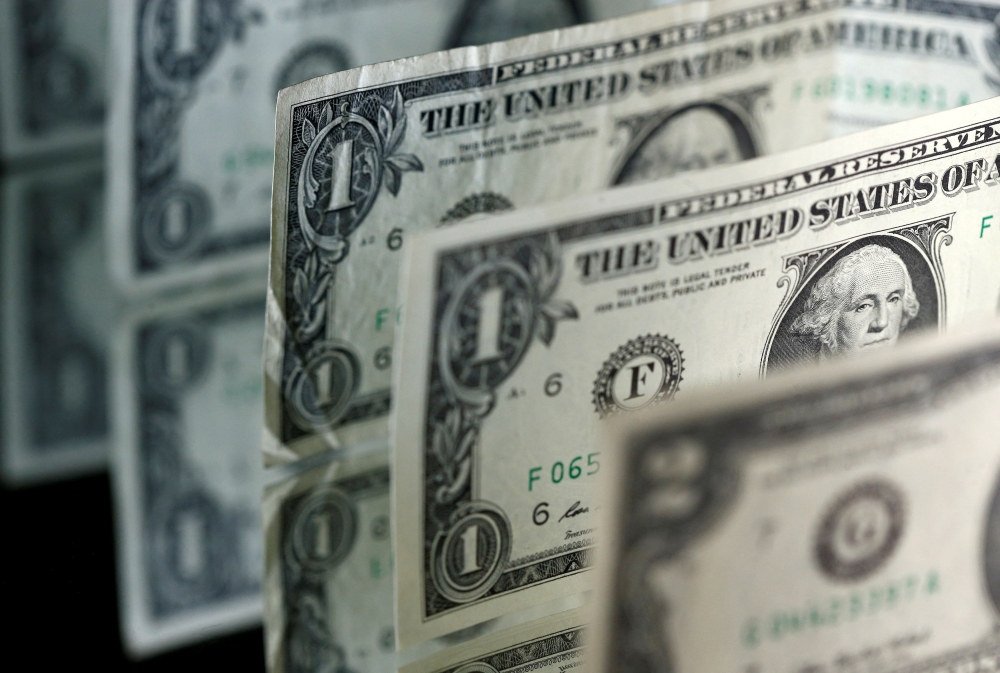
SINGAPORE, March 13 — The US dollar is poised to secure its second straight weekly gain as global investors seek safety amid escalating geopolitical tensions linked to the ongoing conflict involving Iran. The crisis has intensified volatility across currency markets and driven demand for safe-haven assets such as the US dollar.
The dollar index — which measures the greenback against a basket of major currencies — has climbed to its highest level since November, reflecting stronger investor demand as markets react to uncertainty surrounding the conflict and its potential economic consequences.

Safe-Haven Demand Strengthens the Dollar
Market analysts say geopolitical instability tends to drive investors toward traditionally stable currencies, particularly the US dollar. As fears over the conflict’s escalation continue, traders have reduced exposure to riskier assets and shifted capital into safer holdings.
The euro and Japanese yen have both weakened in recent sessions, with the euro trading near its lowest level in months, while the yen has approached levels that could potentially trigger intervention from Japanese authorities.
Financial markets worldwide have also experienced turbulence as the crisis threatens to disrupt global trade and energy supplies.
Oil Prices and Energy Supply Concerns
Energy markets have been particularly sensitive to developments in the Middle East. Oil prices have surged past US$100 per barrel after attacks on key energy infrastructure and concerns over shipping routes in the region.
The Strait of Hormuz, one of the world’s most critical oil shipping lanes, remains under intense scrutiny because roughly 20 per cent of global oil supply passes through the strait. Any disruption could have significant consequences for global energy markets and inflation.
To stabilise markets, the International Energy Agency (IEA) has announced plans to release around 400 million barrels of oil from strategic reserves in an effort to offset supply disruptions and calm global energy prices.
Central Banks and Investors on Alert
The evolving geopolitical crisis has also shifted expectations for global monetary policy. Investors are now closely watching upcoming meetings of the US Federal Reserve and the European Central Bank for signals about interest-rate decisions.
Some analysts believe persistent energy price increases could delay interest-rate cuts in the United States, as higher oil prices may push inflation upward and complicate central bank policy decisions.
Meanwhile, global equity markets have reacted cautiously, with several Asian and US stock indices experiencing declines as investors evaluate the economic risks associated with a prolonged conflict.
Market Volatility Likely to Continue
Currency strategists warn that volatility in foreign exchange markets is likely to remain elevated as long as geopolitical tensions persist.
If the conflict continues to disrupt energy supplies and trade routes, analysts say the US dollar could remain supported by strong safe-haven demand in the weeks ahead.
Investors are expected to keep a close eye on developments in the Middle East, particularly any signals regarding the duration of the conflict or diplomatic efforts to ease tensions.