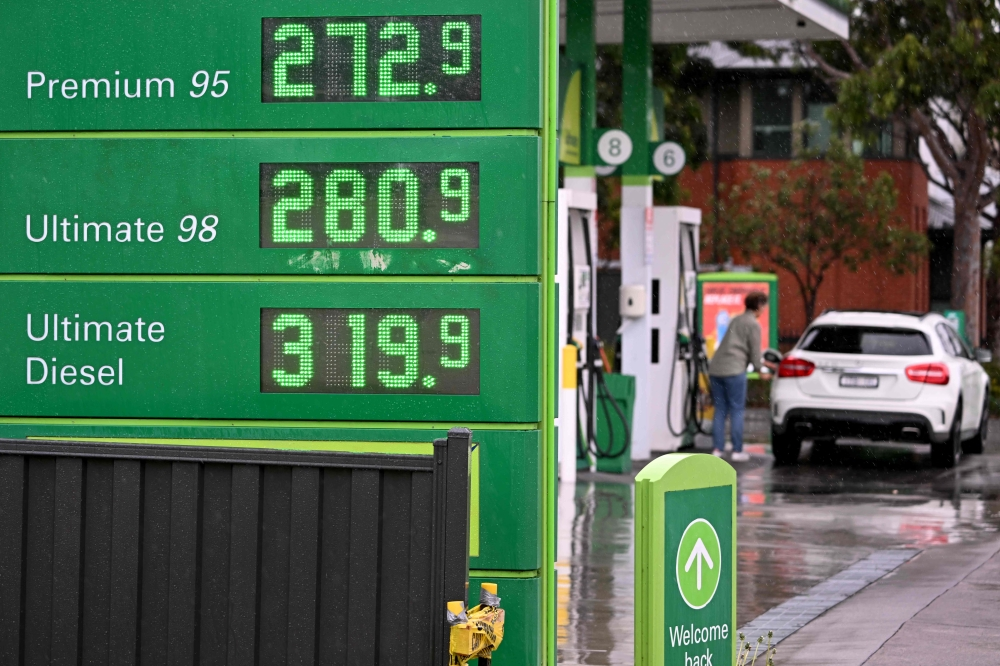
SYDNEY, March 31 — The government of Australia has unveiled a major fuel relief initiative that will halve the national fuel tax and support emergency fuel imports as global oil prices surge due to the escalating conflict involving Iran.
Prime Minister Anthony Albanese said the temporary policy is aimed at easing financial pressure on households and businesses struggling with rapidly rising fuel costs. The measure will reduce fuel prices by 26.3 Australian cents per litre and will remain in effect for three months.

The government estimates the relief package will cost approximately A$2.55 billion (around RM7.03 billion), making it one of the largest short-term energy support measures introduced in response to the ongoing global fuel crisis.
The decision comes as oil markets experience severe volatility due to the widening Middle East conflict, which has disrupted global energy supply chains. Analysts note that the war has pushed crude prices sharply higher, with Brent crude rising nearly 59 per cent in March and trading above US$115 per barrel, one of the steepest monthly increases in history.
Energy experts warn that disruptions linked to tensions in the Persian Gulf — particularly around the strategic Strait of Hormuz — could significantly reduce global oil flows. The strait is one of the most important maritime chokepoints in the world, with roughly 20 per cent of global oil shipments passing through the route before reaching international markets.
In addition to cutting the fuel excise tax, the Australian government also announced it will temporarily remove the heavy road-user charge for transport vehicles, providing additional relief for logistics companies and freight operators that rely heavily on diesel.
Officials say the government will also support the purchase of spot cargo fuel shipments — emergency purchases on the global market — to help ensure domestic fuel supplies remain stable during the ongoing geopolitical crisis. These steps are designed to prevent shortages and protect supply chains that are critical to Australia’s economy.
Treasurer Jim Chalmers said the package is intended to cushion the economic shock caused by global energy disruptions while preventing fuel prices from rising even further for consumers.
Transport and logistics groups welcomed the move, noting that fuel costs have become one of the biggest operating expenses for businesses across the country. Higher diesel prices have placed pressure on supply chains, freight operations and agricultural industries.
However, economists have warned that while the measure will provide immediate relief for motorists, it may only offer temporary benefits if global oil prices continue climbing due to geopolitical tensions and supply disruptions.
The policy is part of a broader strategy by Australia to manage the economic impact of the global energy crisis triggered by the Middle East conflict. Governments worldwide have been scrambling to contain the ripple effects of rising fuel prices, which threaten to increase inflation, disrupt transport networks and slow economic growth.
Market analysts say the situation highlights how deeply global economies remain tied to oil supply routes and geopolitical developments, especially when key shipping lanes or major energy producers are affected by conflict.
With global energy markets still volatile, policymakers are expected to continue monitoring fuel supplies and prices closely in the coming months as the situation in the Middle East evolves.