KUALA LUMPUR,MAY,2026 – Prime Minister Datuk Seri Anwar Ibrahim has called on Malaysian diplomats to play a stronger role in advancing the country’s economic diplomacy, particularly by attracting high-quality investments, expanding trade opportunities, and exploring strategic cooperation with other nations.
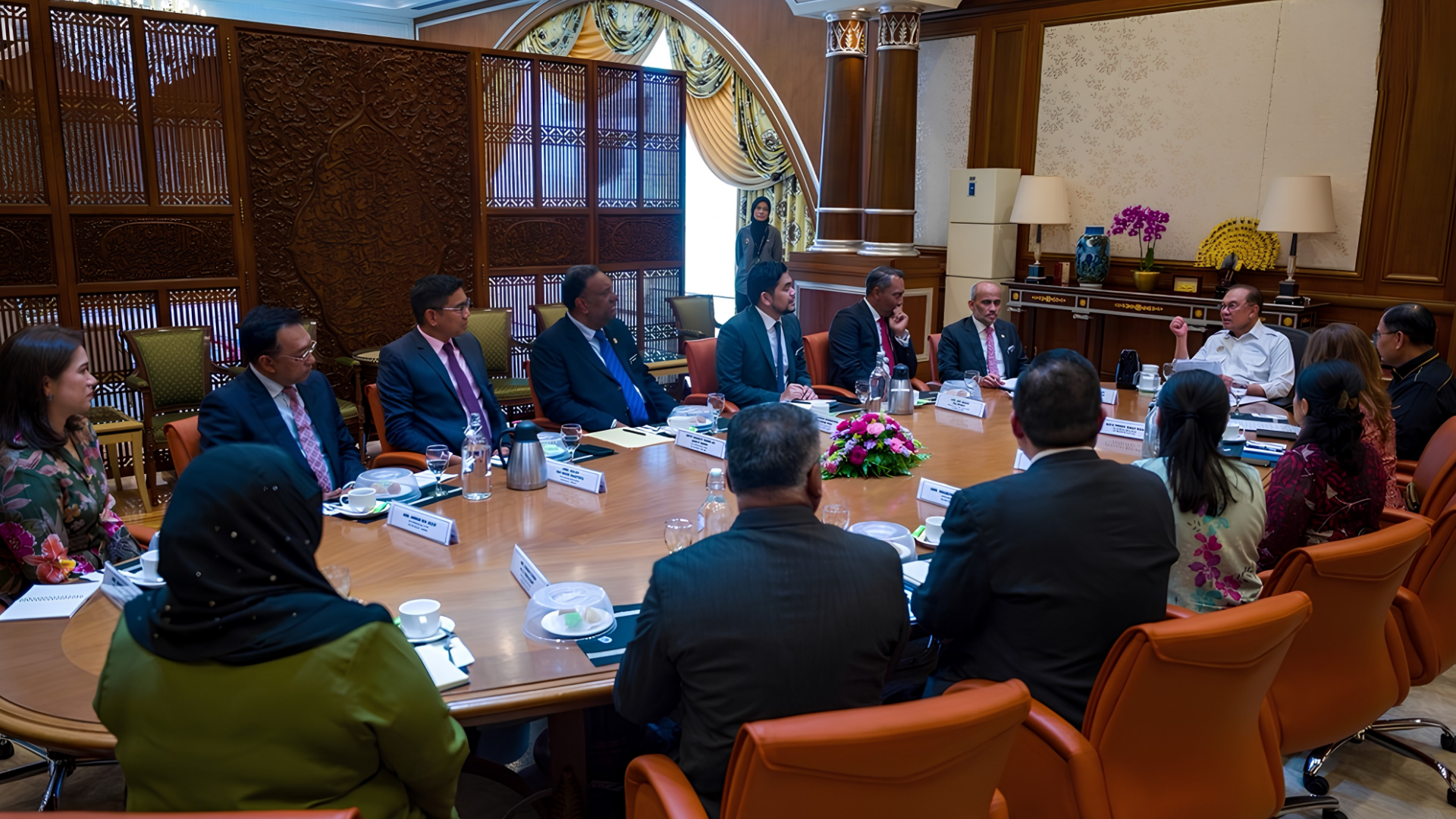
The message was delivered when Anwar received courtesy calls from 13 Malaysian Heads of Diplomatic Missions who will soon begin their assignments in various strategic regions around the world. The meeting placed strong emphasis on the evolving role of diplomacy, especially at a time when global politics, trade flows, and economic competition are becoming increasingly complex.

Anwar, who is also the Finance Minister, said Malaysian diplomats must continue strengthening the nation’s economic diplomacy capabilities. According to him, diplomatic missions should not only focus on official relations and protocol, but also contribute directly to Malaysia’s long-term economic growth by helping the country attract trade, investment, and meaningful international partnerships.
The Prime Minister stressed that Malaysia’s representatives abroad have a major responsibility in positioning the country as a trusted, stable, and competitive investment destination. In the current global environment, foreign investors are not only looking at incentives, but also political stability, good governance, clear policies, skilled talent, infrastructure readiness, and reliable international partnerships.
Anwar said diplomats must develop a deeper understanding of the countries where they serve. This includes knowledge of local history, culture, political systems, economic direction, and the social nuances of local communities. Such understanding, he said, is important to ensure every form of engagement can be carried out more effectively and meaningfully.
The call reflects the government’s wider push to make diplomacy a stronger tool for national economic development. Instead of seeing foreign missions only as platforms for official communication, Anwar wants Malaysian envoys to become active facilitators of investment, trade, technology cooperation, and strategic partnerships that can create long-term benefits for the country.
Economic diplomacy has become increasingly important as Malaysia continues to compete for high-value investments in sectors such as digital economy, renewable energy, semiconductors, advanced manufacturing, halal industries, green technology, and regional services. Through stronger diplomatic engagement, Malaysia aims to connect more directly with global investors, governments, and institutions that can support sustainable national growth.
Anwar also highlighted the need to guide and empower the younger generation of Malaysian diplomats. He said future diplomats must be equipped with broad knowledge, sharp thinking, and the ability to respond to increasingly challenging geopolitical and economic developments.
This is especially important as international relations are no longer limited to traditional political engagement. Modern diplomacy now involves trade negotiations, supply chain strategy, investment promotion, crisis management, regional security, climate policy, technology development, and humanitarian issues. For Malaysia, this means diplomats must be able to represent the country’s interests in a more dynamic and strategic manner.
The Prime Minister said Malaysia will continue to uphold the principles of moderation, stability, good governance, and diplomacy based on wisdom and universal humanitarian values. These principles, he said, remain central to how Malaysia carries its voice on the international stage.
Anwar’s message also comes at a time when Malaysia is working to strengthen its position as a key regional economy in Southeast Asia. With global investors looking for stable and strategic locations in Asia, Malaysia’s diplomatic network is expected to help promote the country’s strengths, including its skilled workforce, strategic location, developed infrastructure, and growing role in regional trade.
For Malaysian envoys, the task ahead is not only to maintain strong bilateral ties, but also to identify new opportunities that can benefit the country’s economy. This includes building stronger engagement with government leaders, business communities, investors, universities, think tanks, and international organisations in their host countries.
The Prime Minister’s reminder signals that Malaysia’s diplomatic missions will continue to carry a broader national agenda. Beyond protecting Malaysia’s image and interests abroad, diplomats are now expected to support the country’s economic transformation by opening doors for new investments, trade expansion, and strategic collaboration.
If successfully implemented, stronger economic diplomacy could help Malaysia attract more quality investments, create skilled jobs, improve industrial competitiveness, and strengthen the country’s position in global value chains. It could also help Malaysia respond more effectively to global uncertainty while maintaining balanced relations with major economic partners.
Overall, Anwar’s call marks a clear direction for Malaysian diplomacy: envoys must be proactive, knowledgeable, and economically driven while continuing to uphold Malaysia’s values of moderation, stability, and good governance. In an increasingly competitive world, Malaysia’s diplomatic presence abroad is expected to play a more direct role in supporting national growth and strengthening the country’s global influence.