KUALA LUMPUR,MAY,2026 – Sarawak Premier Datuk Patinggi Tan Sri Abang Johari Tun Openg has described Sarawak as an emerging economic powerhouse for Malaysia, comparing the state’s ambition to Bavaria in Germany, a region widely known for its industrial strength, innovation and strong economic identity.
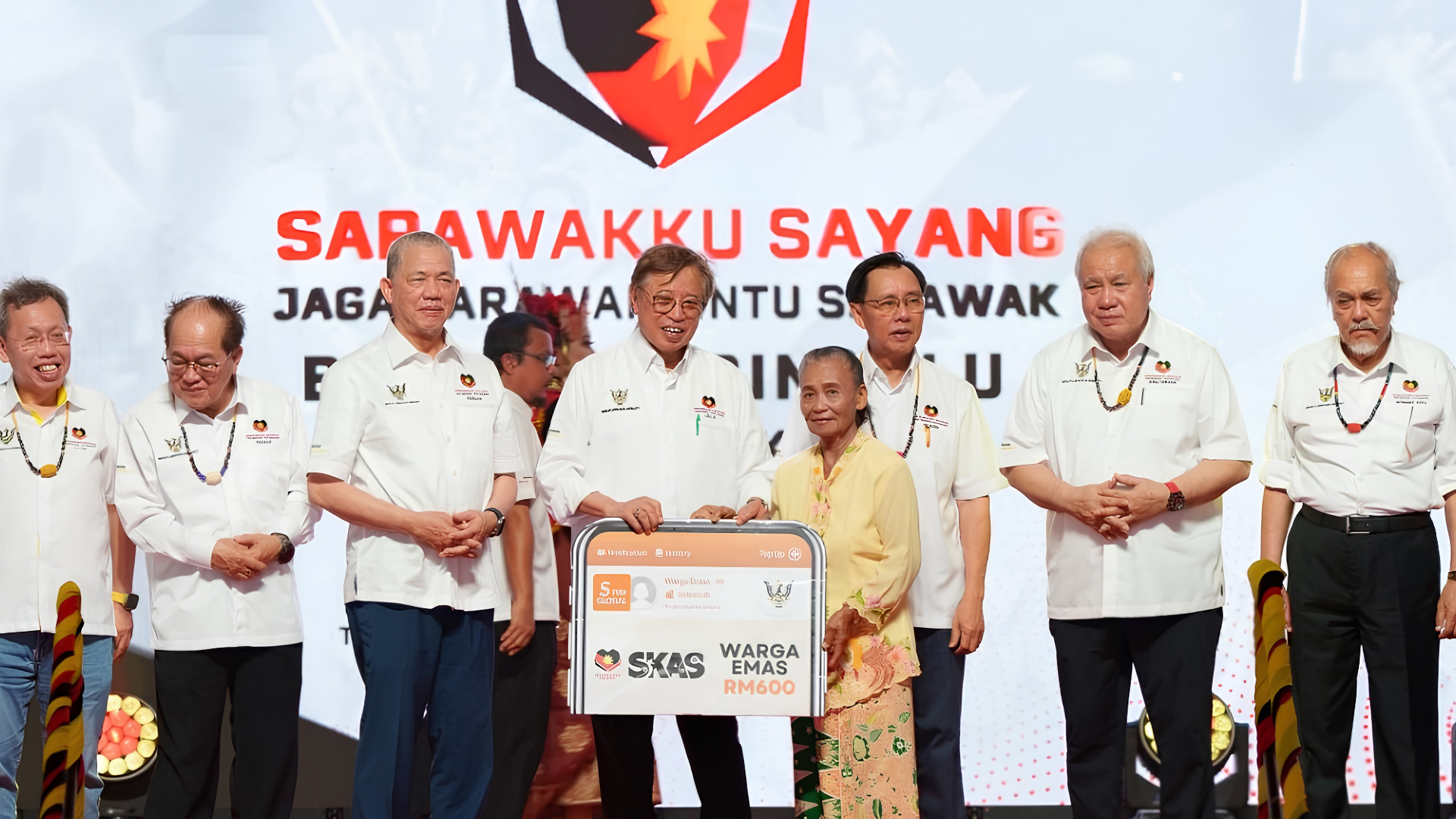
Speaking at the Sarawakku Sayang (SKS) Bintulu 2026 programme, Abang Johari said Sarawak’s unity, political stability and social harmony have become key foundations for the state’s economic rise. He said the strength of Sarawak’s multiracial and multi-religious society has allowed the state government to move confidently into future-focused industries such as green energy, hydrogen and the low-carbon economy.

Abang Johari said Sarawak is now positioning itself as one of the most important drivers of Malaysia’s future economic development. He stressed that the state’s success would not only benefit Sarawak, but also contribute directly to Malaysia’s overall progress.
According to him, Sarawak wants to move as one united force regardless of race, religion or background. He said unity remains the core strength that allows the state to plan boldly, take calculated risks and pursue long-term development strategies without losing social stability.
The comparison with Bavaria reflects Sarawak’s ambition to become a strong regional economic centre with its own specialised industries, advanced infrastructure and sustainable development model. Bavaria is one of Germany’s strongest economic regions, known for manufacturing, technology, research, automotive industries and high-value exports. In Sarawak’s case, the state is focusing on green energy, hydrogen, methanol, digital technology, low-carbon industries and regional connectivity.
Abang Johari said Sarawak’s move into green energy is now producing results, with the state becoming the first hydrogen production hub in ASEAN. He said the state government was willing to take risks, but described them as calculated risks based on future economic trends, especially as fossil fuel resources continue to decline while hydrogen demand expands.
The Premier said Sarawak must be able to anticipate future global changes instead of depending only on traditional resources. This is why the state has pushed strongly into renewable energy, hydrogen production and low-carbon development as part of its wider plan to create long-term economic value.
Sarawak’s low-carbon strategy has also received international recognition. Abang Johari said the World Economic Forum had named Bintulu as one of four low-carbon industrial clusters globally, describing the recognition as proof that Sarawak can balance economic growth with environmental sustainability.
Bintulu plays a major role in Sarawak’s industrial and energy development. With its existing oil and gas base, port facilities, industrial zones and future low-carbon projects, the area is being positioned as a strategic centre for clean industrial transformation. This makes Bintulu important not only for Sarawak, but also for Malaysia’s wider economic and energy transition agenda.
Abang Johari also highlighted Sarawak’s methanol industry as another major achievement. He said the state has exported more than one million metric tonnes of methanol to the Asia-Pacific market, generating billions of ringgit in value. He added that methanol produced in Sarawak carries strong downstream potential because it can be further processed into products such as ammonia and fertiliser.
This downstream potential is important for Sarawak’s economic transformation. Instead of only exporting raw resources, the state aims to create more value through processing, manufacturing and industrial diversification. Such a strategy can help generate skilled jobs, attract investors and strengthen Sarawak’s position in regional supply chains.
In a separate address reported by The Borneo Post, Abang Johari said Sarawak is accelerating its transformation into one of Asia’s most progressive regions through major investments in infrastructure, renewable energy, digital technology and human capital development. He said the state government is working to move beyond traditional industries and expand into high-value sectors.
He also said Sarawak’s long-term goal is to transform today’s natural wealth into lasting prosperity for future generations. This reflects the state’s wider development direction, where natural resources are being used to fund new industries, infrastructure, education and future economic security.
To support this ambition, Sarawak is investing heavily in major infrastructure projects, including new roads, highways and bridges to improve connectivity between urban and rural areas. Projects such as the Second Trunk Road, coastal road network and major bridge developments are expected to open more economic opportunities across the state.
The state is also developing the Autonomous Rapid Transit (ART) system in Kuching as part of efforts to build a modern public transport network. Plans for a new international airport and deep-sea port are also expected to strengthen Sarawak’s position as a regional hub for trade, investment and tourism.
Human capital development is another key part of Sarawak’s economic plan. Abang Johari said development must benefit all Sarawakians, regardless of race, religion or background. He also highlighted education-related initiatives, including free higher education for Sarawakian students in state-owned institutions beginning this year.
The Premier’s statement also strengthens the political message that Sarawak’s development is closely linked to unity and stability. For the state government, economic planning is not only about attracting investment, but also about maintaining social harmony, inclusive growth and confidence among local communities.
Sarawak’s growing role in Malaysia’s economy has become more visible in recent years as the state expands its influence in energy, infrastructure and green technology. With strong natural resources, hydropower capacity, industrial land and strategic access to regional markets, Sarawak is increasingly being positioned as a key contributor to Malaysia’s future growth.
The state’s push into hydrogen and low-carbon industries is also aligned with global energy transition trends. As countries and companies look for cleaner energy sources, Sarawak wants to position itself as a serious player in renewable energy production, green industrial development and sustainable exports.
However, the success of Sarawak’s ambition will depend on execution. Large-scale infrastructure, hydrogen production, methanol downstream processing, digital technology and low-carbon industrial development require major investment, skilled talent, stable policy direction and strong international partnerships.
If implemented effectively, Sarawak’s economic model could help Malaysia strengthen its regional competitiveness, attract more high-value investment and reduce dependence on traditional industries. It could also create new opportunities for local businesses, workers and young Sarawakians.
Overall, Abang Johari’s message presents Sarawak as more than just a resource-rich state. It is being positioned as a future economic engine for Malaysia — one built on unity, political stability, green energy, industrial diversification and long-term planning.
As Sarawak continues to pursue its Bavaria-inspired ambition, the state’s development will likely remain an important part of Malaysia’s national economic conversation, especially in areas involving energy transition, sustainable industry, infrastructure and regional growth.