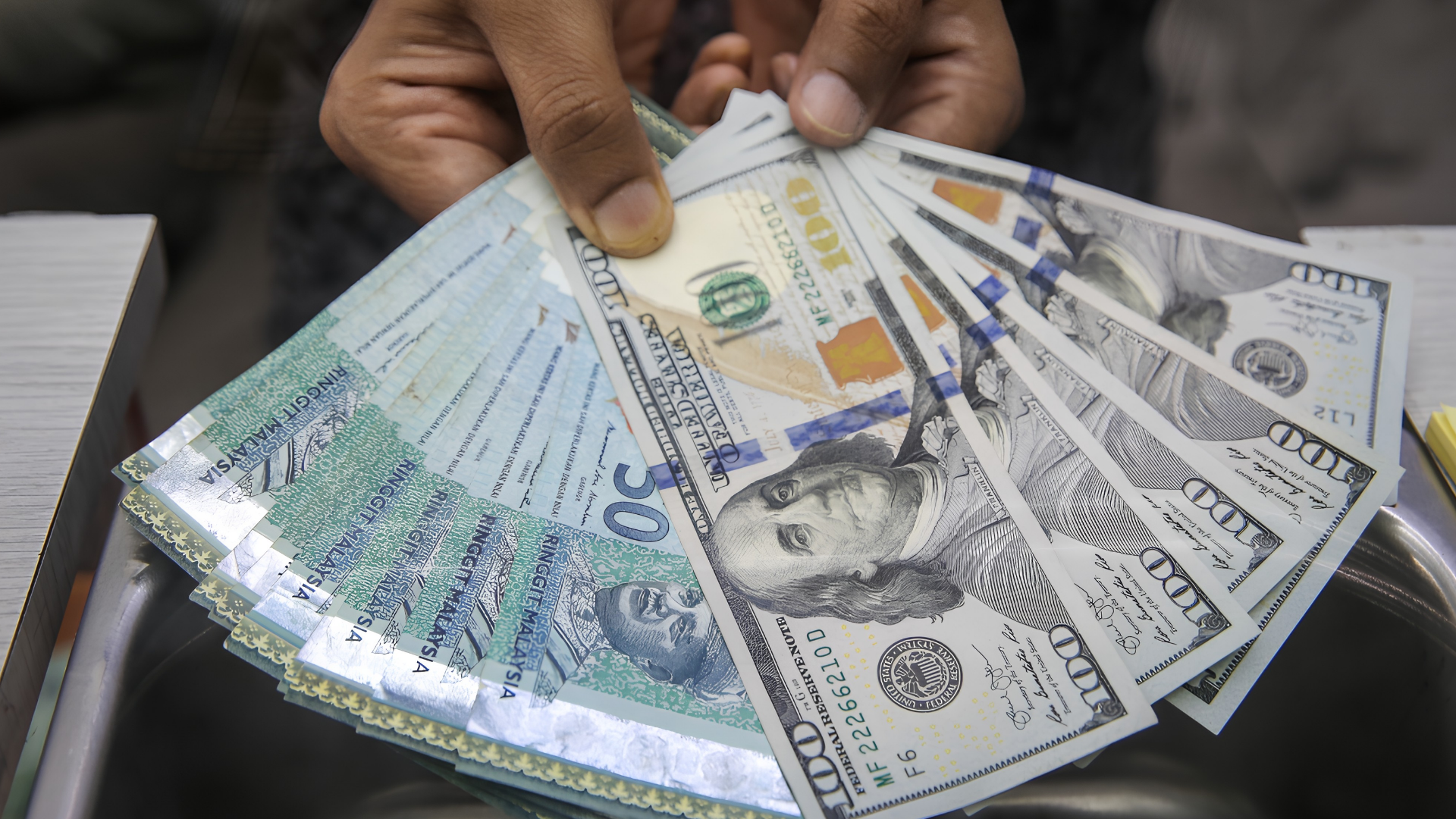
KUALA LUMPUR, June, 2026 – The ringgit opened slightly higher against the US dollar on Thursday as concerns over US protectionist trade policies continued to weigh on sentiment towards the greenback, despite stronger-than-expected economic data from the United States.
At 8am, the local currency improved to 3.9935/0005 against the US dollar compared with Wednesday’s close of 3.9955/9990, according to Bernama data reported by Malay Mail.

The modest gain reflected cautious market sentiment as investors weighed two opposing factors: resilient US economic indicators and growing concerns that higher tariffs could raise business costs and pressure global trade.
Bank Muamalat Malaysia Bhd chief economist Dr Mohd Afzanizam Abdul Rashid said the US Dollar Index, or DXY, rose 0.30 per cent to 99.519 points. However, the stronger dollar reading did not prevent the ringgit from opening slightly firmer, as concerns over trade policy continued to influence market direction.
According to Dr Mohd Afzanizam, recent US economic data showed that the American economy remains strong. However, business surveys also indicated that companies are facing higher fuel costs and rising tariff rates, which could eventually be passed on to consumers.
The ISM services index rose to 54.5 points in May from 53.6 points in April, signalling continued expansion in the US services sector. Meanwhile, the ADP Employment Change increased by 122,000 jobs in May, beating market expectations of 118,000.
Normally, stronger US economic data would support the dollar because it suggests the Federal Reserve may have less urgency to cut interest rates. However, in this case, the positive data was partly offset by concerns that US trade policies could increase business costs and hurt global economic sentiment.
The latest announcement by the US Trade Representative also added to worries that protectionist policies may remain a major feature of US trade strategy. This has raised concerns among investors that tariff-related costs could continue affecting businesses, consumers and international trade flows.
For currency markets, tariff uncertainty can create mixed reactions. On one hand, strong US data may support the dollar. On the other hand, concerns over trade friction, higher import costs and inflationary pressure can weaken confidence in the broader outlook for the greenback.
The ringgit’s slight improvement also came after a softer session previously, when the local note had been pressured by renewed tariff concerns and volatile currency market sentiment.
Against other major currencies, the ringgit also traded stronger at the opening. It rose against the British pound to 5.3613/3707 from 5.3727/3775, strengthened against the euro to 4.6357/6438 from 4.6400/6440, and improved versus the Japanese yen to 2.4966/5011 from 2.5005/5027.
The local currency, however, traded mixed against regional peers. It rose against the Singapore dollar to 3.1121/1178 from 3.1164/1193 and was slightly higher against the Indonesian rupiah at 222.2/222.7 compared with 222.3/222.7 previously.
The ringgit was flat against the Philippine peso at 6.47/6.48, but eased against the Thai baht to 12.2051/2343 from 12.1825/1988.
The mixed regional performance shows that while the ringgit gained some support from weaker sentiment towards the US dollar, broader Asian currency movements remained cautious. Regional currencies are still sensitive to developments in US trade policy, interest rate expectations and global investor risk appetite.
The latest movement also highlights the ringgit’s exposure to external factors. As a trade-oriented economy, Malaysia is closely affected by global demand, commodity prices, US monetary policy and trade tensions between major economies.
If US tariffs continue to rise, the impact could be felt across global supply chains. Businesses may face higher input costs, while consumers could see more expensive goods if companies decide to pass costs down the chain.
For Malaysia, tariff-related uncertainty could affect exporters and manufacturers, especially those connected to electronics, commodities, machinery and regional supply chains. A weaker global trade environment may reduce demand, while stronger foreign exchange volatility can complicate business planning.
However, the ringgit’s slight gain suggests that investors are still willing to support the local currency when dollar sentiment weakens. Malaysia’s domestic economic fundamentals, stable monetary policy and improving investor confidence may also help limit downside pressure.
Currency traders are expected to continue monitoring US data, Federal Reserve signals, tariff announcements and broader market risk sentiment. Any indication that US tariffs could become more aggressive may influence both the dollar and Asian currencies.
At the same time, stronger US labour and services data could keep markets alert to the possibility that US interest rates may remain higher for longer. This would normally support the greenback, but its effect may be limited if trade uncertainty continues to dominate sentiment.
For businesses and consumers in Malaysia, the ringgit’s movement remains important because it affects import costs, overseas spending, travel, fuel-related expenses and pricing for goods linked to foreign currencies.
A stronger ringgit can help reduce the cost of imported goods and ease inflationary pressure. A weaker ringgit, however, can make imports more expensive and increase pressure on businesses that depend on foreign inputs.
Overall, the ringgit’s slight rise against the US dollar reflects a market caught between stronger American economic data and concerns over the long-term impact of US tariff policies. While the local note opened firmer, the currency outlook remains dependent on global trade developments, US policy direction and investor appetite for emerging-market currencies.