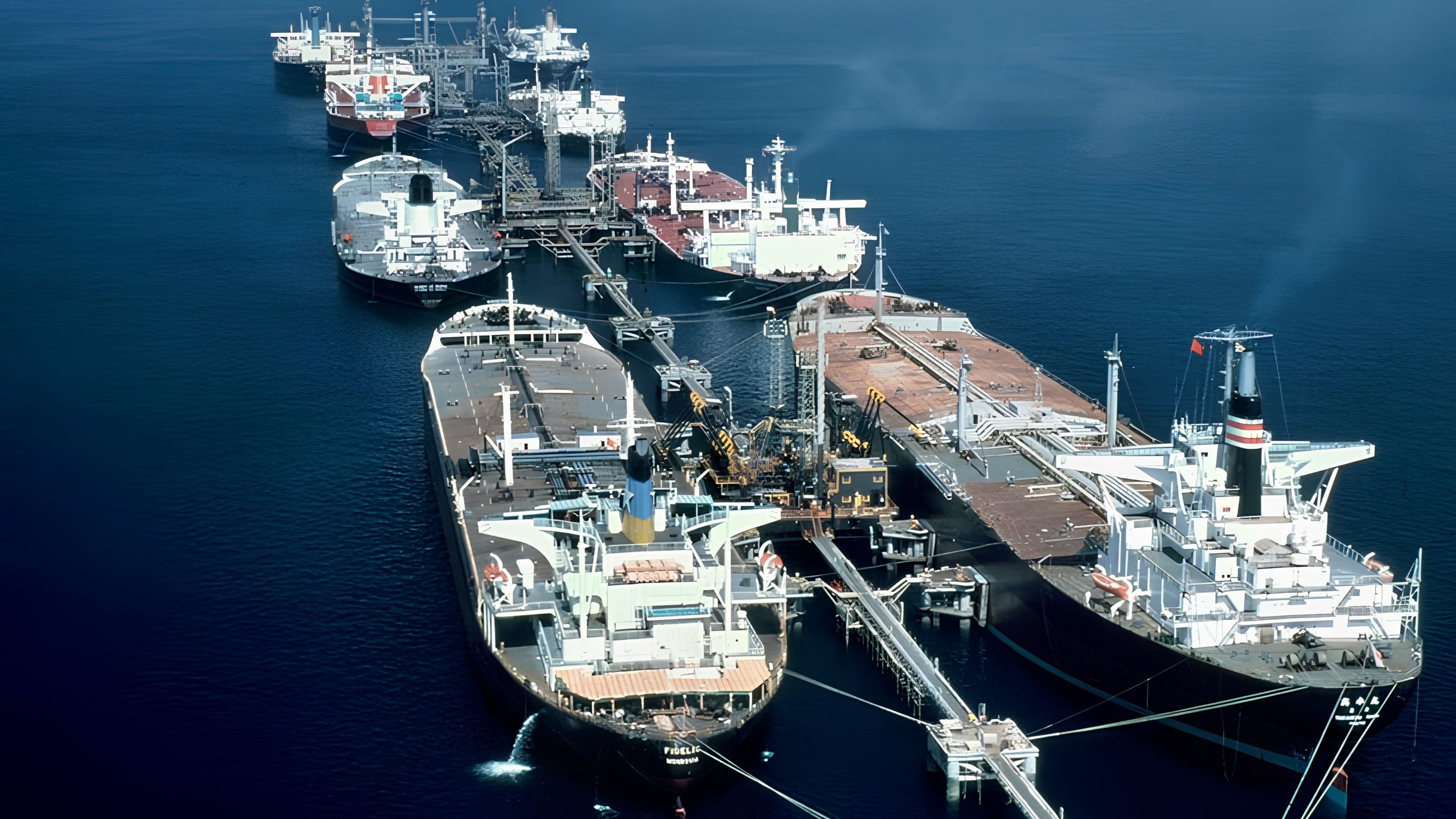
KUALA LUMPUR, June, 2026 — The recovery of Middle East oil flows is gathering pace as Qatar resumes crude sales to Asia, joining other Persian Gulf producers that are increasing supply after the US-Iran interim peace deal helped reopen key shipping routes.
The move signals a broader revival in regional crude exports after months of disruption caused by the Iran war, tanker delays and restrictions around the Strait of Hormuz, one of the world’s most important energy corridors.

Oil markets are now adjusting quickly to the return of Middle East barrels. Reuters reported that oil prices extended their decline on Thursday, with Brent crude futures falling US$1.22 to US$72.52 per barrel, while US West Texas Intermediate dropped US$1.02 to US$69.32. Both benchmarks reached their lowest levels since February 27.
The decline was driven by expectations of increased Middle East supply. According to Reuters, around 20 million barrels passed through the Strait of Hormuz in the previous 24 hours, based on comments from US Energy Secretary Chris Wright.
That improvement is important because the Strait of Hormuz had been a central risk point during the Iran conflict. When shipping through the strait was disrupted, oil prices surged and buyers in Asia struggled to secure steady crude supplies.
The latest recovery suggests that traders are now pricing in a faster-than-expected return of Gulf crude. Reuters reported that markets were focused on renewed Middle East supply after an initial accord between the US, Israel and Iran allowed traffic through the strait to resume and created a 60-day negotiation window on Iran’s nuclear programme.
Qatar’s return to active crude sales to Asia adds to the perception that regional producers are moving from crisis management back toward normal export activity.
The rebound is not limited to crude. Middle Eastern fuel oil exports are projected to hit a four-month high in June, reaching around 2.4 million metric tons, or about 508,000 barrels per day. That would represent a 20% increase from May, although exports remain below pre-war levels.
Reuters reported that the fuel oil recovery followed improved transit conditions through the Strait of Hormuz, as well as diversions by Iraq and Saudi Arabia to alternative ports.
Even so, the recovery remains incomplete. Middle Eastern fuel oil exports are still far below the pre-war monthly average of 5.5 million to 6.0 million tons, showing that the region’s energy system has not fully returned to normal.
The wider physical crude market is also under pressure from rising supply. Reuters reported that physical crude markets are experiencing sharp declines and steep discounts across regions as Middle Eastern producers increase output and offer more cargoes.
Major producers including Abu Dhabi National Oil Company, Kuwait Petroleum Corporation and Iraq’s SOMO have been offering discounted crude, pushing Middle Eastern benchmarks such as Dubai, Oman and Murban into a contango structure, where near-term prices are lower than later-dated contracts.
This structure usually suggests that traders see ample near-term supply. In simple terms, the market is no longer worried only about shortages; it is beginning to price in a possible short-term oversupply.
Reuters also reported that oil markets are starting to signal near-term oversupply as tankers leave the Strait of Hormuz. Brent futures for September delivery traded higher than August contracts, suggesting more oil is available in the immediate market.
This is a major shift from the earlier phase of the conflict, when Middle East supply disruption and tanker delays pushed prices higher and tightened Asian crude availability.
Asia is the main destination for much of the region’s crude, making the return of Qatar and other Gulf sellers especially important. The world’s top energy-consuming region is expected to import about 22.18 million barrels per day of crude in June, up from 20.35 million barrels per day in May, according to Kpler data reported by The Star.
However, Asia’s June crude imports remain below the 26.76 million barrels per day average recorded in the three months before the February 28 attack on Iran by the United States and Israel.
This means Asia is recovering, but not yet back to pre-war import levels. Buyers are returning to the market gradually as supply normalises and prices fall.
The Star also reported that Asian crude arrivals were well above the 18.77 million barrels per day recorded in April, when the effective closure of the Strait of Hormuz caused the sharpest disruption.
China remains a key factor. Kpler data showed China’s seaborne crude arrivals in June at around 5.76 million barrels per day so far, although that figure may still be revised higher. China had sharply reduced imports after prices rose during the Iran war.
The return of Middle East crude could therefore encourage more Asian refiners to rebuild supply, especially if prices continue falling and shipping risks ease.
Qatar’s role is strategically important because it is known not only for liquefied natural gas, but also for crude grades such as Qatar Land and Qatar Marine. A previous QatarEnergy agreement with Shell Singapore involved up to 18 million barrels of Qatar Land and Qatar Marine crude per year over five years, showing the long-term importance of Asian buyers to Qatar’s crude trade.
The latest revival comes after a period of major disruption. The International Energy Agency previously reported that global oil supply fell sharply in March as attacks on Middle East energy infrastructure and restrictions on tanker movements through the Strait of Hormuz caused one of the largest disruptions in recent history.
The IEA also estimated that global crude runs were reduced as Middle East and Asian refineries cut processing due to feedstock supply disruptions.
Now, the market is moving in the opposite direction. Tankers are leaving the Gulf, Gulf producers are offering crude, and Asian refiners are seeing more available supply.
Still, refined fuel markets remain tighter than crude. The Star reported that Asia’s refiners are expected to export 9.20 million barrels per day of light and middle distillates in June, up from May and April, but still 13% below the pre-war three-month average.
This means crude availability is improving faster than refined fuel supply. For consumers and industries, fuel prices may remain elevated even if crude oil prices fall.
For oil traders, Qatar’s renewed sales to Asia are a sign that the Gulf energy network is recovering. But the market is still fragile because the US-Iran peace framework remains temporary and depends on further negotiations.
If the 60-day diplomatic window holds, Middle East crude exports could continue rising and prices may move closer to pre-war levels. If talks break down, tanker risk and supply disruption could return quickly.
The revival also affects global crude flows. Cheaper Middle East crude can reduce demand for Atlantic Basin cargoes heading to Asia, putting pressure on North Sea and African grades. Reuters reported that cheaper Gulf oil has already closed some arbitrage opportunities for US and Atlantic crude exports to Asia.
For Asian buyers, the return of Gulf crude offers relief after months of tight supply and high prices. For Middle Eastern producers, it provides a path to recover lost sales and rebuild market share.
For global markets, the recovery is a double-edged signal. More supply helps reduce prices and inflation pressure, but it also raises concerns about near-term oversupply if demand does not recover at the same pace.
Qatar’s crude sales to Asia show that the Middle East oil revival is gaining momentum. The return of Gulf barrels, renewed tanker movement through Hormuz and falling oil prices all point to a market shifting from war-driven shortage fears toward supply recovery.
The development is suitable for Update News because it involves current Middle East oil market recovery, Qatar’s crude sales to Asia, falling Brent and WTI prices, tanker movement through the Strait of Hormuz and changing global supply conditions.