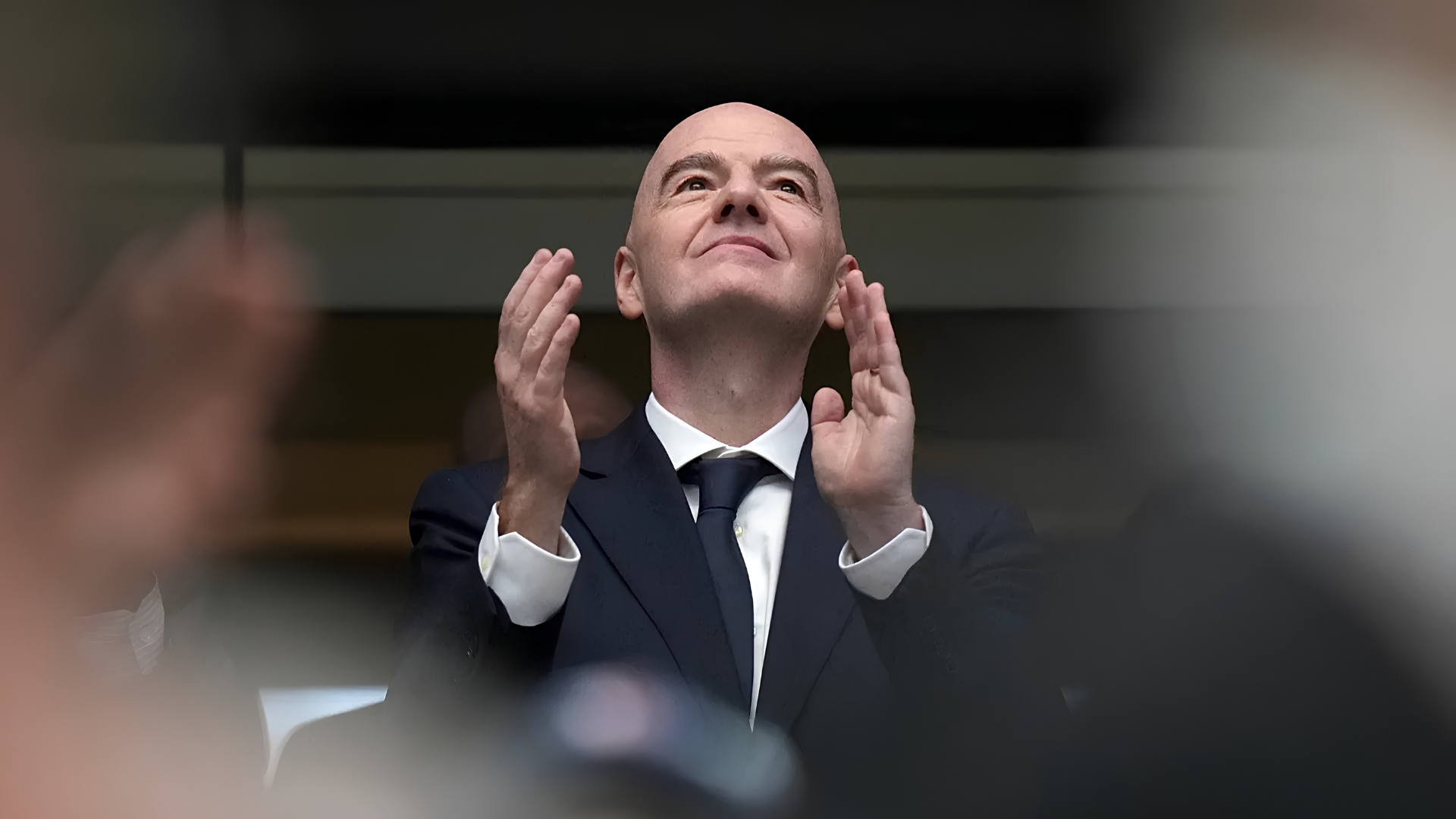
KUALA LUMPUR, AUGUST 2026 — FIFA president Gianni Infantino is facing growing opposition within world football after FIFA vice-president Sándor Csányi withdrew his support, adding to mounting scrutiny over the organisation’s leadership and governance ahead of next year’s presidential election.
Csányi, president of the Hungarian Football Federation and one of FIFA’s eight vice-presidents, informed Infantino of his decision following the departure of FIFA chief operating officer Kevin Lamour. He described Lamour’s exit as the decisive factor that caused him to lose confidence in Infantino’s leadership.

Lamour left FIFA after publicly criticising Infantino’s controversial proposal to bring private investment into a new commercial entity linked to FIFA competitions, including the World Cup. FIFA confirmed that Lamour had left the organisation but did not publicly provide a detailed reason for his departure.
Lamour had been among the senior FIFA executives who questioned the proposed commercial restructuring.
The plan involved selling a 20% stake in a new FIFA commercial entity to private investors, with the transaction potentially raising around US$4.2 billion. The proposed entity itself had been valued at approximately US$20 billion.
The initiative faced strong opposition from major football confederations and member associations before FIFA eventually abandoned it at the end of July. UEFA, the Asian Football Confederation and CONCACAF were among the organisations that opposed the proposal.
Lamour had publicly argued that FIFA staff were not properly informed about how the project was being developed and criticised the decision-making process surrounding it. His subsequent departure sparked further concern among officials who had already been questioning the organisation’s governance.
In a letter to Infantino seen by Reuters, Csányi praised Lamour’s professionalism and contribution to transparent operations within FIFA.
Csányi argued that the circumstances surrounding Lamour’s departure raised serious questions about professional judgement, ethical standards and leadership at the governing body.
His decision is particularly significant because Csányi is not only a FIFA vice-president but also a member of the FIFA Council, the organisation’s key strategic decision-making body.
He has now joined other senior football officials who have publicly criticised Infantino’s conduct in recent months, including the presidents of UEFA, the AFC and CONCACAF.
The pressure increased further when the Football Association of Montenegro withdrew an earlier letter supporting Infantino’s candidacy.
Montenegro FA president Dejan Savićević, who has served on the FIFA Council since 2017, expressed concern about communication, transparency and governance within the organisation.
He called for a thorough review of FIFA’s leadership actions and argued that recent developments had exposed weaknesses not only at the political level but also within FIFA’s administration.
The decision adds Montenegro to a growing group of national associations reconsidering their support for Infantino.
Israel has also withdrawn its support for Infantino’s re-election campaign, according to reporting cited by ABC News.
The decision was reportedly approved unanimously by the board of the Israel Football Association.
Earlier in August, Wales became the first national federation to formally withdraw its support. Football Association of Wales chief executive Noel Mooney subsequently called for Infantino to step down following the controversy surrounding the proposed private investment deal.
New Zealand has also withdrawn its backing and called for an independent review of FIFA governance following the collapse of the commercial proposal.
The opposition is significant because some of football’s largest regional governing bodies have questioned Infantino’s leadership.
UEFA, the Asian Football Confederation (AFC) and CONCACAF have all opposed elements of his recent leadership and the proposed commercial restructuring. Together, their member associations represent a substantial portion of FIFA’s 211-member electorate.
However, support for Infantino has not disappeared.
The Confederation of African Football (CAF) and South America’s CONMEBOL remain supportive of him, while several Arab national associations have also publicly backed his leadership.
CAF president Patrice Motsepe, who is also a FIFA vice-president, has argued that any leadership change should ultimately be decided democratically by FIFA’s 211 member associations through the organisation’s election process.
Infantino officially announced in April that he intends to stand for re-election as FIFA president in 2027.
The election will take place during the 77th FIFA Congress in Rabat, Morocco, on March 18, 2027.
Infantino was first elected FIFA president in February 2016 and has made football development, expanded competitions and increased revenue distribution to member associations central elements of his leadership. FIFA says it has invested billions of dollars into football development programmes during his presidency.
However, the political environment around his latest re-election campaign has changed considerably following the controversy surrounding the abandoned commercial investment plan.
The withdrawal of support from Csányi is especially notable because it comes from inside FIFA’s senior leadership structure rather than solely from outside critics or individual national associations.
Combined with objections from major confederations and the decisions by Montenegro, Israel, Wales and other federations to withdraw support, it indicates an increasingly divided FIFA ahead of the 2027 election.
At the centre of the controversy are questions over transparency, governance, internal consultation and the commercial direction of world football.
Infantino continues to retain significant support, meaning the final balance of power will ultimately depend on how FIFA’s 211 national associations vote when they gather in Rabat next March.
With more than six months remaining before the presidential election, Csányi’s decision represents another major setback for Infantino and could encourage further debate among national federations over the future leadership of world football.