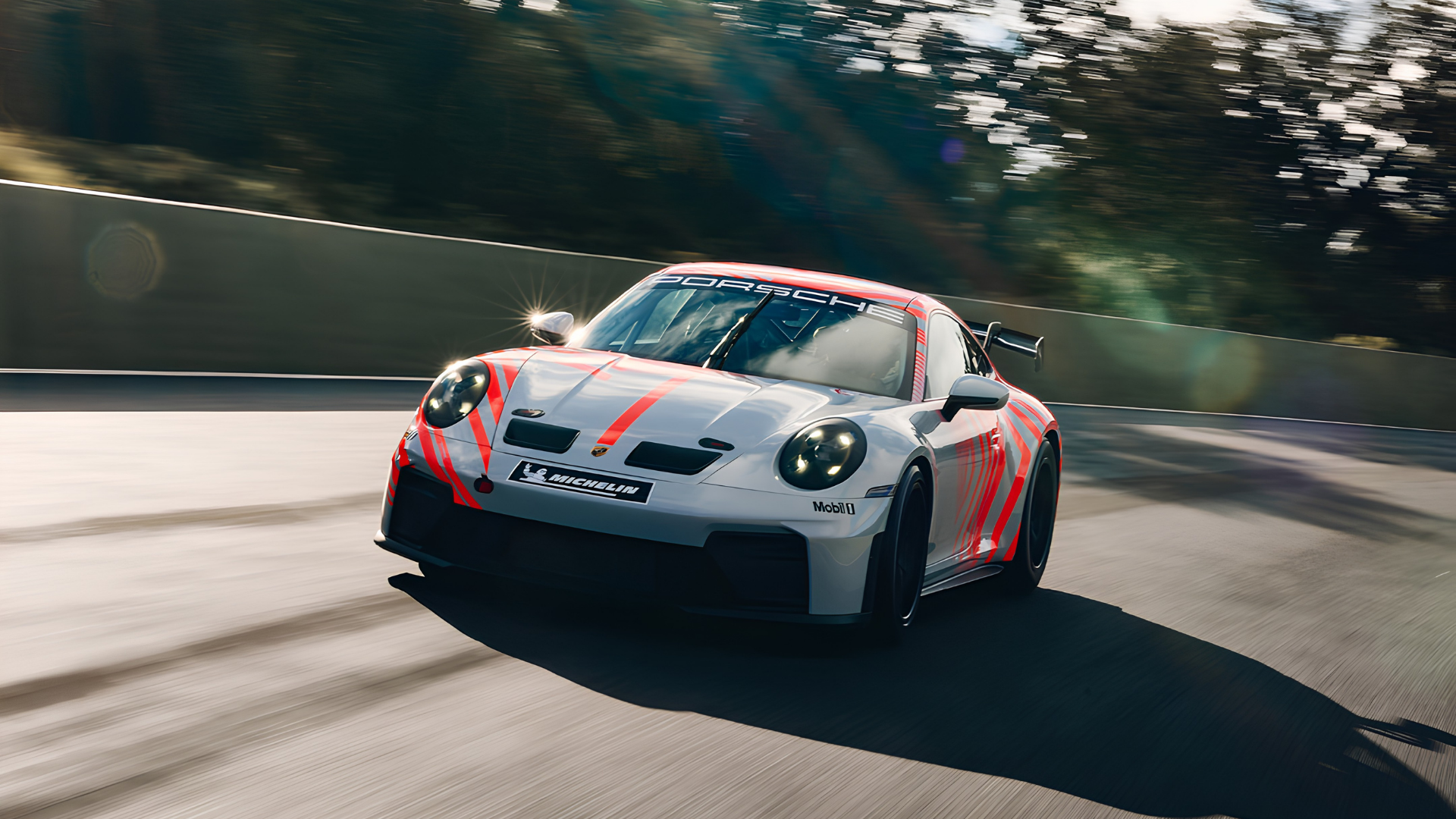
KUALA LUMPUR, AUGUST 2026 – Porsche is expanding its customer motorsport programme with the introduction of the 911 Challenge, a new competition car designed to bridge the gap between the road-going Porsche 911 GT3 and dedicated professional racing machinery.
Unveiled on August 26, 2026, the new model becomes the entry-level offering in Porsche’s 911-based customer racing hierarchy. It combines substantial production-car technology with essential motorsport equipment, giving drivers a more approachable route into competitive racing while maintaining the characteristics associated with the 911 GT3.

Unlike Porsche’s more specialised 911 Cup and GT racing cars, the 911 Challenge retains many components familiar from the road-going GT3. Porsche says this approach should reduce the learning curve for drivers moving from track-day driving into organised motorsport.
The model also replaces the role previously occupied by cars such as the Cayman GT4 Clubsport and 718 Cayman GT4 RS Clubsport as the starting point of Porsche’s customer racing ladder.
At the heart of the Porsche 911 Challenge is a high-revving 4.0-litre naturally aspirated six-cylinder boxer engine derived largely from the current production 911 GT3.
The engine produces 379 kW, or 515 PS, at 8,500 rpm, while its maximum engine speed reaches 9,000 rpm. A modified racing exhaust system retains a catalytic converter but does not require the particulate filter used in the road car.
Power is transmitted through a seven-speed PDK dual-clutch transmission, another major component carried over from the production GT3.
Drivers can choose between automatic operation and manual shifts using paddles on the steering wheel, helping the Challenge maintain a familiar driving experience while delivering the durability and performance required for racing.
The approach differs from more specialised competition models and is part of Porsche’s strategy to make the vehicle easier for newcomers to operate on track.
The 911 Challenge shares its dimensions and several major body components with the standard GT3, but beneath the familiar exterior are significant modifications for circuit competition.
Its suspension includes motorsport-specific shock absorbers, while the anti-roll bar can be adjusted through three settings. The vehicle runs on 18-inch wheels fitted with racing slick tyres, using a conventional five-hole wheel mounting arrangement.
Braking is handled by a racing system featuring 380mm steel brake discs at both the front and rear, with technology related to Porsche’s newer GT4 competition platform.
Drivers also benefit from adjustable electronic systems including ABS, traction control, Electronic Stability Control and Porsche Torque Vectoring Plus.
These systems can be configured according to driver experience and track conditions, allowing less experienced racers to progressively explore the car’s performance rather than immediately facing the demands of a completely unrestricted racing machine.
While the exterior remains recognisably related to the 911 GT3, the cabin clearly reveals the Challenge’s competition purpose.
Porsche has removed sound-deadening material, carpets and interior trim. In their place is a welded roll cage designed to strengthen the structure and protect the driver in an accident.
The car is also equipped with an adjustable racing bucket seat, six-point safety harness, fire-extinguishing system and a 110-litre FT3 racing fuel tank.
Other race-specific equipment includes an FIA-certified rear rain light, quick-release bonnet fasteners and an integrated air-jack system with three lifting points.
The rear wing can also be mechanically adjusted through four positions, allowing teams to modify aerodynamic balance according to individual circuits and driving preferences.
Despite its stripped-out racing cabin, Porsche has retained air conditioning, reflecting the manufacturer’s aim of combining professional race preparation with greater usability for customer drivers.
The 911 Challenge is strictly a competition vehicle and does not have road approval.
Porsche Motorsport says one of the main objectives behind the new car is to give a wider group of customers access to racing without requiring them to immediately step into the company’s more complex competition machines.
Thomas Laudenbach, Vice President Porsche Motorsport, said the new model expands the GT3 tradition by allowing new customer groups to experience motorsport in a 911.
Porsche also designed the car with operating and spare-parts costs in mind, positioning it below the 911 GT4 R and 911 Cup in the company’s racing hierarchy.
The Challenge therefore joins a four-model Porsche customer racing structure centred entirely around the 911.
Above it sits the 911 GT4 R, which targets international GT4 racing, followed by the 911 Cup, used in championships such as the Porsche Mobil 1 Supercup and national Carrera Cup series.
At the top of the customer GT range is the 911 GT3 R, Porsche’s FIA GT3-class competition machine used by professional customer teams around the world.
The new Porsche 911 Challenge is scheduled to become eligible for numerous one-make racing championships beginning with the 2027 season.
In Asia, Porsche has confirmed that the car can compete in series including the Porsche Sprint Trophy Thailand and Porsche Sprint Challenge Japan. Other regional championships are also expected to incorporate the model.
In North America, Porsche Motorsport has announced that the Challenge will be eligible for four Porsche one-make competitions.
For the US market, the race-ready model is being offered to 2027 one-make championship entrants at $275,000, including import and delivery.
The 911 Challenge represents an important shift in Porsche’s motorsport strategy. Instead of using the Cayman platform as the introductory step into customer racing, new competitors can now begin their progression with the company’s most famous sports-car platform.
By combining the GT3’s naturally aspirated flat-six engine, PDK transmission and familiar controls with professional safety equipment and race-developed suspension technology, Porsche is positioning the 911 Challenge as a more accessible—but still uncompromising—entry into competitive motorsport.
From track days and first races to higher levels of professional competition, Porsche’s latest customer racing programme increasingly revolves around one central platform: the 911.