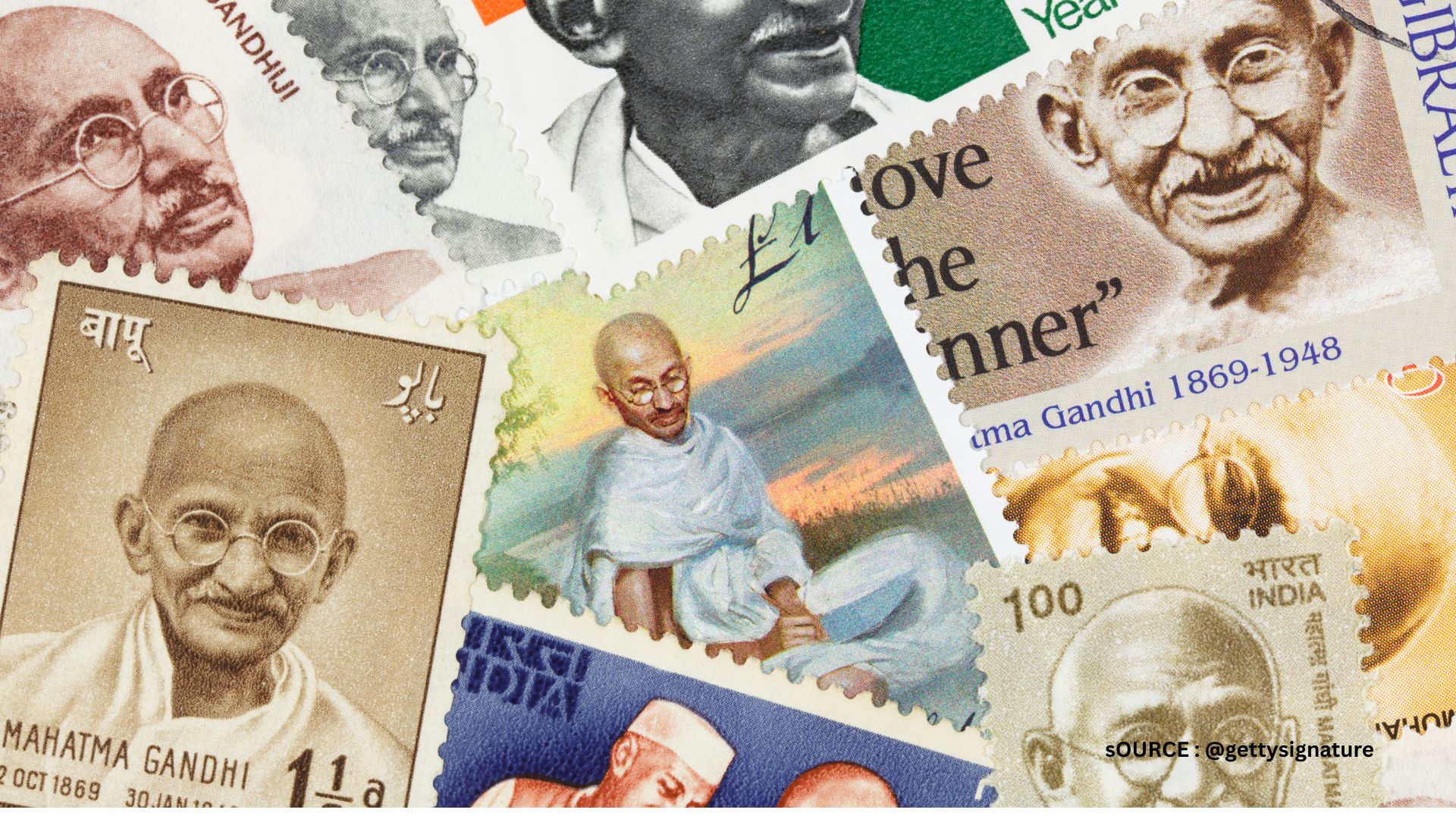
NEW DELHI, El Sky News – Decades after his passing, the influence of Mohandas Karamchand Gandhi, known globally as “Mahatma” (Great Soul), continues to resonate as a powerful force in modern social and political movements. While many leaders of his era relied on military might, Gandhi’s ascent to global icon status was built on the unconventional pillars of radical peace and moral courage.
A Revolution Without Weapons
At the heart of Gandhi’s inspiration is the concept of Satyagraha, or “truth-force.” Unlike traditional revolutions that sought to overpower enemies through violence, Gandhi sought to convert the “opponent” through the sheer power of persistence and non-violence (Ahimsa).

Historians argue that Gandhi’s primary breakthrough was proving that non-violence is not a sign of weakness, but the ultimate form of bravery. By organizing the 1930 Salt March—a 240-mile trek to protest British salt taxes—he demonstrated how simple, symbolic acts could dismantle the legitimacy of a global empire.
The Power of Living Simply
Beyond his political strategy, Gandhi’s personal lifestyle serves as a masterclass in leadership integrity. In an era of political branding, Gandhi chose a path of “voluntary poverty.” He discarded his Western legal attire for a hand-spun dhoti, weaving his own clothes on a charkha (spinning wheel).
“Gandhi didn’t just lead a movement; he became the movement,” says a modern political analyst. “His ability to align his personal life with his political message of self-reliance is what makes him authentically relatable to people across generations.”
A Global Ripple Effect
The “Gandhian Way” did not end with India’s independence in 1947. His blueprint for civil disobedience became the foundation for several major human rights movements in the 20th century:
- Martin Luther King Jr. adopted Gandhi’s methods to lead the American Civil Rights Movement.
- Nelson Mandela cited Gandhi as a vital influence in the struggle against Apartheid in South Africa.
- Environmental movements today frequently use his philosophy of “enough for everyone’s need, but not everyone’s greed” to advocate for sustainability.
The Modern Relevance
In a world increasingly polarized by digital and physical conflict, Gandhi’s message of religious pluralism and the rejection of “an eye for an eye” remains a critical reference point. His life serves as a reminder that the most lasting changes are those won through the human spirit rather than the barrel of a gun.
As the famous adage attributed to his philosophy suggests, Gandhi’s greatest gift was the lesson that to change the world, one must first possess the discipline to change oneself.