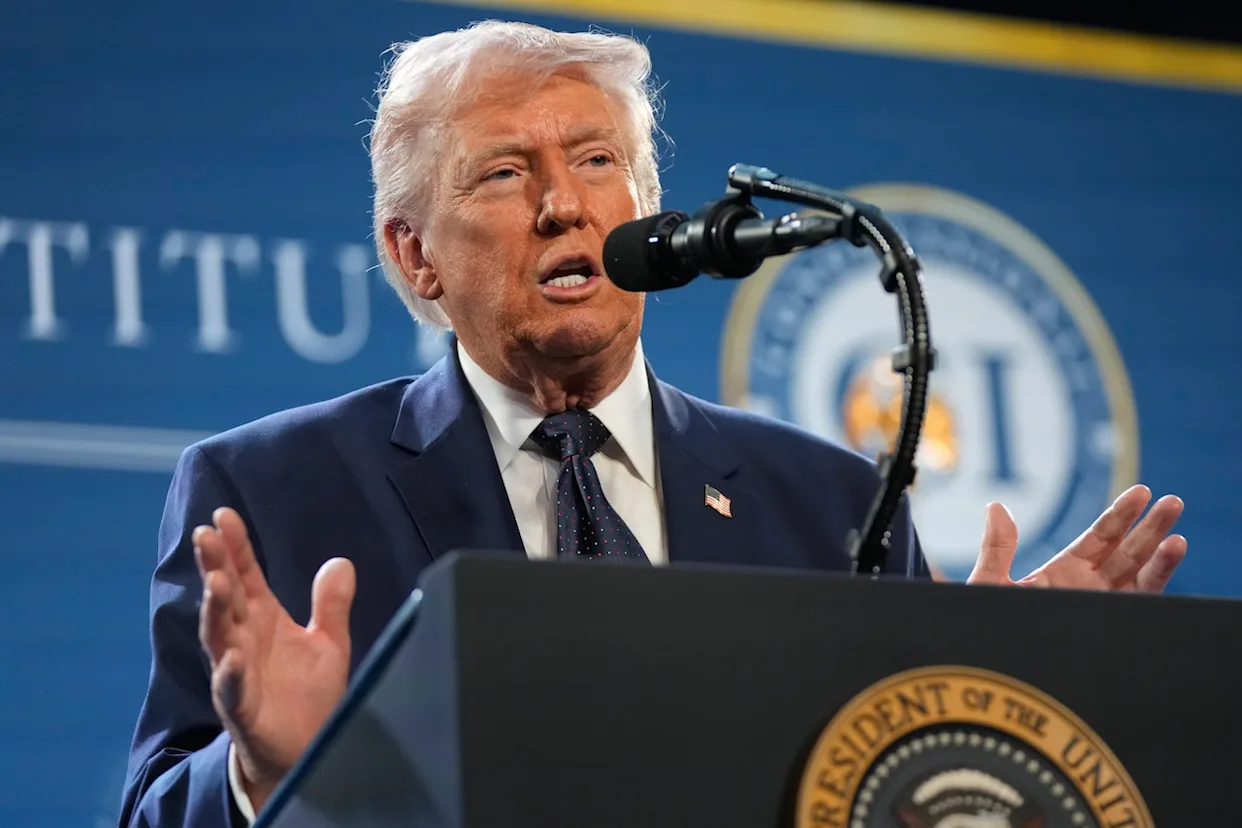
WASHINGTON, March 31 — United States President Donald Trump has warned that the US military could launch devastating strikes against critical Iranian energy facilities — including the vital oil export hub Kharg Island — if negotiations with Iran fail to produce a deal in the near future.
Trump made the remarks in a post on his social media platform, stating that the United States is currently attempting to reach an agreement aimed at ending escalating tensions in the Middle East. However, he cautioned that failure to secure a deal “shortly” could lead to severe military consequences targeting Iran’s economic and energy infrastructure.

In his message, Trump said the United States could destroy Iran’s electricity generation plants, oil wells and other strategic assets if diplomacy collapses. Among the locations specifically mentioned was Kharg Island, a small but highly strategic island in the Persian Gulf that serves as the country’s most important crude oil export terminal.
Kharg Island handles the majority of Iran’s oil shipments to international markets and is considered one of the most critical pieces of energy infrastructure in the country. The island hosts massive storage facilities, loading terminals and pipelines that allow tankers to transport Iranian crude to global buyers. Any disruption to the island’s operations could significantly affect Iran’s ability to export oil and generate revenue.
The warning comes amid growing geopolitical tensions across the Middle East and heightened concerns about global energy security. Analysts say that a military strike targeting such a key oil facility could send shockwaves through international energy markets and potentially trigger sharp increases in global oil prices.
The Persian Gulf region — where Kharg Island is located — lies close to the strategic Strait of Hormuz, one of the world’s most important oil shipping routes. A significant portion of global crude oil shipments passes through this narrow waterway, making it a critical artery for international energy trade.
Trump’s warning is also linked to ongoing disputes over regional security and maritime access in the Gulf. He has previously demanded that shipping lanes remain open for international vessels and has warned that the United States would act forcefully if global trade routes were threatened.
While Trump struck a confrontational tone, he also suggested that diplomatic efforts remain ongoing and that progress toward a deal may still be possible. “Great progress has been made,” he wrote, while emphasizing that negotiations must reach a conclusion quickly to avoid further escalation.
Iranian officials, however, have repeatedly denied that direct negotiations with Washington are currently underway. The long-standing tensions between the two countries have been shaped by disputes over nuclear policy, regional influence and economic sanctions imposed by the United States.
Foreign policy experts warn that strong rhetoric from both sides risks further destabilizing the region at a time when global markets are already sensitive to geopolitical shocks. Any direct military confrontation involving major energy infrastructure could have far-reaching consequences not only for the Middle East but also for global trade and financial markets.
Energy analysts say investors are closely monitoring developments in the region because even the possibility of disruptions to oil exports can trigger volatility in crude prices. If Iran’s export facilities were targeted or shipping routes disrupted, the impact could ripple across global supply chains and fuel markets.
For now, diplomatic channels remain uncertain, and the situation continues to evolve as international leaders call for restraint and renewed dialogue to avoid a broader conflict in one of the world’s most strategically important energy regions.