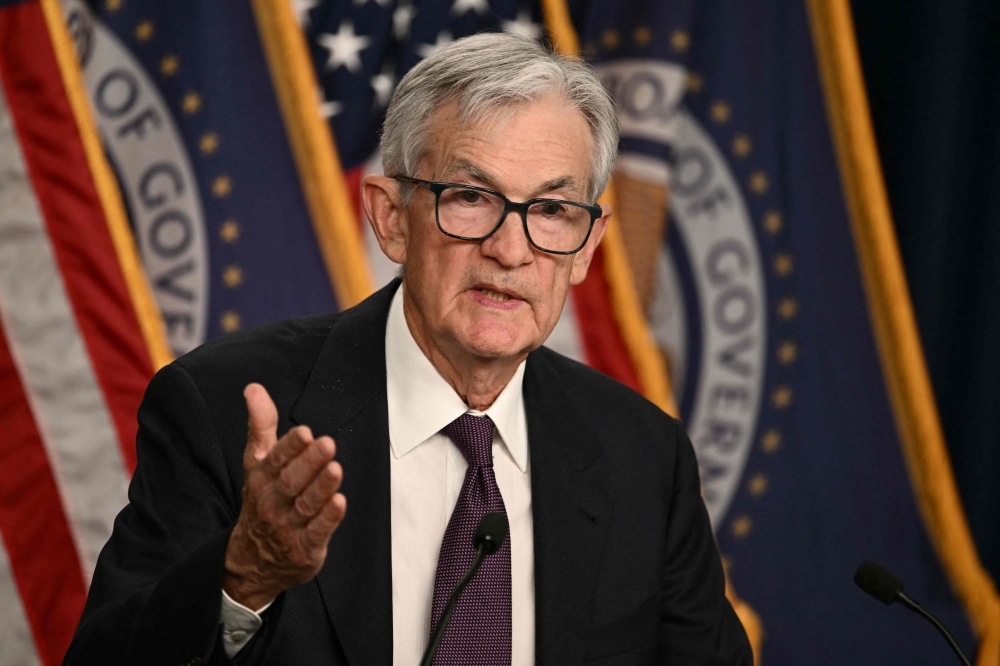
WASHINGTON, March 31 — U.S. Federal Reserve Chair Jerome Powell said Tuesday that the central bank views the current energy price surge as manageable for now, but flagged the possibility of deeper inflation risks if elevated costs begin to influence broader price expectations.
Speaking at an event at Harvard University, Powell acknowledged that the spike in energy prices — driven largely by ongoing geopolitical tensions in the Middle East — has raised uncertainties in the inflation outlook, but stressed that monetary policy changes typically take time to work through the economy.

“The tendency is to look through any kind of a supply shock,” Powell said, noting that energy shocks historically have been transient and short‑lived compared to the timeline for policy changes to influence inflation and growth.
Powell’s comments come as global oil markets have remained volatile in the wake of the U.S.–Israel strikes against Iran, which led to retaliatory actions, disruptions to supply routes, and significant fluctuations in crude prices. The Strait of Hormuz, a critical energy transit chokepoint, has been a central focus for markets fearing prolonged supply constraints.
While Powell indicated that the Fed sees little reason to immediately tighten monetary policy in response to short‑term supply shocks, he warned that the central bank would act if rising energy costs began to change inflation expectations among consumers and businesses.
Analysts say the Fed’s approach reflects a broader shift toward cautious monitoring rather than reactive tightening, as central bankers balance inflation control with concerns about economic growth and labor market stability amid external shocks. Recent comments from other Fed officials underscore this nuanced stance: some see inflation pressures building, while others urge a wait‑and‑see approach before adjusting interest rates.
Moreover, data on inflation has shown signs of resilience, with some measures remaining above the Fed’s 2% target, driven in part by energy and transportation costs — components that could have knock‑on effects if sustained.
Powell’s remarks suggest the central bank’s current policy stance — holding interest rates steady — remains appropriate for now, with officials prepared to intervene if inflation expectations become unanchored. Investors and markets have so far reacted with muted volatility, viewing the Fed’s cautious tone as a signal that policymakers are trying to navigate a complex interplay of global supply disruptions and domestic economic fundamentals.
The Fed’s position also reflects lessons from previous supply shocks, where premature policy tightening risked stifling economic growth without significantly dampening inflation rooted in external factors. Economists note that while energy price spikes can elevate headline inflation in the short term, core inflation measures — which exclude volatile energy costs — remain a central focus for long‑term strategy.
As global uncertainties persist, Powell and his colleagues are expected to continue monitoring a broad set of economic indicators before making any moves on interest rates or monetary policy adjustments.