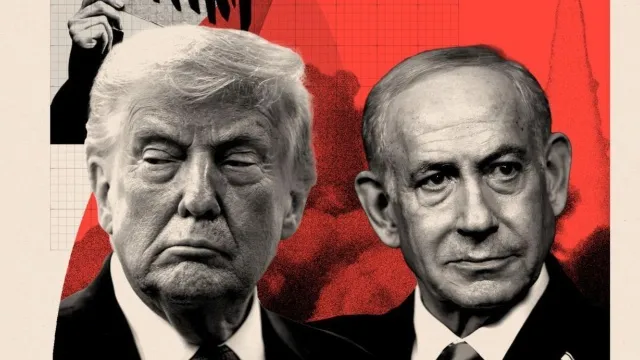
Kuala Lumpur – By all measures, the 48-hour ultimatum issued by Donald Trump to Iran is not just political rhetoric—it is a high-stakes gamble that could reshape the geopolitical and economic landscape far beyond the Middle East.
When Trump warned that “hell will rain down” if Iran fails to comply or reopen the Strait of Hormuz, the message was clear: this is no longer about negotiation leverage, but about coercion under extreme pressure. The problem is, history has repeatedly shown that ultimatums of this kind rarely lead to de-escalation—they often do the opposite.

At the center of this crisis lies the Strait of Hormuz, a narrow waterway that carries nearly a fifth of the world’s oil supply. Any disruption here doesn’t just affect Iran or the United States—it hits global markets instantly. Oil prices spike, inflation follows, and economies thousands of miles away begin to feel the pressure. In this sense, the ultimatum is not just aimed at Tehran—it indirectly puts the entire world economy on edge.
Iran, on the other hand, is unlikely to respond under pressure without resistance. For Tehran, reopening Hormuz under threat could be seen as a sign of weakness, something that carries both domestic and regional political consequences. This creates a dangerous deadlock: one side demanding compliance, the other unwilling to concede.
What makes the situation even more fragile is the broader context of escalating conflict. Following joint strikes earlier this year and retaliatory attacks across the region, tensions are already at a boiling point. Adding a strict deadline into this environment is like introducing a countdown timer into an already unstable system.
There is also a strategic contradiction in play. While the ultimatum is intended to assert dominance and control, it may instead expose limits of influence. If Iran refuses to comply—and the U.S. follows through—the result could be a wider regional war. If the U.S. does not follow through, it risks weakening its own credibility on the global stage.
In both scenarios, the costs are high.
For global markets, especially energy and commodities, this is a moment of extreme sensitivity. Gold tends to surge in times of uncertainty, while oil markets react almost instantly to any perceived risk around Hormuz. For traders and investors, this is not just news—it’s a signal.
Ultimately, the real question is not whether the ultimatum will work, but what comes after the 48 hours expire. Because in geopolitics, deadlines don’t just end—they trigger consequences.
And this one could be felt worldwide.