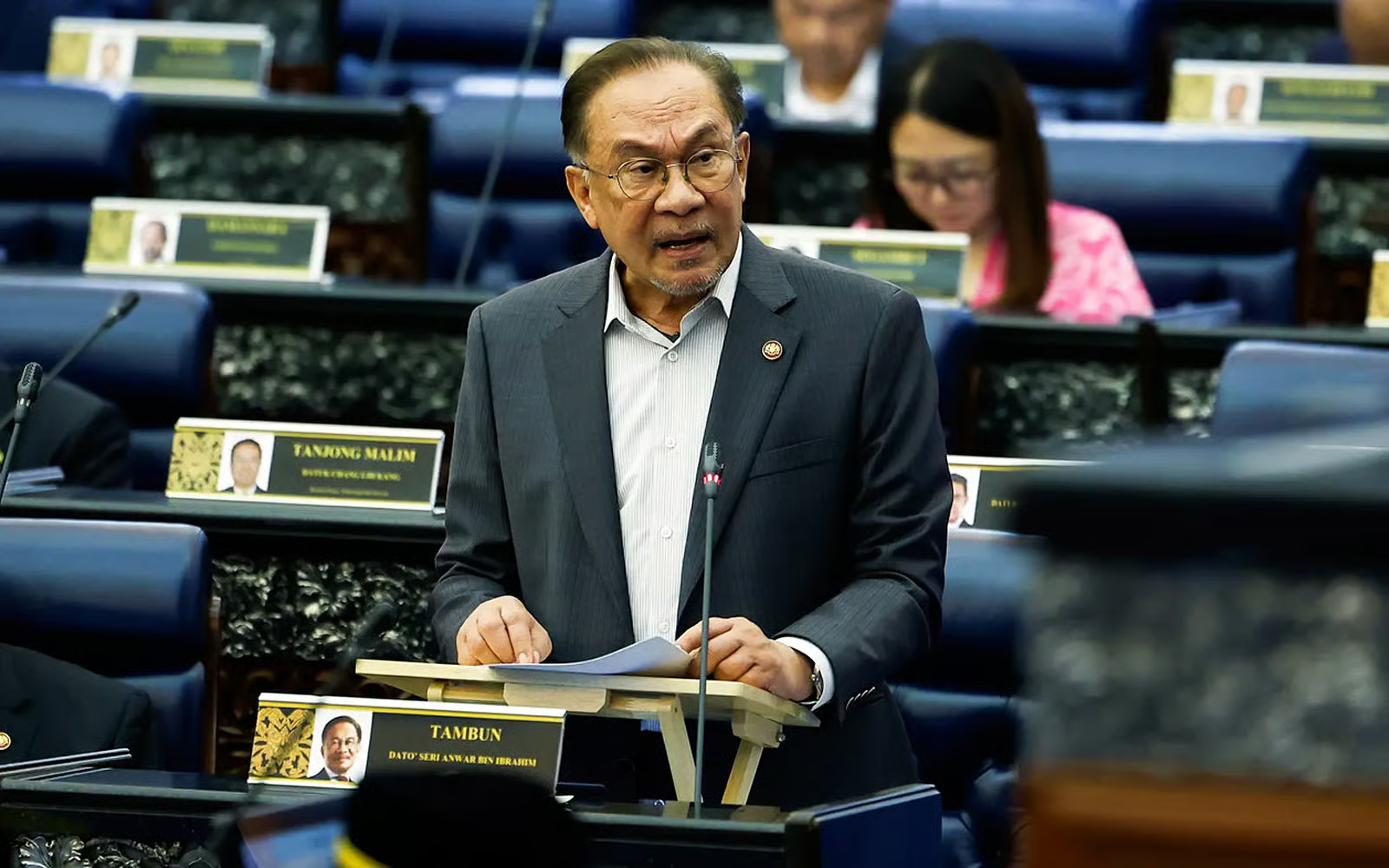
Kuala Lumpur – In an increasingly volatile global geopolitical landscape, the leadership of Anwar Ibrahim is being tested at a particularly critical moment. The escalation of conflict in the Middle East, especially involving Iran between March and April 2026, is not merely a regional issue—it carries the potential to disrupt economic and security stability worldwide, including in Malaysia.
Amid these pressures, Anwar’s approach stands out as measured rather than reactive. He combines active diplomacy on the international stage with efforts to reinforce domestic resilience, creating a balance that is rarely achieved in times of global uncertainty. This reflects a leadership style that not only understands the situation but is also capable of anticipating its long-term implications.

His decision to remain committed to a non-aligned foreign policy is not just a political stance, but a strategic move to preserve Malaysia’s flexibility amid the competing interests of major global powers. Within the regional context, Malaysia’s role in the Association of Southeast Asian Nations has also become more prominent as a rational and stabilizing force—one that avoids polarization while maintaining relevance in safeguarding regional stability.
On the economic front, the government’s move to leverage Malaysia’s position as a net energy exporter demonstrates a sharp and opportunistic reading of the crisis. While many countries struggle under rising oil prices, Malaysia has been able to turn this challenge into a fiscal buffer. Revenues from PETRONAS are being optimized to support domestic stability—an approach that is both defensive and adaptive.
Importantly, this strategy extends beyond macroeconomic policy. There is clear continuity down to grassroots-level measures, particularly in protecting household purchasing power. The commitment to maintaining fuel subsidies despite fiscal pressures sends a strong signal that the government remains focused on safeguarding the welfare of its people.
Domestically, the narrative being built is not merely populist. Anwar has chosen a path of transparent and realistic communication, encouraging the public to understand the consequences of global developments without inciting panic. This reflects a mature leadership approach—one that prioritizes both honesty and social stability.
Against this backdrop, the following are the key programs and strategies implemented under Anwar Ibrahim’s leadership:
1. Active and Balanced Geopolitical Diplomacy
Malaysia maintains a non-aligned stance while engaging directly with key global players. Dialogue with Iran aims to mitigate potential spillover effects, while strategic coordination with Prabowo Subianto strengthens regional supply chain resilience. At the ASEAN level, Malaysia continues to position itself as a moderate and consistent voice.
2. Energy-Based Economic Protection Strategy
Rising global oil prices are utilized as an economic buffer. Energy revenues are channeled to balance fiscal pressures and maintain control over domestic prices. At the same time, the government demonstrates caution by opening the possibility to reassess 2026 economic growth projections in light of ongoing uncertainty caused by the Middle East conflict. This reflects an adaptive approach, in which Malaysia seeks to align its economic strategy realistically with evolving global dynamics.
3. Strengthening National Security and Stability
Instructions to agencies such as the Polis Diraja Malaysia reflect heightened vigilance against potential external threats. Concurrently, efforts to reinforce regional identity and strategic cooperation with neighboring countries serve as a broader political and cultural safeguard.
4. Social Protection and Cost of Living Measures
Fuel subsidies are maintained despite their significant fiscal burden, ensuring that citizens are shielded from the direct impact of global inflation. The government also actively communicates the realities of global conflict—such as disruptions in trade routes—to help the public prepare without fostering panic, while continuing humanitarian assistance to conflict-affected regions as a reflection of moral consistency.
Overall, the policy direction reflects a structured and composed leadership approach: resilient at home, yet proactive abroad. In a time defined by uncertainty, these decisions demonstrate a careful balance between decisiveness and prudence—laying a strong foundation for Malaysia’s stability and resilience moving forward.