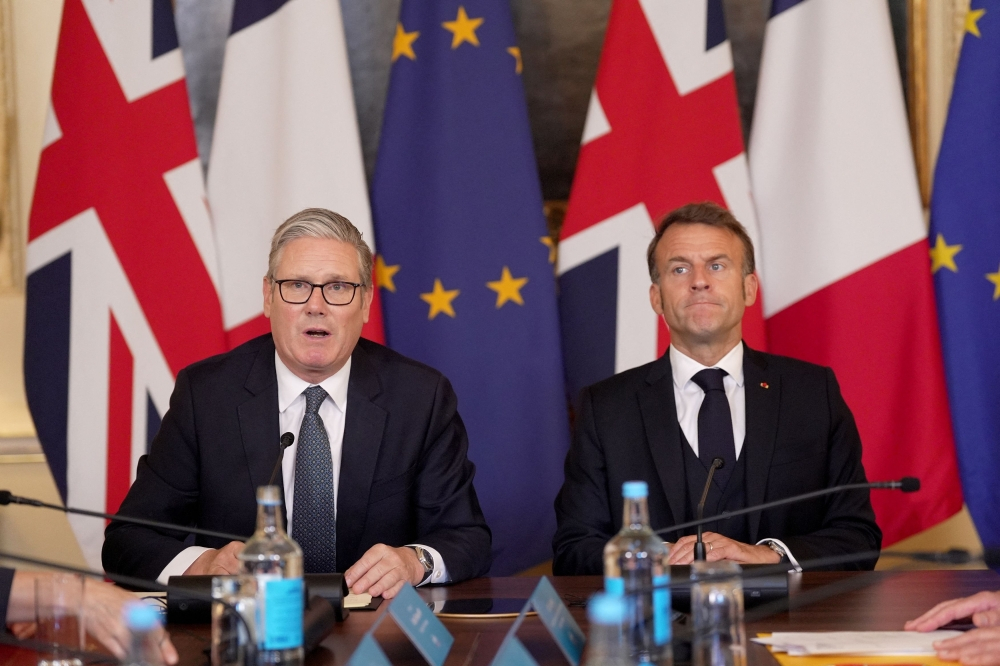
KUALA LUMPUR, APRILL — French President Emmanuel Macron and British Prime Minister Keir Starmer are set to lead a major international summit this Friday focused on restoring safe maritime navigation through the Strait of Hormuz, one of the most critical oil transit routes in the world.
The high-level meeting comes at a time of heightened global concern, as ongoing tensions linked to the United States–Iran conflict continue to disrupt shipping lanes, threaten energy supplies, and fuel volatility across global markets.

The Strait of Hormuz is widely regarded as one of the most strategically important waterways on the planet, with nearly one-fifth of the world’s oil supply passing through it daily.
Recent military activity, increased surveillance, and tightening controls in the region have significantly reduced safe passage for commercial vessels. Shipping companies have reported rising insurance costs, delayed routes, and growing safety risks for crews navigating the corridor.
As a result, global oil markets have reacted sharply, with price spikes and supply uncertainty affecting both developed and emerging economies.
The summit led by France and the United Kingdom is expected to bring together representatives from dozens of countries, including major energy importers, exporters, and maritime stakeholders.
According to diplomatic sources, the initiative will focus on establishing a coordinated multinational framework to restore confidence in the shipping route.
Key agenda items include:
- Reopening safe maritime corridors for commercial vessels
- Coordinating naval presence for escort and monitoring missions
- Enhancing intelligence-sharing among participating countries
- Establishing communication channels to prevent accidental escalation
European officials have emphasized that the mission will be defensive in nature, aimed solely at protecting navigation and not escalating military confrontation.
The leadership of Emmanuel Macron and Keir Starmer reflects a broader European effort to position itself as a stabilizing force in the crisis.
Unlike the more aggressive posture adopted by Washington, European nations are prioritizing diplomacy, coordination, and multilateral engagement.
Analysts note that this approach seeks to:
- Reduce the risk of direct military confrontation
- Maintain neutrality while ensuring global trade continuity
- Protect European economic interests tied to energy imports
The summit is also expected to explore diplomatic channels that could complement ongoing efforts to ease tensions between the United States and Iran.
Disruptions in the Strait of Hormuz have already had profound consequences for the global economy.
Key impacts include:
- Surging oil prices, affecting fuel costs worldwide
- Supply chain disruptions, particularly in energy-dependent industries
- Rising inflation, driven by higher transportation and production costs
- Market volatility, as investors react to geopolitical uncertainty
Energy-importing nations, particularly in Asia and Europe, have been among the hardest hit, facing increased costs and potential shortages.
Meanwhile, oil-exporting countries are navigating a complex landscape of higher revenues but increased geopolitical risk.
Efforts to restore navigation are complicated by ongoing geopolitical tensions in the region.
The United States has maintained a strong military presence and implemented measures targeting Iranian oil exports, while Iran has responded by increasing its control and monitoring of maritime traffic.
This has created a fragile environment where even minor incidents could escalate into broader conflict.
Additionally, coordination among multiple nations with differing strategic interests presents a significant diplomatic challenge.
Global shipping companies and energy firms are closely watching developments from the summit.
Many operators have already begun rerouting vessels or reducing exposure to the region due to safety concerns.
Insurance premiums for ships passing through the strait have surged, further increasing operational costs and impacting global trade flows.
Industry leaders are calling for:
- Clear security guarantees
- Transparent communication from authorities
- Rapid implementation of protective measures
The Macron–Starmer-led summit represents a critical moment in the international response to the Strait of Hormuz crisis.
If successful, it could:
- Restore confidence in global energy supply routes
- Stabilize oil prices and financial markets
- Reduce the risk of further military escalation
However, failure to reach consensus or implement effective measures could prolong uncertainty and deepen the economic impact worldwide.
As global attention turns to the outcome of the summit, the stakes remain exceptionally high—not just for regional stability, but for the entire global economy.