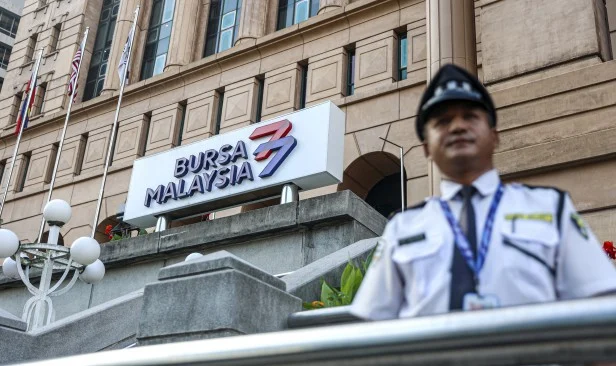
KUALA LUMPUR,MEI,2026 FTSE Bursa Malaysia KLCI ended Wednesday’s trading session slightly higher after Bank Negara Malaysia announced that it would maintain the Overnight Policy Rate (OPR) at 2.75%, a move widely expected by economists and financial analysts. The central bank’s latest decision reflects its ongoing effort to support sustainable economic growth while keeping inflation under control amid an increasingly uncertain global environment.
The decision marked the fifth consecutive monetary policy meeting in which Bank Negara Malaysia kept the benchmark interest rate unchanged. According to analysts, the move indicates that policymakers remain comfortable with the country’s current economic trajectory despite concerns surrounding geopolitical tensions, commodity price fluctuations, and slowing global demand.

Following the announcement, Bursa Malaysia showed modest gains as investors responded positively to the central bank’s stable policy stance. Market sentiment was supported by expectations that stable borrowing costs could continue encouraging consumer spending, business activity, and investment growth across key sectors of the Malaysian economy.
Bank Negara Malaysia stated that the current monetary policy remains “appropriate and supportive” of price stability and long-term economic expansion. The central bank also highlighted that Malaysia’s economic fundamentals continue to remain strong, supported by domestic demand, labour market improvements, and resilient household spending.
Recent economic indicators suggest that Malaysia’s economy maintained healthy momentum during the first quarter of 2026. Preliminary estimates showed the country’s gross domestic product (GDP) expanded by approximately 5.3% year-on-year, reinforcing expectations that Malaysia could achieve full-year growth between 4% and 5% in 2026.
However, Bank Negara also warned that ongoing geopolitical conflicts, particularly tensions in the Middle East involving Iran, could create additional risks for the global economy and financial markets. Rising commodity and oil prices linked to the conflict may increase production costs and inflationary pressures globally, including in Malaysia.
Despite these concerns, inflation in Malaysia has remained relatively moderate so far. Headline inflation averaged around 1.6% during the first quarter of 2026, while core inflation stood at approximately 2.1%, according to the central bank. Policymakers believe domestic price pressures remain manageable at the moment, although external risks continue to be closely monitored.
Economists noted that the stable OPR decision also reflects Bank Negara’s cautious approach toward balancing growth and inflation. A lower interest rate environment generally helps businesses and consumers by keeping financing costs manageable, which can support spending activity and investment expansion.
At the same time, analysts believe the central bank may still face pressure to adjust monetary policy later in the year if inflation rises significantly due to higher fuel prices or stronger global commodity costs. Some economists have warned that prolonged geopolitical tensions could eventually increase subsidy burdens and operational costs within Malaysia’s economy.
The banking, consumer, and industrial sectors were among the areas closely watched by investors following the OPR announcement. Financial market observers expect stable interest rates to continue benefiting sectors dependent on consumer financing and corporate lending activity.
Meanwhile, the Malaysian ringgit remained relatively stable following the decision, reflecting investor confidence in the country’s broader economic outlook and monetary policy direction. Analysts said Malaysia’s strong domestic fundamentals continue to provide resilience against external market shocks compared to several regional economies.
As global economic uncertainty continues throughout 2026, investors are expected to closely monitor future signals from Bank Negara Malaysia regarding inflation trends, subsidy reforms, global oil prices, and broader geopolitical developments that could influence the country’s financial markets in the coming months.