KUALA LUMPUR, MAY, 2026 – China recorded a 14.1% increase in exports in April 2026, marking a strong rebound in its external trade performance despite a highly volatile global environment shaped by ongoing geopolitical tensions and economic disruption linked to conflict conditions in key regions.
The data indicates that Chinese exports not only recovered from weaker performance in previous months but also exceeded analysts’ expectations, reinforcing the resilience of the country’s manufacturing and export-driven economy.

War-Driven Global Uncertainty Boosts Short-Term Demand
Economists suggest that part of the export surge was driven by global stockpiling behavior, as international buyers increased orders in anticipation of higher input costs caused by ongoing conflicts affecting global energy and shipping routes.
Concerns surrounding war-related disruptions have pushed companies in Europe, Asia, and the Americas to secure goods earlier than usual, particularly in:
- Electronics and semiconductors
- Industrial machinery
- Automotive components
- Refined and manufactured goods
This “front-loading” effect has helped boost China’s export figures in the short term, even as long-term demand risks remain.
Strong Manufacturing Base Supports Export Performance
China’s export strength continues to be supported by its vast industrial base and dominance in global manufacturing supply chains.
Key contributing sectors include:
- High-end electronics and semiconductors
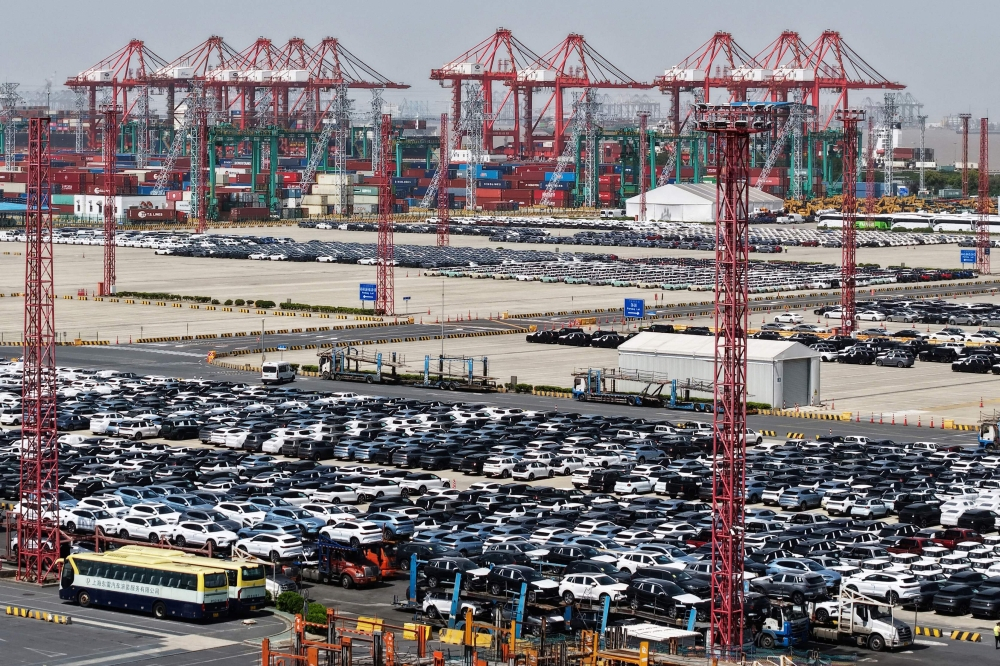
- Electric vehicles and automotive parts
- Machinery and industrial equipment
- Consumer electronics and appliances
Despite external pressure from tariffs and geopolitical tensions, China has maintained strong production capacity and competitive pricing, allowing it to sustain export momentum.
Impact of Global Energy Crisis and Conflict
The ongoing global conflict, particularly in energy-sensitive regions, has contributed to rising oil prices and increased transportation costs worldwide.
This has created a mixed effect on China’s trade:
- Positive: Increased short-term demand due to stockpiling
- Negative: Higher shipping and production costs
- Uncertain: Long-term global demand stability
Earlier reports showed that war-related disruptions had already slowed export momentum in previous months, with March growth dropping sharply before April’s rebound.
Trade Recovery Follows Earlier Slowdown
Prior to the April rebound, China’s export growth had slowed significantly in early 2026, with weaker performance recorded in March due to global economic pressure and rising energy costs.
That slowdown reflected:
- Higher global inflation
- Energy supply disruptions
- Weakening consumer demand in some regions
- Supply chain uncertainty
However, the April data suggests a temporary recovery driven by external demand rather than a structural shift in global trade conditions.
Imports Also Rising, Trade Surplus Expands
Alongside export growth, China also recorded strong import activity, indicating continued domestic industrial demand and supply chain activity.
This has contributed to a widening trade surplus, reflecting:
- Strong export competitiveness
- Stable industrial production
- Continued global reliance on Chinese goods
However, analysts warn that rising import costs linked to global energy prices may pressure future margins.
Economic Outlook Remains Mixed
While the April export figures are strong, economists caution that the outlook remains uncertain due to ongoing geopolitical and economic risks.
Key concerns include:
- Prolonged global conflict affecting trade routes
- Rising energy and logistics costs
- Weak domestic consumption in China
- Potential slowdown in global demand
- Trade tensions with major economies
Some analysts believe current export strength may not be sustainable if global instability continues or worsens.
China’s 14.1% export growth in April 2026 demonstrates remarkable resilience in its trade sector despite global war-related economic pressure and uncertainty.
However, while short-term demand remains strong due to stockpiling and industrial reliance on Chinese manufacturing, the long-term outlook will depend heavily on geopolitical stability, energy market conditions, and global economic recovery trends.
For now, China continues to play a central role in global trade, even as the world economy faces increasing pressure from conflict and uncertainty.