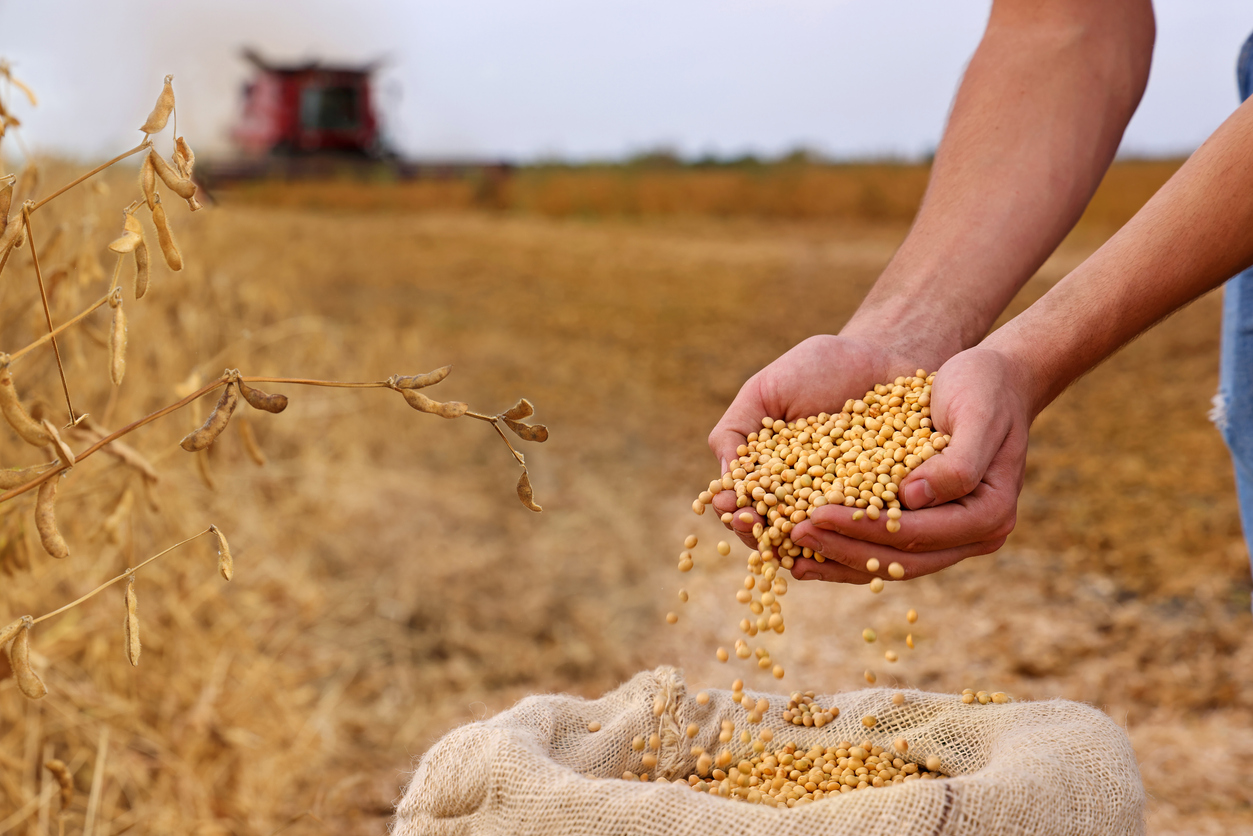
KUALA LUMPUR, May 2026 — Soybean and corn futures rose after the United States said China is expected to increase purchases of American agricultural products following high-level talks between US President Donald Trump and Chinese President Xi Jinping in Beijing.
The market reaction came after US Trade Representative Jamieson Greer said China is expected to commit to “double-digit billion” purchases of US farm goods annually over the next three years. Greer said the expected buying would not be limited to soybeans, but would cover a broader range of agricultural products.

According to Bloomberg’s report republished by Livemint, soybean futures in Chicago rose as much as 0.8%, while corn futures climbed as much as 1.3%. Wheat also edged higher as traders reacted to signs of stronger Chinese demand for US crops.
The gains followed comments from Greer and Trump suggesting that China would buy more American farm products. Trump also said China would be looking at “a lot of soybeans” for US farmers, adding to expectations that agriculture could become one of the more immediate trade deliverables from the Beijing summit.
Greer said the US and China already have an agreement for China to buy 25 million metric tons of soybeans annually over the next few years. He added that any new agreement would cover not only soybeans, but also “everything else,” pointing to a wider agricultural package.
Reuters reported that the existing soybean commitment was agreed last October and that the US now expects additional agricultural purchases worth double-digit billions of dollars per year over the next three years. However, it remains unclear which products will be included and whether the latest figure mostly reflects the existing soybean commitment or genuinely new purchases.
The development is important for US farmers because China is the world’s largest soybean buyer and one of the most important destinations for American agricultural exports. Soybeans have long been central to US-China trade talks, especially during both Trump administrations.
Even so, traders remain cautious. Reuters reported that markets did not expect Beijing to increase its soybean target beyond the previously agreed 25 million metric tons per year, especially because China is dealing with weak domestic demand and cheaper supplies from Brazil.
China has also reduced its reliance on US soybeans over the years. Reuters said China sourced about 20% of its soybeans from the US in 2024, down from 41% in 2016. Last year, the US share fell further to around 15%, showing how much Brazil and other suppliers have gained market share.
This is why the market is watching not only soybeans, but also other crops. Reuters reported earlier this week that traders expected any new farm deal to include possible purchases of corn, sorghum, milling wheat, beef and poultry, rather than a major new soybean commitment alone.
Bloomberg also reported that Chinese officials had been discussing purchases of US corn, along with products such as sorghum and distillers dried grains, ahead of Trump’s China visit. Soybeans were also part of the discussions, but the potential for additional demand appeared broader than one commodity.
For grain markets, the key issue is whether China’s buying will be large enough, fast enough and specific enough to support prices beyond the initial rally. Traders are still waiting for details on exact volumes, shipment schedules, product categories and whether Beijing will reduce tariffs or other barriers that have limited private Chinese buyers.
Greer said most soybean sales are expected later in the year, which would match normal seasonal patterns. China typically books US soybean supplies after the American harvest begins around September, when US soybeans become more competitive in the global market.
If China follows through, the purchases could help support US farmers after years of uncertainty caused by trade tensions, tariffs and competition from South American suppliers. Stronger Chinese demand could also improve sentiment across the US grain market, especially if purchases extend to corn and other crops.
However, analysts are likely to remain careful until firm commitments are confirmed. Past US-China trade announcements have sometimes moved markets quickly, but traders usually look for actual purchase orders, shipping data and customs figures before treating the demand as fully priced into the market.
The latest rise in soybean and corn futures shows that markets welcomed the signal from Washington, but the rally remains dependent on follow-through from Beijing. Without clear purchase volumes or timing, the gains could remain limited.
For the Trump administration, the expected farm purchases could be presented as a political and economic win for US farmers. Agriculture has often been one of the more visible parts of US-China trade negotiations because crop exports directly affect rural states and commodity prices.
For China, buying more US farm goods could help ease trade tensions while also supporting food supply needs. However, Beijing is also likely to balance purchases against domestic demand, price competitiveness, strategic reserves and its long-term preference to diversify supply sources.
Overall, the latest development suggests that agriculture remains one of the most practical areas for US-China trade cooperation. Soybeans and corn rose because traders saw a stronger chance of renewed Chinese buying, but the market is still waiting for the most important details: what China will buy, how much it will buy, and when the shipments will begin.