KUALA LUMPUR,MAY,2026 – Malaysia’s participation in the BRICS Foreign Ministers’ Meeting has strengthened the country’s position in the intergovernmental grouping, Foreign Minister Datuk Seri Mohamad Hasan said.
Mohamad, also known as Tok Mat, said Malaysia’s presence at the meeting helped expand the country’s role in promoting multilateral cooperation and advancing the interests of developing nations on the global stage. The meeting was held in New Delhi on May 14 and 15.

According to Mohamad, one of the key issues discussed was the importance of defending multilateralism in international relations at a time of growing geopolitical uncertainty. He said the theme of this year’s meeting was closely aligned with Malaysia’s foreign policy, which continues to place multilateralism at the centre of relations between nations.
Malaysia also used the platform to stress that the United Nations should be strengthened as the main institution for managing global relations and addressing international challenges. Mohamad said Malaysia wants the principles of multilateralism to be maintained and reinforced, especially as the world faces rising instability and competing geopolitical interests.
The BRICS meeting also touched on the crisis in West Asia, including tensions in the Strait of Hormuz, which have affected the global economy and the ASEAN region. Mohamad said Malaysia wants the crisis to end as soon as possible, while stressing the need for dialogue, diplomacy and respect for international law.
On trade, Mohamad said he represented Malaysia in calling for stronger intra-BRICS trade so that the country can expand economic cooperation with BRICS member states. He also held meetings with counterparts from Iran, Russia, India, Egypt, the United Arab Emirates, Cuba and Thailand to explore ways to strengthen economic ties and trade cooperation.
Malaysia’s participation is significant because BRICS has become an increasingly influential platform for developing economies and the Global South. The grouping now includes Brazil, Russia, India, China, South Africa, Egypt, Ethiopia, Iran, the United Arab Emirates and Indonesia, while Malaysia became a BRICS Partner Country on January 1, 2025.
Speaking earlier during the BRICS Partners’ Foreign Ministers’ Meeting, Mohamad called for stronger cooperation among BRICS members and partner countries to build a more resilient, inclusive and sustainable global order. He said the world is facing weakened global institutions, rising geopolitical conflict, unstable energy markets and disruptions to global supply chains.
Mohamad said BRICS has the potential to strengthen global resilience through greater intra-trade and cross-investment. He added that the grouping could help build a diversified and dependable global supply chain that is better able to withstand shocks.
Beyond trade, Malaysia also highlighted the importance of digital transformation. Mohamad said deeper BRICS cooperation is needed in areas such as artificial intelligence, digital public infrastructure, fintech systems and digital skills development so that technological progress benefits all countries more equitably.
He also stressed the importance of sustainable development and green finance, saying green financing should move from the margins to the centre of global development planning. Mohamad said institutions such as the New Development Bank have a critical role in ensuring financing remains fair, accessible and responsive to the needs of the Global South.
Malaysia also discussed bilateral priorities during the New Delhi visit. Mohamad said India remains an important partner in trade, pharmaceuticals and tourism, while both sides also discussed efforts to improve connectivity and people-to-people ties. He also said Malaysia aims to position Egypt as a gateway to the North African market.
In a related development, Mohamad said Iran had assured Malaysia that Malaysian vessels face no issues passing through the Strait of Hormuz. However, he noted that heavy congestion following the recent closure of the strategic waterway has caused longer transit times, with more than 2,000 vessels reportedly stranded.
The broader BRICS meeting was held against a tense geopolitical backdrop. Reuters reported that the meeting ended without a joint statement after divisions emerged over the conflict involving Iran, the United States and Israel, with India issuing only a chair’s statement that reflected differing views among members.
Despite those divisions, Malaysia’s participation allowed the country to reinforce its diplomatic position as a bridge between ASEAN, BRICS partners and the wider Global South. For Putrajaya, the platform offers another avenue to promote economic cooperation, defend multilateralism and strengthen Malaysia’s role in global discussions.
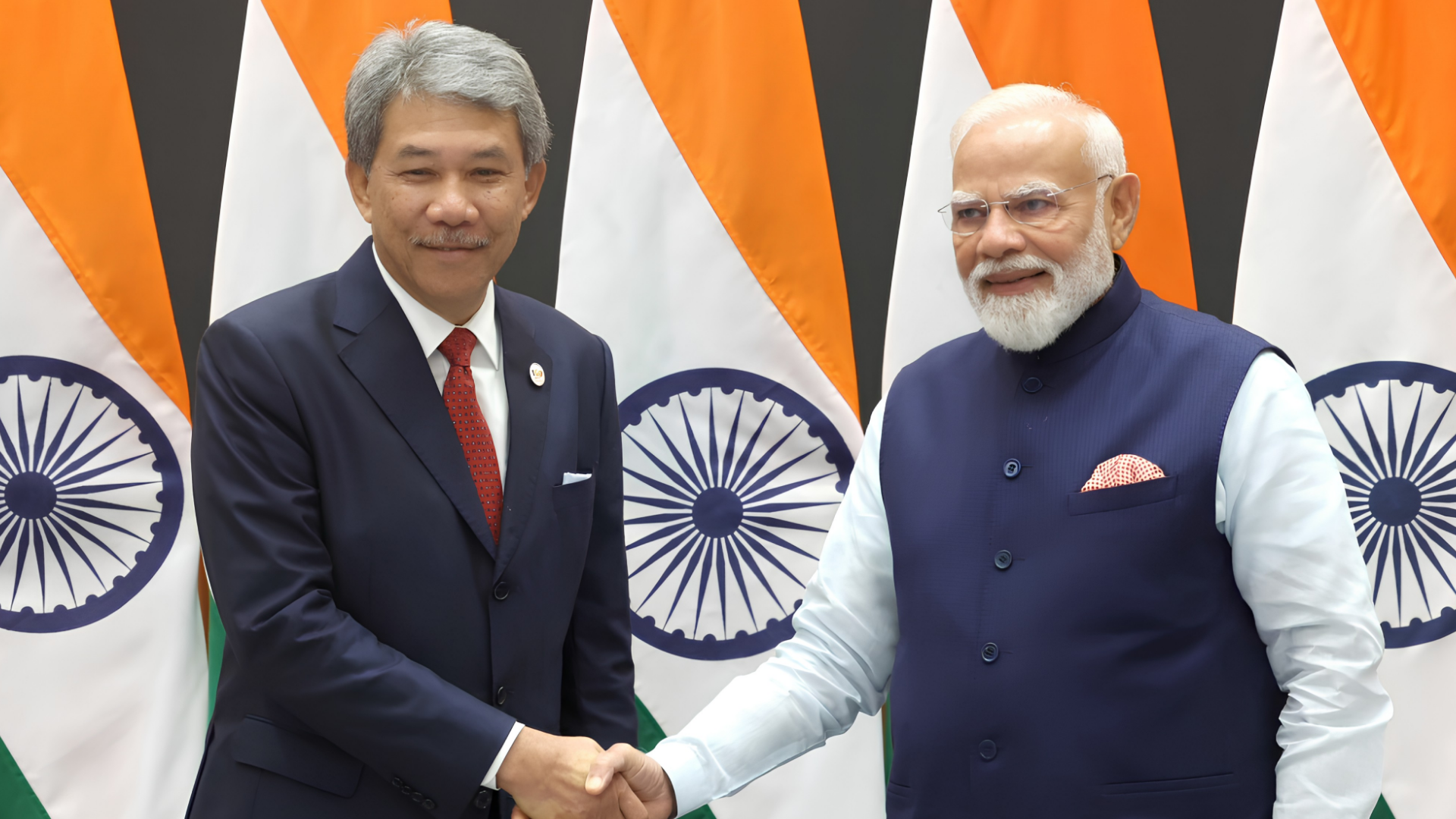
Mohamad concluded his working visit after participating in four main programmes, including a courtesy call on Indian Prime Minister Narendra Modi, two statements, an official dinner and seven bilateral meetings on the sidelines. The Foreign Ministers’ Meeting also served as a key platform ahead of the BRICS Summit scheduled in New Delhi on September 12 and 13.
Overall, Malaysia’s message at the BRICS Foreign Ministers’ Meeting was clear: stronger multilateral cooperation, fairer global institutions, deeper trade links and inclusive development are needed to help developing nations navigate a more uncertain world.