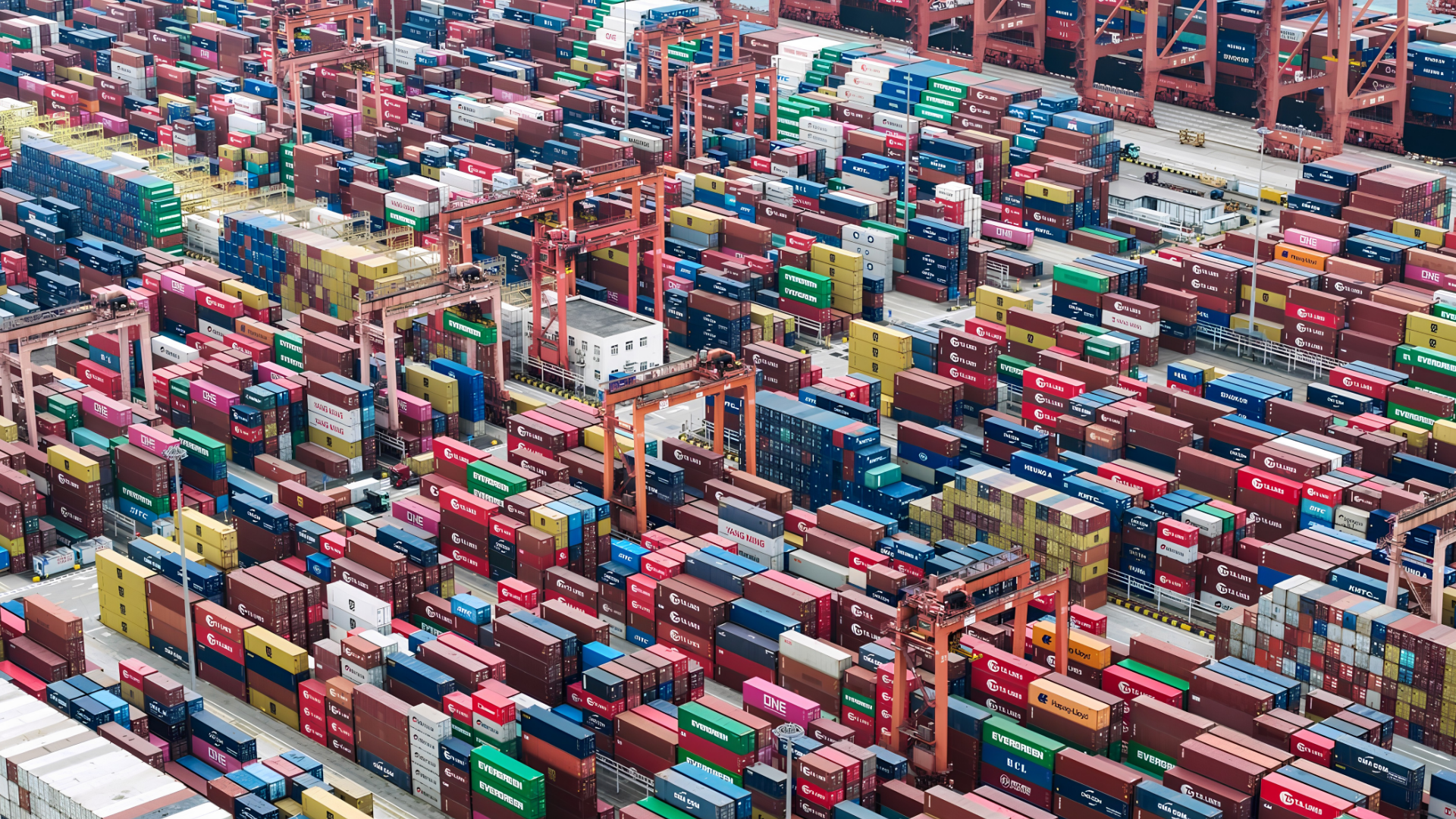
KUALA LUMPUR, May,2026 — The European Union is considering tougher trade measures against China as officials become increasingly concerned that a surge of Chinese exports could weaken European industries and deepen the bloc’s trade imbalance with Beijing.
According to Bloomberg, EU officials are preparing discussions on which trade instruments member states may be willing to use against China’s manufacturing overcapacity. The talks are also expected to examine whether the EU needs new measures and how far it is prepared to go in using its strongest trade tools, including the anti-coercion instrument.

The move comes as Brussels faces growing pressure from European manufacturers, who argue that cheaper Chinese goods, supported by state subsidies and industrial overcapacity, are flooding global markets and making it harder for EU companies to compete. Concerns have grown across sectors such as electric vehicles, batteries, solar panels, chemicals, machinery and other industrial goods.
The EU’s trade deficit with China has become a major political and economic issue. Eurostat data showed that the EU exported €199.6 billion worth of goods to China in 2025 but imported €559.4 billion, resulting in a trade deficit of €359.8 billion. Compared with 2024, EU exports to China fell 6.5 per cent, while imports from China rose 6.4 per cent.
This imbalance has strengthened calls within the EU for a stronger response. European Trade Commissioner Maroš Šefčovič has previously described the EU-China trade imbalance as unsustainable, saying China should not continue benefiting from low-tariff access to European markets while restricting access for European companies in China.
Among the measures reportedly being considered are stronger trade defence actions, possible punitive tariffs, tighter rules on supply chain dependence and new safeguards to protect European industries from sudden import surges. Reuters, citing the Financial Times, reported that the EU is also looking at rules that would require companies in critical sectors to diversify away from excessive reliance on Chinese suppliers.
Under those proposals, companies in sectors such as chemicals and industrial machinery may be required to source key components from multiple suppliers across different countries, instead of relying heavily on one dominant supplier. The aim is to reduce Europe’s vulnerability to supply disruptions and prevent China from using its control over key materials or components as economic leverage.
The issue has become more urgent after China tightened export controls on strategic materials and technologies, including minerals used in semiconductors, electric vehicles and defence-related industries. European officials are increasingly worried that dependence on Chinese supply chains could become a national security risk as well as an economic problem.
One of the strongest tools available to Brussels is the Anti-Coercion Instrument, which entered into force on December 27, 2023. The European Commission says the instrument is designed to protect the EU and its member states from economic coercion by third countries.
The anti-coercion tool allows the EU to respond when another country uses trade or investment pressure to influence European decisions. Possible responses can include tariffs, restrictions on trade in services, limits on access to public procurement or other countermeasures. However, using such a tool against China would be politically sensitive and could trigger retaliation from Beijing.
The latest discussions reflect a broader shift in EU trade policy. For years, Brussels tried to balance commercial engagement with China while raising concerns over market access, subsidies and intellectual property. But the rapid growth of Chinese exports has pushed the EU toward a more defensive trade stance.
European industries have warned that China’s excess production capacity is no longer limited to traditional sectors such as steel. The concern now extends to green technologies and advanced manufacturing, including electric vehicles, batteries and solar equipment, where European companies are trying to build long-term competitiveness.
The Guardian reported that Europe is facing what some analysts describe as a new “China shock,” as reliance on Chinese imports and components continues to rise. The report noted growing fears that deeper dependence on Chinese supply chains could weaken Europe’s industrial base and lead to job losses in manufacturing-heavy economies.
The issue is especially sensitive for countries such as Germany, France and Italy, where manufacturing remains central to economic growth and employment. If Chinese goods continue entering Europe at lower prices, EU policymakers fear that local producers may lose market share, reduce investment or shift production outside Europe.
At the same time, Brussels must avoid triggering a full-scale trade war with Beijing. China remains one of the EU’s largest trading partners, and many European companies still rely on the Chinese market for sales, investment and supply chains. A tougher EU approach could invite countermeasures that would affect European exporters, particularly in the automotive, luxury goods, agriculture and machinery sectors.
Beijing has repeatedly rejected accusations that its industries are unfairly supported by overcapacity or state subsidies. China has argued that its export growth reflects strong competitiveness, efficient manufacturing and global demand for affordable products. However, European officials say the scale of China’s export surge has become too large to ignore.
The EU is expected to discuss these measures further at a high-level meeting on China policy, with possible proposals moving forward in the coming weeks. Reuters reported that new EU proposals could be discussed at a May 29 meeting and may later be considered by EU leaders in late June.
For global markets, the outcome could be significant. Stronger EU trade barriers against China may reshape supply chains, raise costs for some businesses and increase pressure on companies to diversify production away from China. It may also accelerate Europe’s push for industrial resilience, especially in critical sectors.
For China, tougher EU measures would add to growing pressure from Western economies as the United States and Europe both seek to reduce dependence on Chinese manufacturing. For the EU, the challenge is to protect its industries without damaging trade ties or raising consumer prices too sharply.
The latest move shows that Brussels is no longer treating China’s export surge as a short-term trade issue. Instead, the EU increasingly sees it as a structural challenge involving industrial strategy, economic security and long-term competitiveness.
If the EU proceeds with tougher measures, the decision could mark another major step in the global shift away from free-trade openness toward more defensive, security-driven economic policy.
The EU is considering tougher trade measures against China as Brussels grows increasingly concerned over a surge of Chinese exports, industrial overcapacity and Europe’s widening trade deficit. The move could affect sectors such as electric vehicles, batteries, solar panels, chemicals and machinery.