KUALA LUMPUR,MAY,2026 – Malaysia’s labour productivity continued to grow in the first quarter of 2026, supported by steady economic expansion and a favourable labour market.
According to the Department of Statistics Malaysia, labour productivity measured by value added per hour worked stood at RM45.5 per hour in the first quarter of 2026, recording growth of 4.8%. The performance was supported by Malaysia’s 5.4% economic growth during the same period.

Although the latest productivity growth remained positive, it was lower than the 5.8% growth recorded in the same quarter last year. This suggests that Malaysia’s productivity continued expanding, but at a more moderate pace compared with the previous corresponding period.
Chief Statistician Datuk Seri Dr Mohd Uzir Mahidin said labour productivity per worker also improved, rising 4.3% to RM26,171 in the first quarter of 2026. The performance was supported by a 1.0% increase in the number of workers, bringing total employment to 16.7 million.
Total hours worked also increased marginally by 0.5% to 9.6 billion hours, compared with a 0.3% rise in the fourth quarter of 2025. The data indicates that Malaysia’s productivity growth was backed by both labour market stability and continued economic activity.
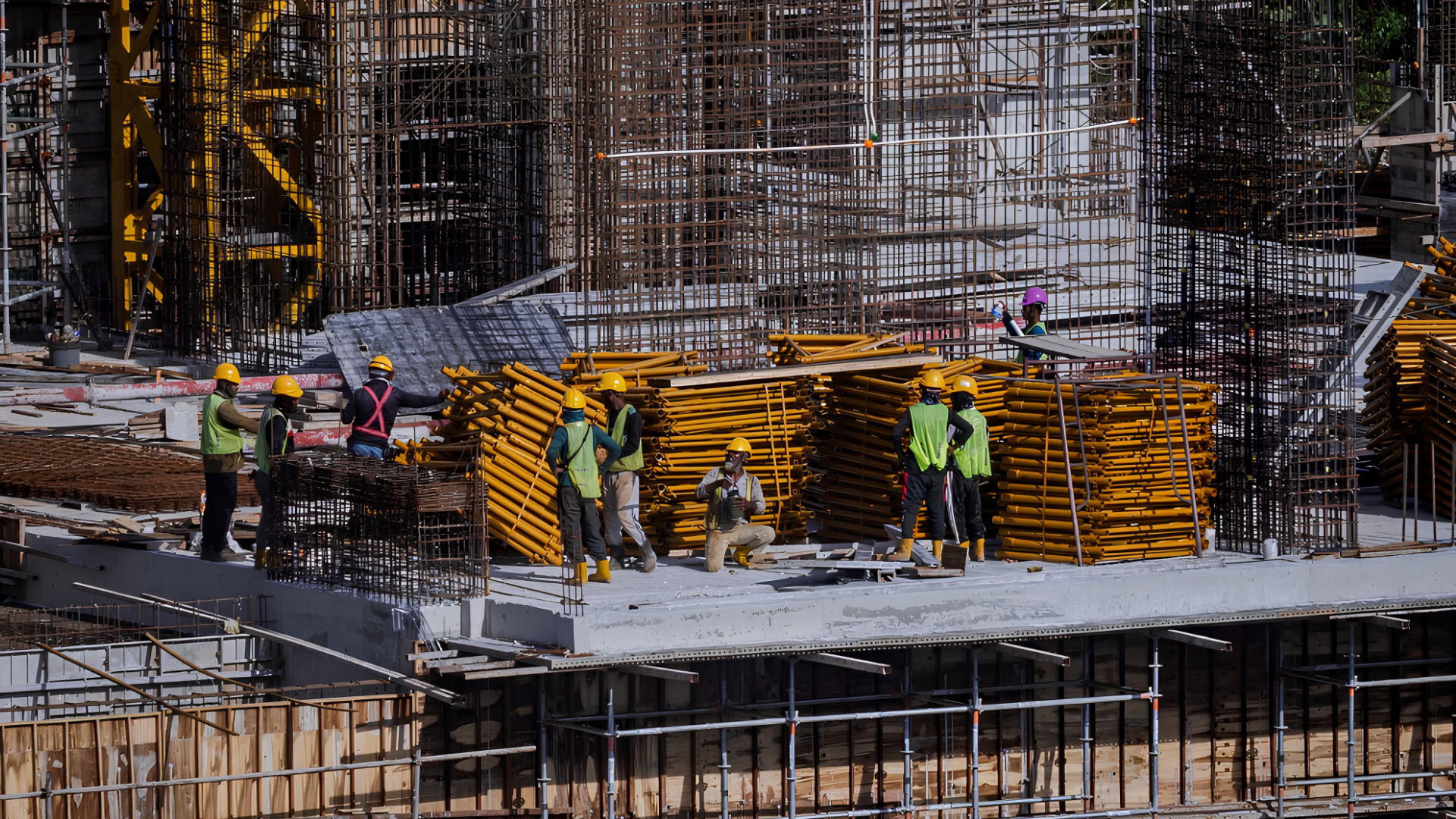
By sector, the construction sector led productivity growth measured by value added per hour worked, expanding 7.8% in the first quarter. However, this was slower than the 10.8% growth recorded in the fourth quarter of 2025.
The manufacturing sector followed with productivity growth of 5.8%, compared with 6.7% previously. Meanwhile, the services sector grew 4.5%, while the agriculture sector recorded growth of 3.6%.
The only major sector to record a decline was mining and quarrying, where labour productivity per hour worked fell 2.4%, compared with growth of 1.2% in the previous quarter.
In terms of labour productivity measured by value added per worker, the construction sector again led overall performance with 7.0% growth. Manufacturing remained steady at 5.8%, followed by services at 4.1% and agriculture at 2.5%. Mining and quarrying declined 2.5%.
The latest figures show that Malaysia’s productivity performance remains broadly supported by domestic economic resilience. Stronger productivity is important because it reflects how efficiently labour is contributing to economic output, which can influence wages, business competitiveness and long-term economic growth.
The construction sector’s strong performance may reflect ongoing infrastructure activity, property development and project implementation, while manufacturing productivity growth points to continued output strength despite global uncertainty.
The services sector, which forms a large part of Malaysia’s economy, also remained positive. This suggests that consumer activity, business services, tourism-related segments and domestic demand continued to support the labour market.
However, the decline in mining and quarrying shows that not all sectors experienced the same momentum. The sector can be more exposed to commodity production cycles, energy market shifts and operational disruptions, making productivity performance more uneven.
DOSM’s official publication catalogue confirms that the 1Q 2026 Labour Productivity report was released on May 21, 2026, covering value added per hour worked and per worker by economic activity.
Mohd Uzir said labour productivity is expected to remain on a positive path, supported by Malaysia’s resilient economic performance despite a challenging global environment.
Malaysia’s 4.8% labour productivity growth in the first quarter of 2026 signals continued strength in the economy, with construction, manufacturing and services helping drive output efficiency. However, slower growth compared with last year and weakness in mining and quarrying show that productivity momentum still needs to be strengthened across all sectors.