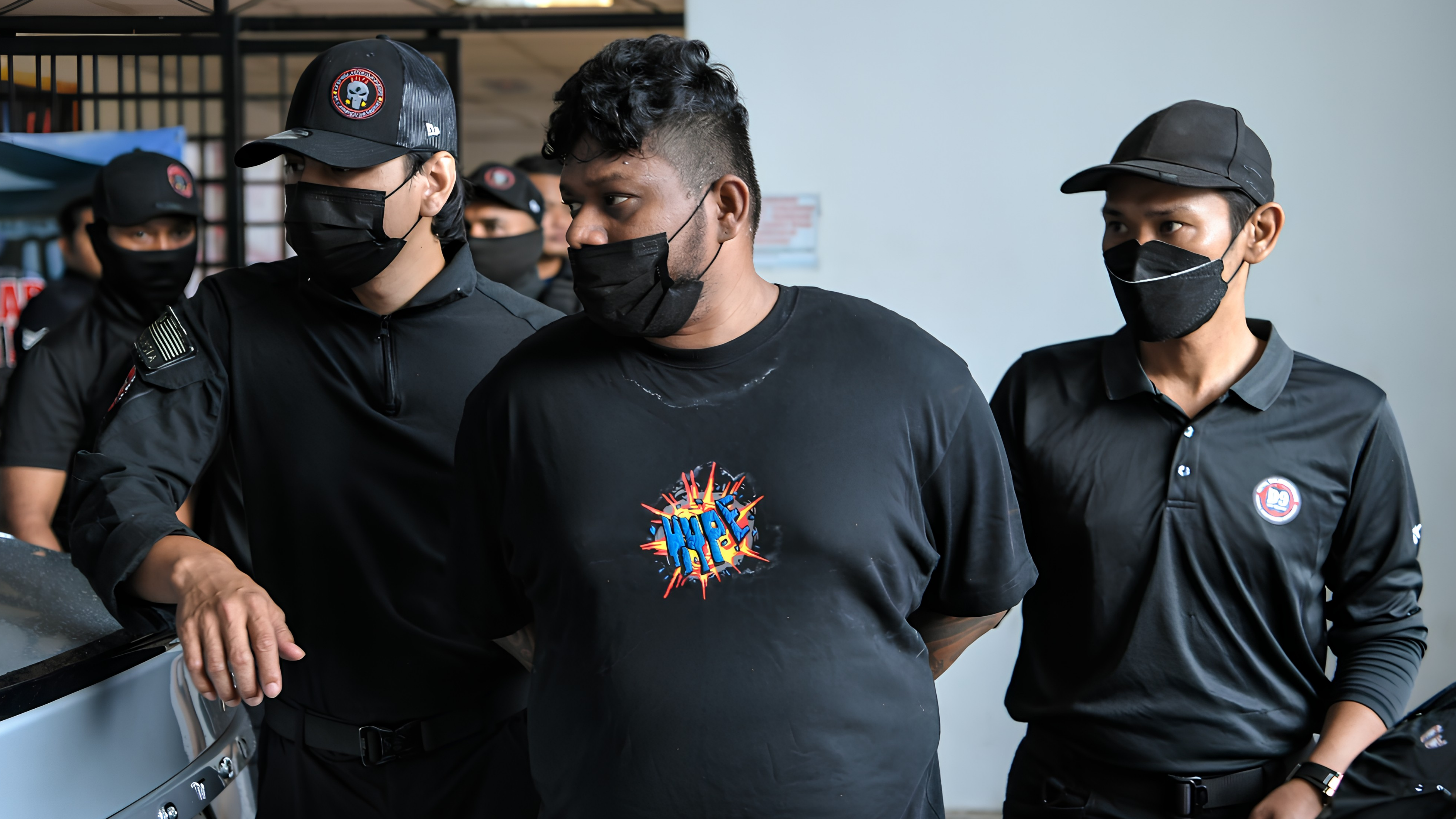
KUALA LUMPUR,June, 2026 – A man believed to be the leader of the “Rames Gang” has been charged at the Sessions Court in Alor Setar over alleged involvement in an organised criminal group.
The accused, G. Ramesh, 37, was charged on Tuesday, June 2, 2026, with being a member of the organised criminal group known as the “Rames Gang”. The alleged offence was said to have taken place in Kampung Sungai Division, Kuala Muda, between January 2024 and December 4, 2025.

The charge was framed under Section 130V(1) of the Penal Code, which covers membership in an organised criminal group. If convicted, the section carries a prison sentence of not less than five years and not more than 20 years.
During proceedings before Judge Sharmila Abdul Samad, Ramesh nodded to indicate that he understood the charge after it was read to him. However, no plea was recorded because the case falls under the jurisdiction of the High Court.
The prosecution was conducted by Deputy Public Prosecutor Vatchira Wong Rui Fern, while the accused was represented by lawyer S. Shathish.
The case has attracted attention because it involves an alleged organised crime group and a suspect believed to be its leader. Organised crime cases are considered serious because they may involve structured networks, coordinated criminal activity and offences that can affect public security.
According to earlier reports, the suspected gang leader was arrested under Op Tiga on May 22, 2026, following cooperation between Indian and Thai authorities.
Bukit Aman Criminal Investigation Department director Datuk M. Kumar was previously reported as saying that the suspect was arrested while on a flight from Bangkok to Hyderabad. He was later brought back to Malaysia through cooperation involving authorities from both countries.
The cross-border nature of the arrest highlights the importance of international enforcement cooperation in handling suspected organised crime cases. When suspects move across national borders, coordination between enforcement agencies becomes crucial to ensure they can be returned to face legal proceedings.
The charge in Alor Setar marks an important development in the case, as it formally brings the accused before the Malaysian court system. However, as no plea was recorded, the matter is expected to proceed to the High Court for further case management and trial process.
It is important to note that the accused remains presumed innocent unless proven guilty in court. At this stage, the charge represents an allegation brought by the prosecution and the case has yet to be fully heard.
The case also reflects Malaysia’s continued focus on tackling organised crime under the Penal Code. Section 130V(1) is among the provisions used against alleged membership in organised criminal groups, with serious penalties attached upon conviction.
Organised crime-related cases often receive strong public attention due to concerns over community safety, violence, intimidation, illegal networks and the wider impact on society. Such cases may also involve complex investigations, including intelligence gathering, surveillance, cooperation between agencies and cross-border tracking.
In this case, the alleged location of the offence was identified as Kampung Sungai Division in Kuala Muda, Kedah. The alleged period covers nearly two years, from January 2024 until December 4, 2025, suggesting that investigators may be looking at a broader timeline of alleged activities linked to the group.
The mention of Op Tiga also suggests that the arrest was part of a targeted law enforcement operation. Although detailed operational information was not disclosed in the court report, the involvement of Bukit Aman and foreign authorities indicates that the case had moved beyond a routine local arrest.
For Kedah, the case is likely to remain under close observation due to the alleged link to an organised criminal group operating in the state. Public interest may continue as the matter progresses through the court system.
Court cases involving alleged gang membership can take time because prosecutors must present evidence to support the charge, while the defence has the right to challenge the allegations. The High Court process will determine whether the prosecution can prove its case according to the law.
The role of the defence lawyer is also important in ensuring that the accused receives a fair trial. In Malaysia’s criminal justice system, even serious charges must be tested in court through proper legal procedures and evidence.
The prosecution, meanwhile, will be expected to establish the elements of the offence under the relevant provision of the Penal Code. This may include evidence related to the alleged organised criminal group, the accused’s alleged membership and the period stated in the charge.
The case may also raise wider questions about organised crime monitoring, intelligence sharing and enforcement coordination at both domestic and international levels. The reported cooperation involving Indian and Thai authorities shows how suspected criminal networks or individuals may require multi-country cooperation to track and detain.
For the public, the case is a reminder that organised crime enforcement is not limited to street-level operations. It can involve broader investigations, legal coordination and cross-border action when suspects are believed to have left the country.
The next stage of the case will depend on the court process following the transfer or handling of the matter at the High Court. Until then, the accused has only been charged and no finding of guilt has been made.
Overall, the charging of the suspected “Rames Gang” leader in Alor Setar represents a major development in Malaysia’s effort to address organised crime cases. With the accused now before the court, attention will turn to the next legal proceedings and how the prosecution presents its case under Section 130V(1) of the Penal Code.