KUALA LUMPUR,June, 2026 – Johor Menteri Besar Datuk Onn Hafiz Ghazi has announced the dissolution of the Johor state legislative assembly, clearing the way for the state’s next election.
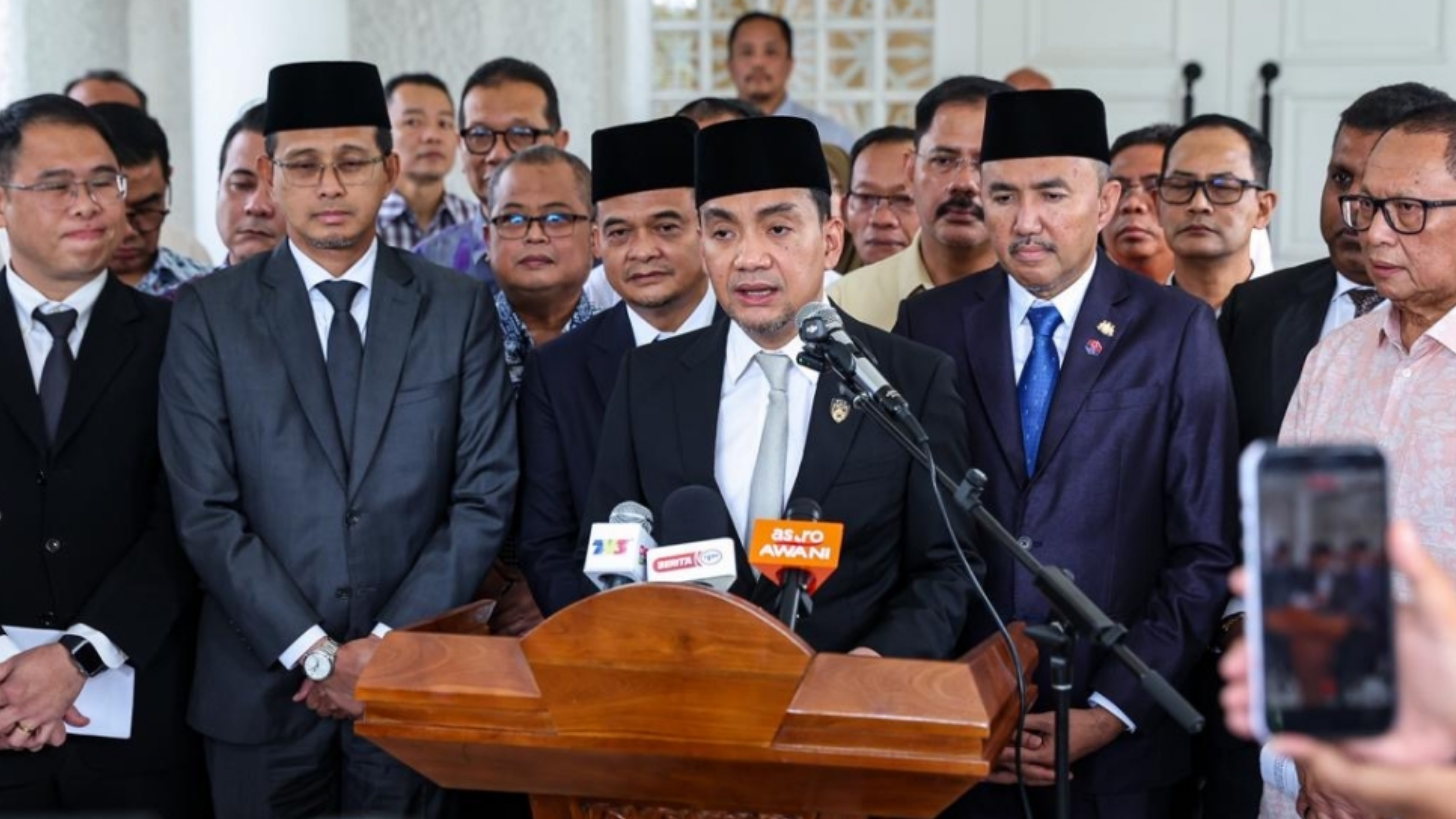
The announcement was made on Monday, June 1, 2026, during a brief special media conference at the Johor Menteri Besar’s official residence in Saujana, Johor Bahru.

According to Onn Hafiz, the dissolution was carried out after obtaining the consent of the Johor Regent, Tunku Mahkota Ismail Sultan Ibrahim, earlier the same day.
The move now paves the way for the 16th Johor state election, with the Election Commission expected to decide the key election dates, including nomination day, early voting and polling day.
Onn Hafiz said the dissolution would allow the people of Johor to elect a new state government and give a fresh mandate for the administration to continue the state’s development agenda.
The decision is politically significant as the Johor state assembly was originally scheduled to complete its term on April 21, 2027. However, with the assembly now dissolved ahead of schedule, Johor voters will return to the polls earlier than expected.
Under existing election provisions, the Election Commission has up to 60 days from the date of dissolution to hold the state election. This means Johor is expected to face an election within the coming weeks, once the official dates are announced.
Onn Hafiz, who is also the Johor Barisan Nasional chairman and state Umno chief, was accompanied by state legislative assembly Speaker Datuk Mohd Puad Zarkashi during the announcement. Incumbent ruling assemblymen were also present at the media conference.
The dissolution marks the beginning of a new political contest in one of Malaysia’s most important states. Johor plays a major role in the country’s economy due to its strategic location, industrial zones, ports, border links with Singapore and ongoing development projects.
For Barisan Nasional, the election will be a major test of whether the coalition can retain its strong position in the state. In the previous Johor state election held in March 2022, BN won a supermajority after securing 40 of the 56 state seats.
Pakatan Harapan won 12 seats in the 2022 election, with DAP taking 10 seats while PKR and Amanah won one seat each. Perikatan Nasional secured three seats, while Muda won one seat.
The latest dissolution is expected to trigger intense political preparation among major coalitions, including BN, Pakatan Harapan and Perikatan Nasional. Candidate selection, seat negotiations, campaign narratives and voter mobilisation will now become the main focus in Johor politics.
Onn Hafiz’s emphasis on a fresh mandate suggests that development will likely be one of BN’s central campaign messages. The state government is expected to highlight ongoing and planned development initiatives as part of its argument for continuity.
Johor has been positioned as a key economic growth state, particularly due to its proximity to Singapore and its role in trade, logistics, manufacturing and investment. A new mandate could give the next state government stronger political legitimacy to push forward major development plans.
The election will also be closely watched at the national level. Although it is a state election, Johor’s political direction could influence broader political sentiment in Malaysia, especially as parties prepare for future national contests.
For voters, the election will provide an opportunity to assess the current state administration’s performance and decide whether to continue with the existing leadership or support an alternative political direction.
The dissolution may also bring attention to local issues such as infrastructure, cost of living, housing, employment, public services, investment, flood management and state-level governance. These issues are likely to shape campaign debates across urban, semi-urban and rural constituencies.
In Johor, political competition can vary significantly by region. Urban areas may focus more on governance, public transport, business opportunities and cost-of-living concerns, while rural areas may give greater attention to local development, agriculture, basic infrastructure and community welfare.
The upcoming election will also test voter sentiment after several years of political changes in Malaysia. Johor has historically been an important base for Umno and BN, but opposition parties have also built support in several constituencies, particularly in urban areas.
With 56 seats at stake, the election will determine whether BN can maintain its dominance, whether Pakatan Harapan can expand its presence, and whether Perikatan Nasional can increase its influence in the southern state.
The Election Commission’s next announcement will be crucial. Once nomination and polling dates are confirmed, political parties will move into full campaign mode, with manifestos, candidate announcements and campaign events expected to follow quickly.
For now, the key development is clear: the Johor state assembly has been dissolved, and the state is heading into a fresh election. Onn Hafiz has framed the decision as a move to return power to the people and secure a new mandate for Johor’s future development.
The coming election is expected to be one of the most closely watched state polls in Malaysia, given Johor’s political weight, economic importance and strategic location.