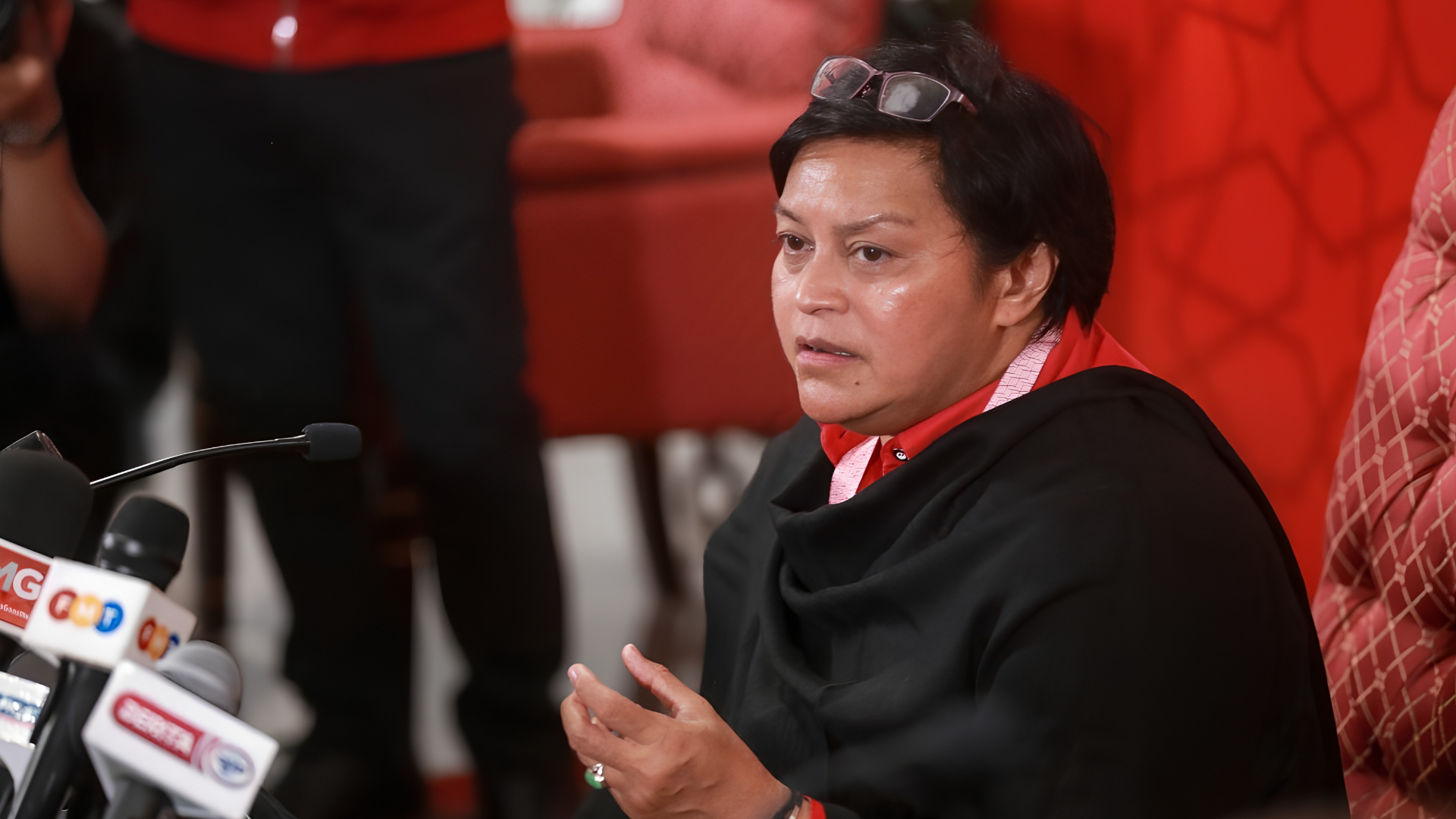
KUALA LUMPUR, June, 2026 – Umno Information Chief Datuk Seri Azalina Othman Said has called on Johor Barisan Nasional component parties to consider fielding young and new faces in the upcoming Johor state election, particularly in constituencies with a large number of youth voters.
Azalina said the move would not only benefit BN’s election strategy but also help create space for a new generation of leaders to emerge through the Johor State Legislative Assembly.

Speaking at a press conference after launching the Madani Adopted Village Programme in Kampung Tanjung Serindit, Kota Tinggi, Azalina said political parties must accept the reality that many young Malaysians are now registered voters.
According to Azalina, about 40 per cent of voters in her own constituency are young voters, making youth representation an important factor for BN to consider when finalising its candidate list.
Her statement comes as Johor prepares for a fresh state election following the dissolution of the Johor State Legislative Assembly. The dissolution was announced by Menteri Besar Datuk Onn Hafiz Ghazi and took effect on June 1 after receiving the consent of the Johor Regent, Tunku Mahkota Ismail.
Azalina said the final decision on candidate selection rests with the Johor BN leadership and political bureau. However, her remarks suggest that BN may need to carefully balance experience with renewal as it prepares to face voters.
The call for younger candidates is politically significant because youth voters have become an increasingly important group in Malaysian elections. With younger voters making up a large portion of the electorate, parties are under pressure to present candidates who can connect with their concerns, priorities and expectations.
For BN, fielding young and new faces could help the coalition project an image of renewal while maintaining its traditional political base in Johor. It could also strengthen the party’s appeal among first-time voters and younger Malaysians who may be looking for fresh leadership at the state level.
Azalina said giving opportunities to younger leaders could help shape BN’s future leadership pipeline. By allowing new faces to contest state seats, the coalition could create a platform for emerging leaders to gain experience in public service, policy-making and grassroots representation.
At the same time, Azalina also expressed hope that the two incumbent state assemblymen under her Pengerang parliamentary constituency would be retained as candidates in the election. The two are Aznan Tamin, the incumbent assemblyman for Tanjung Surat, and Fauziah Misri, the incumbent assemblywoman for Penawar.
Her position reflects the balance BN may need to manage ahead of the Johor polls. While there is a push for young and new candidates, experienced incumbents who have strong local support may still be seen as important assets in certain constituencies.
Azalina also expressed hope that the election would proceed in a democratic spirit, free from violence or any unwanted incidents.
On the dissolution of the state assembly, Azalina said the Johor government under Onn Hafiz had the right to dissolve the assembly with the consent of the Johor Palace. She added that the decision may have been influenced by the continued positive support shown by the people of Johor towards the state government’s leadership.
She also pointed to recent developments such as Umno’s 80th Anniversary Celebration at Istana Besar Johor and Johor Darul Ta’zim’s 12th Super League title victory as examples of positive sentiment in the state.
The upcoming Johor state election is expected to be closely watched at the national level. Johor remains one of Malaysia’s most politically and economically important states, with strong links to trade, investment, industry, tourism and cross-border activity with Singapore.
The election will be a major test for BN’s ability to retain voter support in a changing political environment. Although Johor has traditionally been a key BN stronghold, the growing influence of young voters means campaign strategies may need to be adjusted.
Youth voters are likely to focus on issues such as job opportunities, wages, housing affordability, education, public transport, cost of living and digital economic prospects. Candidates who can speak directly to these issues may have an advantage in seats with a high concentration of younger voters.
Azalina’s call also suggests that BN is aware of the need to present candidates who reflect changing voter demographics. Younger candidates may be better positioned to engage voters through digital platforms, community outreach and issue-based campaigning.
However, fielding young candidates alone may not be enough. Political parties will also need to ensure that candidates are credible, prepared and able to address local concerns. Youth appeal must be matched with clear policy direction and strong grassroots work.
For Johor BN, the candidate selection process will be crucial. The coalition must decide where to retain experienced incumbents, where to introduce new faces and how to ensure that its candidate lineup sends the right message to voters.
The final list of candidates will likely indicate BN’s broader election strategy. If more young candidates are fielded, it could signal a stronger push towards generational renewal. If more incumbents are retained, the coalition may be prioritising stability and continuity.
Overall, Azalina’s remarks highlight the growing importance of youth voters in the Johor state election. Her call for young and new faces reflects BN’s need to adapt to a changing electorate while still maintaining experience within its leadership structure.
As the election approaches, all eyes will be on Johor BN’s candidate lineup and whether the coalition will make youth representation a key part of its campaign strategy.