KUALA LUMPUR,June,2026 – A total of 27 Rohingya victims from Myanmar, who died in a migrant boat tragedy near Langkawi last November, have finally been buried in Kedah after about seven months of forensic and legal procedures.
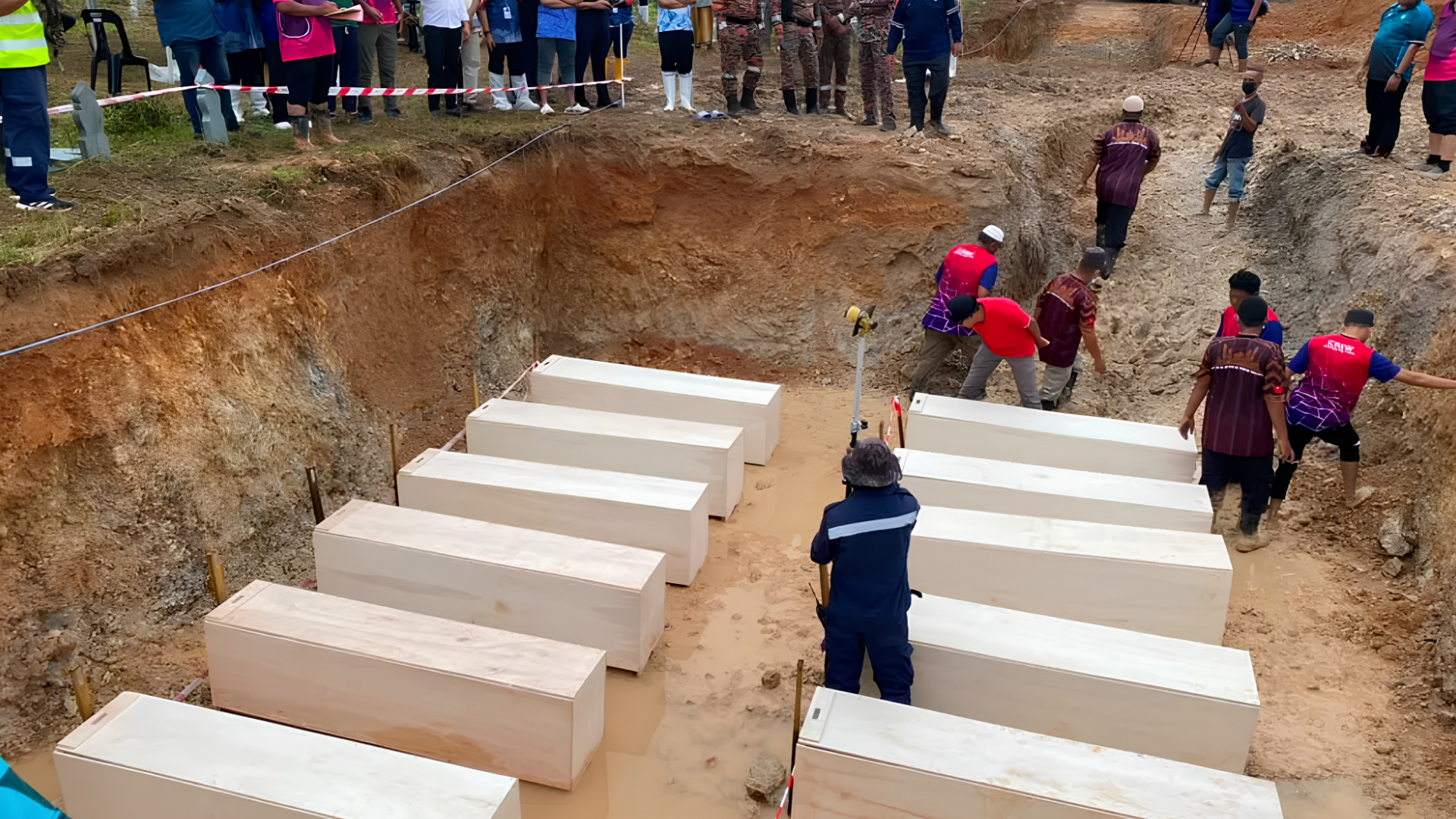
The burial took place at the Kampung Tualang Muslim Cemetery in Pokok Sena on Thursday, with the process carried out in accordance with Islamic rites and under the supervision of the Kedah Islamic Religious Council (MAIK).

Kedah police chief Datuk Adzli Abu Shah said the management of the remains began at 10pm the previous night and was completed at 7am. The burial itself began at about 7.30am and was conducted in an orderly and respectful manner.
According to police, the 27 victims comprised 13 males and 14 females. Their burial followed the temporary controlled burial (TCB) procedure based on advice from hospital authorities.
The operation involved several agencies, including the Royal Malaysia Police (PDRM), Hospital Sultanah Bahiyah, MAIK, the Kedah Islamic Religious Affairs Department, the Fire and Rescue Department, the Public Works Department and the Department of Survey and Mapping Malaysia.
Before the burial, all remains had been taken to the Forensic Medicine Unit of Hospital Sultanah Bahiyah for identification, post-mortem examination and forensic documentation according to established procedures.
Adzli explained that the long delay before the burial was due to complex forensic and legal procedures. These included DNA testing and the waiting period to determine whether any party would come forward to claim the remains.
The victims were linked to a boat tragedy reported on November 8, 2025, when a vessel carrying about 70 Rohingya migrants capsized near Pulau Tarutao, Thailand, before bodies and survivors were later found in waters off Langkawi.
Astro Awani reported that 44 victims, including 30 who died, were found floating in the waters off Langkawi after the incident. The migrants were believed to be heading towards Malaysia.
The group was reportedly part of about 300 migrants who had boarded a larger “mother vessel” from Buthidaung, Myanmar, before being transferred to smaller boats as they approached the Thailand-Malaysia border.
Authorities also said the migrants claimed they had paid around RM13,500 to a syndicate to enter Malaysia, raising concerns over the role of human smuggling networks in the tragedy.
Police said investigations are still ongoing into the cause of the incident, the entry route used and the individuals behind the migrant smuggling activity. The case is being investigated under Section 26A of the Anti-Trafficking in Persons and Anti-Smuggling of Migrants Act 2007 (ATIPSOM).
Members of the public with information related to the case have been urged to come forward to the nearest police station to assist the investigation.
The tragedy has again highlighted the dangerous routes used by vulnerable Rohingya migrants attempting to reach countries in the region. Many Rohingya risk long and unsafe journeys by sea due to violence, displacement and worsening conditions in refugee settlements.
Reuters previously reported that the capsized vessel was part of a wider movement of Rohingya refugees leaving Myanmar and Bangladesh by sea, with Malaysian and Thai authorities involved in search operations after the incident near Langkawi and the Thailand-Malaysia maritime area.
The Associated Press also reported at the time that the death toll from the capsized boat had risen to 27, with bodies recovered by authorities in Malaysia and Thailand. The report said many Rohingya continue taking dangerous sea routes because of conflict in Myanmar and deteriorating conditions in refugee camps.
For Malaysian authorities, the case is not only a humanitarian tragedy but also a border security and anti-smuggling issue. Migrant smuggling networks often exploit vulnerable communities by promising dangerous journeys across international waters in exchange for large payments.
Adzli described the case as a heartbreaking tragedy and a reminder of the serious risks faced by those involved in migrant smuggling routes that are not legally recognised. He said PDRM would continue strengthening law enforcement and maritime security controls to protect national sovereignty and safety.
The burial of the 27 victims brings closure to one part of the tragedy, but investigations into the smuggling syndicate and the wider route used by the migrants are still continuing.
The case also underlines the need for regional cooperation between Malaysia, Thailand and other neighbouring countries to address maritime smuggling, human trafficking risks and the humanitarian conditions that push desperate migrants onto unsafe boats.
the burial of the 27 Rohingya victims in Kedah marks a solemn end to a long forensic and legal process. However, the tragedy remains a painful reminder of the dangers faced by vulnerable migrants and the continuing threat posed by human smuggling networks in the region.