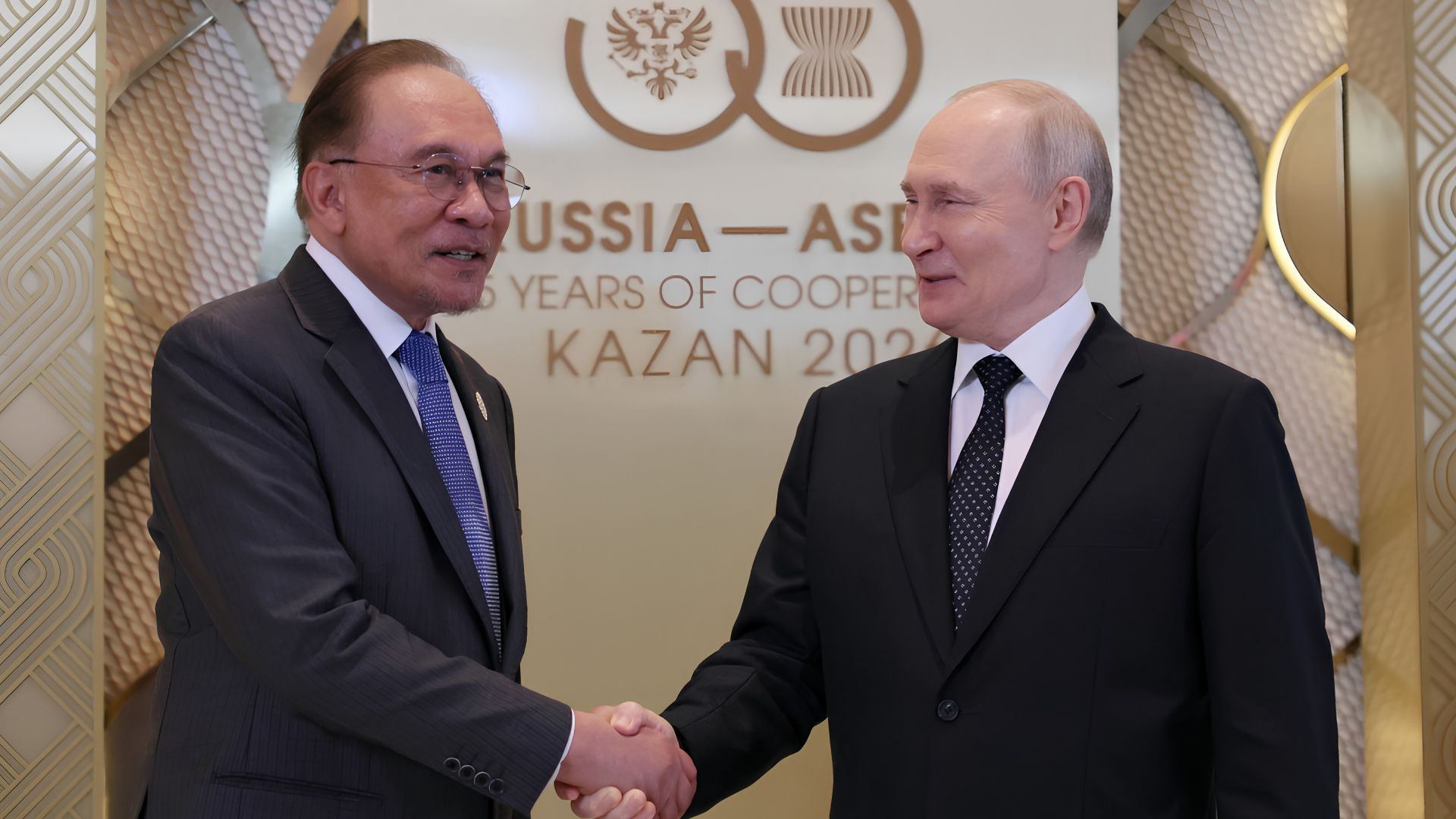
KUALA LUMPUR,June, 2026 — Prime Minister Datuk Seri Anwar Ibrahim has expressed appreciation to Russian President Vladimir Putin for Moscow’s support in strengthening energy cooperation with Malaysia, especially involving national oil company Petroliam Nasional Bhd, or Petronas.
Anwar made the remarks during a bilateral meeting with Putin in Kazan, the capital of Tatarstan, where he is attending the Asean-Russia Commemorative Summit from June 17 to 18.

The Prime Minister, who is also Finance Minister, said bilateral mechanisms between Malaysia and Russia have continued to expand across several sectors, including trade, investment, the halal economy and finance.
In his opening remarks, Anwar said Malaysia appreciated Russia’s commitment to enhancing cooperation in the energy sector, particularly during a period of global uncertainty and energy supply pressure.
Anwar also thanked Putin directly for Russia’s support in facilitating Petronas’ engagement with Russian counterparts and companies. He noted that Petronas had met Russian energy players, including Rosneft, as part of efforts to advance collaboration in the sector.
Rosneft is Russia’s largest integrated energy corporation and one of the world’s major public oil and gas companies. Headquartered in Moscow, the company is involved in hydrocarbon exploration, production, refining and the sale of petroleum products.
Malay Mail reported that Rosneft accounts for roughly 40% of Russia’s total oil production, making the company a major player in any future energy cooperation involving Malaysia and Russia.
Anwar had earlier said in April that Petronas would negotiate with Russia to secure sufficient oil supplies for Malaysia’s domestic needs, adding that Putrajaya’s good ties with Moscow placed the country in a favourable position to pursue such discussions.
The latest meeting therefore signals Malaysia’s continued effort to strengthen energy security through wider international partnerships. Energy cooperation has become increasingly important for many countries as global markets face volatility caused by conflict, supply disruption and changing geopolitical alignments.
Beyond energy, Anwar said Malaysia and Russia are also close to finalising visa liberalisation arrangements, which could make travel and exchanges between the two countries easier.
According to the report, Russia is aiming to abolish visa requirements for citizens of Malaysia, Indonesia and Kuwait this year. Anwar said the Russian Foreign Ministry would step up efforts to finalise and coordinate the relevant agreements.
The visa liberalisation plan could support tourism, business travel, education exchanges and people-to-people relations between Malaysia and Russia. Easier travel access may also help expand commercial engagement between companies from both countries.
Anwar also expressed hope that Russia would support efforts to improve air connectivity between Malaysia and Russian cities, including Moscow and Kazan. He said stronger air links could help boost tourism, trade and people-to-people ties.
Improved air connectivity would be important if both countries want to deepen economic cooperation beyond the energy sector. Direct or more convenient routes can encourage tourism flows, business delegations and stronger logistics links.
The meeting also touched on cooperation in the halal economy and finance. Anwar said both countries are exploring opportunities in these areas, while trade and investment discussions continue to progress positively.
The halal economy could become a useful platform for Malaysia-Russia cooperation, especially as Malaysia has developed a strong global reputation in halal certification, halal products and Islamic finance.
In terms of regional trade, total Asean-Russia trade stood at US$18.1 billion in 2024, while Russian foreign direct investment in Asean was recorded at RM367.90 million, or US$92.97 million.
For Malaysia, Russia was the country’s ninth-largest trading partner among European nations in 2025, with total trade valued at RM8.72 billion, or US$2.04 billion.
Malaysia’s main exports to Russia include electrical and electronic products, machinery, equipment and parts, as well as processed food products. Meanwhile, Malaysia’s main imports from Russia include petroleum products, minerals, chemicals and chemical-based products.
This trade profile shows that energy and industrial goods remain important parts of Malaysia-Russia economic relations. At the same time, the inclusion of processed food products and halal-related opportunities suggests that both countries may be looking to diversify trade beyond traditional sectors.
Anwar’s meeting with Putin comes at a time when Malaysia is seeking to maintain balanced foreign relations while protecting national interests, especially in energy security, trade and investment. The engagement also reflects Malaysia’s wider diplomatic approach of working with multiple global partners.
The focus on Petronas is especially significant because energy supply remains a strategic issue for Malaysia. Any long-term cooperation with Russian energy firms could help Malaysia explore more options for crude oil, petroleum products or other energy-related arrangements.
However, future cooperation will likely depend on commercial feasibility, global market conditions, sanctions-related considerations and Malaysia’s own domestic energy needs. The discussions indicate interest, but any major energy agreement would still require further negotiation and formalisation.
The meeting also strengthens Malaysia’s role in Asean-Russia engagement. As Anwar attended the commemorative summit in Kazan, Malaysia’s bilateral discussions with Russia were framed not only as a national agenda, but also as part of wider regional cooperation between Asean and Moscow.
Anwar’s message to Putin was clear: Malaysia values Russia’s support in energy cooperation, wants to deepen Petronas’ engagement with Russian companies, and hopes to expand bilateral ties into wider areas such as trade, tourism, halal economy, finance and connectivity.
The latest development can be considered an Update News item because it involves current diplomatic engagement, energy security, Petronas’ international cooperation and Malaysia’s economic relationship with Russia.