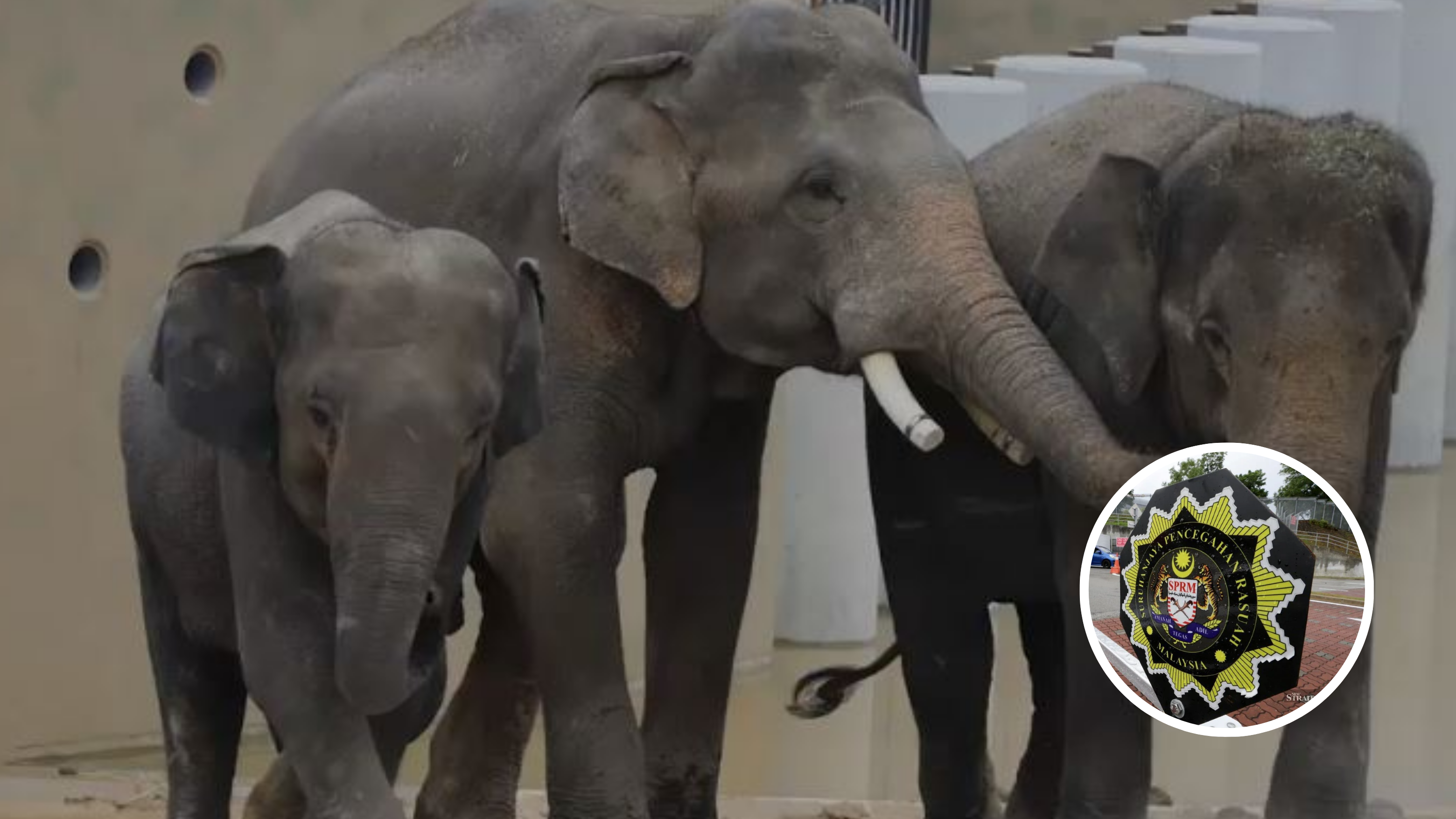
KUALA LUMPUR, June 2026 — The Malaysian Anti-Corruption Commission has opened an investigation into allegations of irregularities linked to the transfer of three Malaysian elephants from Zoo Taiping & Night Safari to Tennoji Zoo in Osaka, Japan. The elephants, known as Dara, Amoi and Kelat, were relocated in March under a long-term conservation and research arrangement between the two zoos.
According to Malay Mail, the investigation centres on claims that payments connected to the transfer allegedly did not reach the government, with allegations involving transactions worth about RM53 million. MACC said it is examining possible elements of leakage, bribery, misappropriation or abuse of power, while stressing that the probe is still at an early stage.

The commission said the investigation focuses on the Natural Resources and Environmental Sustainability Ministry, the Wildlife and National Parks Department, and agents involved in facilitating the elephants’ transfer. BusinessToday also reported that MACC is recording statements from at least four public agencies, including NRES, Perak Perhilitan, Taiping Municipal Council and Zoo Taiping.
MACC said investigators are seeking details on the approval process, procedures and memorandum of understanding governing the relocation programme. The agency also urged the public not to speculate or draw conclusions that could interfere with the ongoing investigation.
The issue gained wider public attention after wildlife advocacy group Hak Asasi Hidupan Liar Malaysia called on authorities to scrutinise the transfer on June 18. According to MACC, the group alleged that several payments related to the relocation had not been channelled to the government as intended and linked several individuals to transactions estimated at RM53 million.
Another group, Pertubuhan Pelindung Khazanah Alam Malaysia, had also urged MACC to investigate claims that about RM50 million linked to the transfer was allegedly paid to several individuals instead of the government. Its president, Rajesh Nagarajan, said the group had received information from a purported whistleblower and submitted the names of eight individuals to MACC for investigation.
However, neither MACC nor the NGOs have publicly identified the individuals allegedly linked to the transactions. This means the case remains an investigation into allegations, and no party has been found guilty at this stage.
Dara, Amoi and Kelat arrived at Tennoji Zoo on March 11 as part of a programme described by authorities as a long-term conservation and research collaboration. The arrangement has drawn scrutiny from environmental and wildlife groups, especially over questions involving transparency, animal welfare and the length of the agreement.
The elephant transfer was previously defended by Perak Housing and Local Government Committee chairman Sandrea Ng Shy Ching, who said the 25-year agreement between Taiping Zoo and Tennoji Zoo was reasonable because it was based on long-term conservation and breeding efforts. She said the three elephants remain the property of Taiping Zoo, while the ownership of first-generation calves has been set under the agreement.
Under that arrangement, the first, third and fifth calves would belong to Tennoji Zoo, while the second, fourth and sixth calves would belong to Taiping Zoo. Sandrea said the arrangement was part of a conservation collaboration that required a suitable timeframe.
She also said Perhilitan had assigned mahouts to accompany the elephants during the adaptation process in Japan and to monitor their condition. According to her, periodic reports are provided to ensure that Dara, Amoi and Kelat remain healthy and stable.
The Taiping Municipal Council previously said any move to repatriate the elephants from Japan or terminate the cooperation programme must be based on clear evidence of welfare breaches. The council said decisions could not be made unilaterally because they are subject to the terms agreed between the parties involved.
The council also said Tennoji Zoo is responsible for ensuring the elephants’ welfare, health, nutrition, veterinary treatment, safety and daily management in line with international standards and best practices. It added that monitoring mechanisms include joint committee meetings and annual reports on the elephants’ health condition and management.
At the same time, public pressure has continued. The issue has sparked concern among animal welfare groups and online activists under the #KembalikanDAK campaign, which calls for the return of Dara, Amoi and Kelat to Malaysia.
TheSun reported that supporters of the 25-year agreement have defended it as a conservation and breeding collaboration, while critics have raised questions about welfare, living conditions and whether the elephants would be better cared for in Malaysia.
The controversy also includes questions over whether the elephants were captured from the wild or bred in captivity. Rajesh Nagarajan reportedly questioned how approval was granted for the relocation and alleged that the elephants transferred to Japan had been captured from the wild rather than bred in captivity. This allegation has not been proven and is now part of the wider public scrutiny surrounding the case.
Former Natural Resources and Environmental Sustainability minister Nik Nazmi Nik Ahmad has denied involvement in alleged corruption linked to the elephants’ transfer and welcomed the investigation, according to Malaysiakini.
The case now carries several layers of public interest. First, it involves possible governance and corruption concerns, because MACC is examining whether payments connected to the transfer were properly channelled. Second, it involves animal welfare, because activists continue to question the suitability of moving three Malaysian elephants to Japan. Third, it involves transparency, because the full agreement has not been publicly disclosed.
From a governance perspective, the investigation will likely focus on how the transfer was approved, which agencies were involved, whether all procedures were followed, and whether any individual or agent benefited improperly from the arrangement.
From an animal welfare perspective, the central question is whether Dara, Amoi and Kelat are being cared for in a manner that meets proper standards. Authorities have said monitoring mechanisms exist, but advocacy groups continue to push for more independent review and transparency.
The Taiping Municipal Council has said the agreement was drafted with reference to Malaysia’s Animal Welfare Act 2015, the Wildlife Conservation Act 2010, the Malaysian National Elephant Conservation Action Plan, and international guidelines by the World Association of Zoos and Aquariums.
However, critics argue that public trust requires more than assurances. They want independent welfare assessments, clearer reporting and greater transparency over the terms of the agreement, especially because the elephants are considered part of Malaysia’s wildlife heritage.
For now, MACC’s investigation remains at the early stage. The agency has not confirmed wrongdoing, and the allegations have not been tested in court. The commission’s appeal against public speculation is important because premature conclusions could affect the integrity of the investigation.
The case is likely to remain closely watched because it sits at the intersection of wildlife conservation, public accountability, international cooperation and corruption prevention.
If MACC finds evidence of wrongdoing, the case could become a major governance issue involving national wildlife resources and public trust. If no wrongdoing is found, attention may still remain on the animal welfare and transparency concerns surrounding the 25-year agreement.
the investigation into the transfer of Dara, Amoi and Kelat is a significant development in Malaysia’s wildlife and governance landscape. The case raises serious questions about accountability, conservation agreements and the handling of protected animals in international cooperation programmes.
The development is suitable for Update News because it involves a current MACC investigation, RM53 million allegations, public concern over wildlife welfare and the international transfer of three Malaysian elephants to Japan.