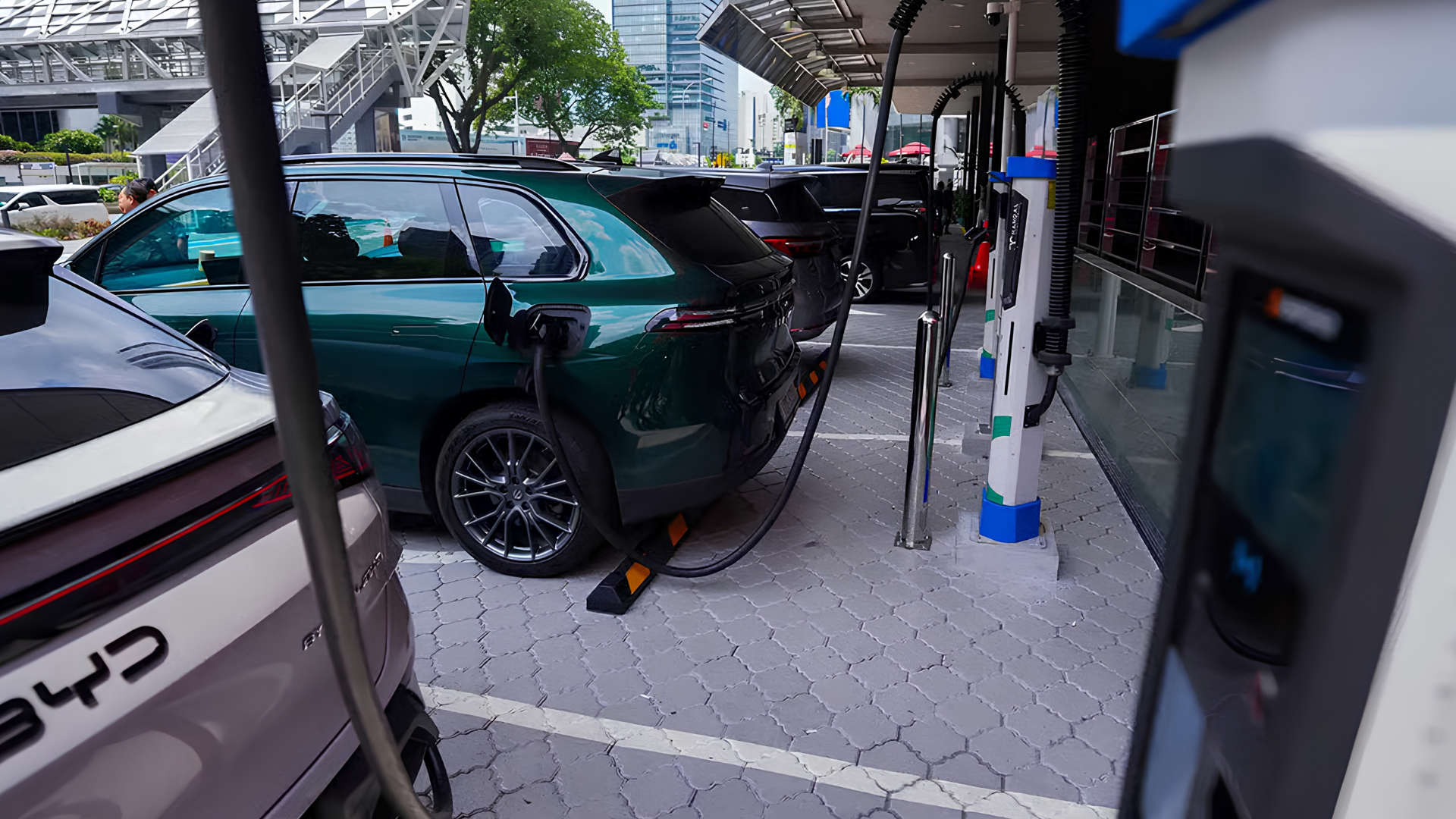
KUALA LUMPUR, JULY 2026 – Malaysia’s growing adoption of electric vehicles represents an important step towards cleaner transport, but replacing petrol-powered cars with EVs alone will not guarantee zero emissions.
An opinion analysis by columnist K. Kati Guggen argues that an electric car should not automatically be described as carbon-free simply because it produces no exhaust fumes while being driven. Electricity must still be generated, transmitted and delivered to charging stations, meaning the vehicle’s environmental impact is closely connected to the country’s power-generation mix.

Malaysia continues to generate most of its electricity from fossil fuels. Ember reported that low-carbon sources supplied about 21% of the country’s electricity in 2025, indicating that coal and natural gas remained responsible for the majority of generation.
The commentary estimates that fossil fuels produce more than three-quarters of Malaysia’s electricity, with coal alone accounting for about 45%. Much of the coal used by the power sector is imported, particularly from Indonesia, creating an indirect connection between EV charging and overseas fossil-fuel consumption.
Electric vehicles therefore have zero tailpipe emissions rather than zero total emissions. Carbon dioxide may no longer be released from a vehicle’s exhaust, but emissions can still occur at power plants generating the electricity used to recharge its battery.
Malaysia’s exact power mix can also change according to fuel availability, costs and electricity demand. Coal reportedly supplied 58.6% of Peninsular Malaysia’s electricity in 2025, while natural gas contributed 33.1% and solar accounted for 2.4%. By April 2026, gas generation had increased sharply as the country responded to record electricity demand, while coal’s share declined but remained significant.
This does not mean Malaysia should abandon its transition to electric mobility. The opinion piece acknowledges that EV incentives have encouraged adoption, registrations have increased and battery-electric cars now represent nearly 8% of the vehicle market. Electric motors are also more energy-efficient than internal-combustion engines and generally require less routine maintenance.
Research examining Malaysia’s transport sector has found that moving from petrol vehicles to electric alternatives can reduce greenhouse-gas emissions. However, the scale of that reduction depends on the electricity mix, vehicle efficiency, battery manufacturing and the distance travelled during the vehicle’s operating life.
A 2025 review of Malaysia’s EV sector similarly warned that vehicles charged through a fossil-fuel-heavy grid may, in some circumstances, produce higher overall emissions than highly efficient petrol cars or hybrid vehicles. The study nevertheless identified EVs as an important part of the country’s transition towards lower-emission transportation.
The central issue is therefore not whether Malaysia should support EVs, but whether vehicle electrification is progressing alongside the decarbonisation of the electricity system.
Solar energy is presented as one of the country’s most important opportunities. Malaysia receives strong sunlight throughout the year and has developed a substantial solar-manufacturing industry, yet solar electricity continues to represent only a small share of total generation.
Expanding solar generation could reduce both transport emissions and Malaysia’s dependence on imported coal. The opinion argues that renewable electricity should also be viewed as an energy-security measure because imported fuels can be disrupted by geopolitical conflict, supply shortages and international price fluctuations.
The challenge is that solar power is variable. Electricity generation falls during cloudy conditions and stops at night, while consumer demand may continue rising after sunset. Malaysia consequently needs stronger electricity networks, flexible generation and energy-storage systems to integrate larger quantities of renewable power.
The Malaysia Renewable Energy Roadmap identifies energy storage as an important tool for maintaining system stability as solar penetration increases. It recommends the gradual introduction of battery storage and other technologies to reduce renewable-energy curtailment, manage evening demand and support the reliability of the national grid.
Malaysia has already begun advancing battery-energy-storage projects and solar-powered charging systems. These developments indicate that the technologies needed to connect renewable generation with electric mobility are increasingly available, although wider implementation will require investment, regulation and coordinated planning.
Vehicle manufacturing must also be considered. Producing lithium-ion batteries requires energy and raw materials, while mining, processing, transportation and assembly generate emissions before an EV reaches the road.
Battery recycling and disposal will become increasingly important as Malaysia’s electric-vehicle fleet grows. Without an effective system for collecting, reusing and recycling batteries, the transition could create new environmental problems involving hazardous materials and electronic waste.