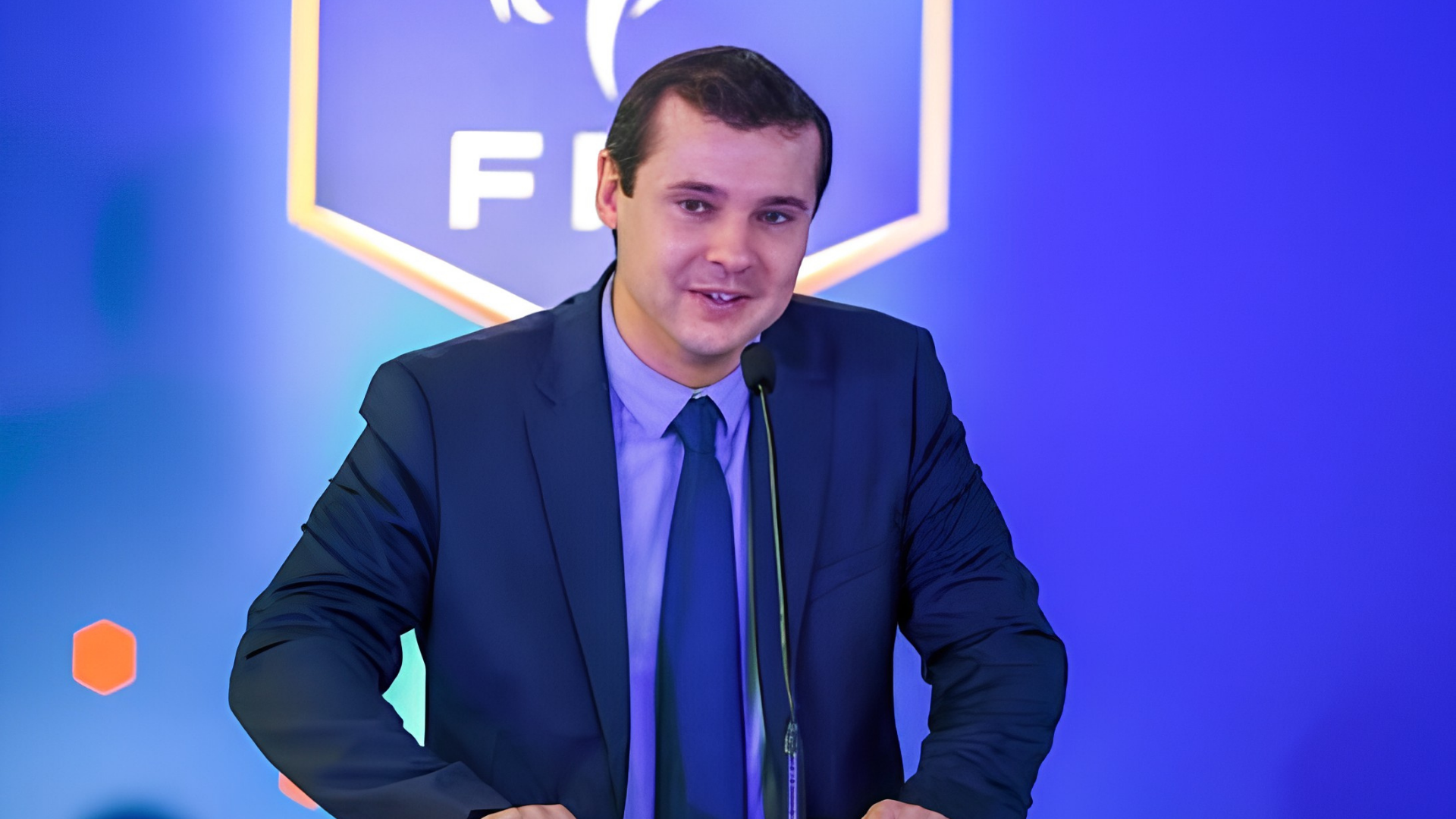
KUALA LUMPUR, AUGSUT 2026 — Senior FIFA executive Kevin Lamour has left world football’s governing body following a highly public dispute over President Gianni Infantino’s abandoned plan to bring private investors into FIFA’s commercial tournament business.
Lamour had served as FIFA’s Chief Operating Officer since November 2024, having previously worked as UEFA’s deputy secretary general. FIFA confirmed that his tenure officially ended on August 17, 2026, thanked him for his service and declined to provide further details about the circumstances surrounding his departure.

Sky News reported that Lamour had been sacked, although FIFA itself did not publicly characterise his departure as a dismissal. The timing immediately drew attention because Lamour had recently become one of the most senior FIFA officials to openly challenge Infantino’s leadership.
The dispute centred on a plan backed by Infantino to create a new commercial structure for FIFA’s most valuable competitions.
The proposal involved spinning off commercial businesses connected with tournaments including the men’s and women’s World Cups and Club World Cups into a company reportedly valued at around $20 billion. Private investors would have been permitted to acquire a minority stake of roughly 20%.
That structure could have generated billions of dollars in outside investment while giving private capital access to some of FIFA’s most valuable commercial assets.
However, the plan triggered significant opposition over governance, transparency and the long-term implications of allowing private investors to own a stake in revenues associated with major FIFA tournaments.
Lamour emerged as one of its most vocal internal critics.
He argued that FIFA employees had not been given sufficient transparency about how the plan had been developed and publicly characterised the proposal as being driven primarily by Infantino rather than through a sufficiently collective decision-making process.
Lamour’s criticism was particularly striking because he had worked closely with Infantino for years.
Before joining FIFA, the French-Swiss football administrator had held senior positions at UEFA and was part of the circle involved in supporting Infantino’s successful campaign for the FIFA presidency in 2016.
When he publicly challenged the investment plan at the end of July, Lamour acknowledged that speaking out could cost him his job.
His criticism also extended beyond the proposed commercial structure itself. He raised concerns about FIFA’s internal culture and argued that employees deserved greater openness and respect from the organisation’s leadership.
The controversial plan was shelved shortly after the internal and external backlash intensified.
Lamour was not the only senior FIFA figure to oppose the proposal.
Carlos Cordeiro, a senior adviser to Infantino and former president of U.S. Soccer, resigned amid the controversy and criticised the proposed investment structure.
Cordeiro’s resignation was followed by Lamour’s public intervention, creating an unusual display of dissent among executives who had previously been considered part of FIFA’s senior leadership structure.
The combination of resignations, public criticism and opposition from major football confederations eventually turned the commercial proposal into a broader debate about FIFA governance.
Opposition also came from several of football’s most powerful regional bodies.
UEFA, the Asian Football Confederation and CONCACAF all challenged the proposed commercial restructuring, with concerns focused on transparency, decision-making and the potential consequences of selling part of FIFA’s tournament business to private investors.
UEFA went even further by publicly declaring that it had lost confidence in Infantino’s leadership following the collapse of the plan and called for greater accountability.
The unprecedented resistance placed Infantino under significant political pressure inside international football.
Lamour’s exit now adds another layer to that dispute.
FIFA Secretary General Mattias Grafström informed employees that Lamour would be leaving, while FIFA publicly confirmed only that their professional relationship had ended. No official reason was provided.
Because Lamour had publicly declared his opposition to the commercial plan only weeks earlier, his departure is likely to intensify questions over whether dissent is tolerated within FIFA’s senior leadership.
The situation is especially significant because Lamour was not an external critic or political opponent. He was FIFA’s COO and a longtime colleague of Infantino from their years in European football administration.
The controversy also comes as attention turns towards FIFA’s next presidential election in 2027.
Infantino’s eligibility for another term has attracted renewed scrutiny from governance and human-rights advocates. The dispute concerns whether his first period in office from 2016 to 2019 should count towards FIFA’s presidential term limits.
FIFA has previously taken the position that Infantino’s initial period, when he completed the remainder of Sepp Blatter’s mandate, does not count as a full term.
Critics argue that allowing another campaign raises governance questions, especially following the collapse of the private-investment proposal and the growing opposition from senior figures inside world football.
Human-rights organisation FairSquare has also called for FIFA’s governance bodies to review Infantino’s eligibility, adding further pressure ahead of the election process.
Lamour’s departure therefore represents more than a routine executive reshuffle.
It follows the collapse of one of Infantino’s most ambitious commercial proposals, the resignation of another senior adviser and unusually direct criticism from major continental confederations.
Although FIFA has stopped short of publicly saying Lamour was dismissed because of his criticism, Sky News and other reports have linked his exit directly to his opposition to Infantino.
With FIFA now facing growing scrutiny over governance, transparency and its future leadership, Lamour’s departure could become another important chapter in a widening internal crisis ahead of the 2027 presidential election.