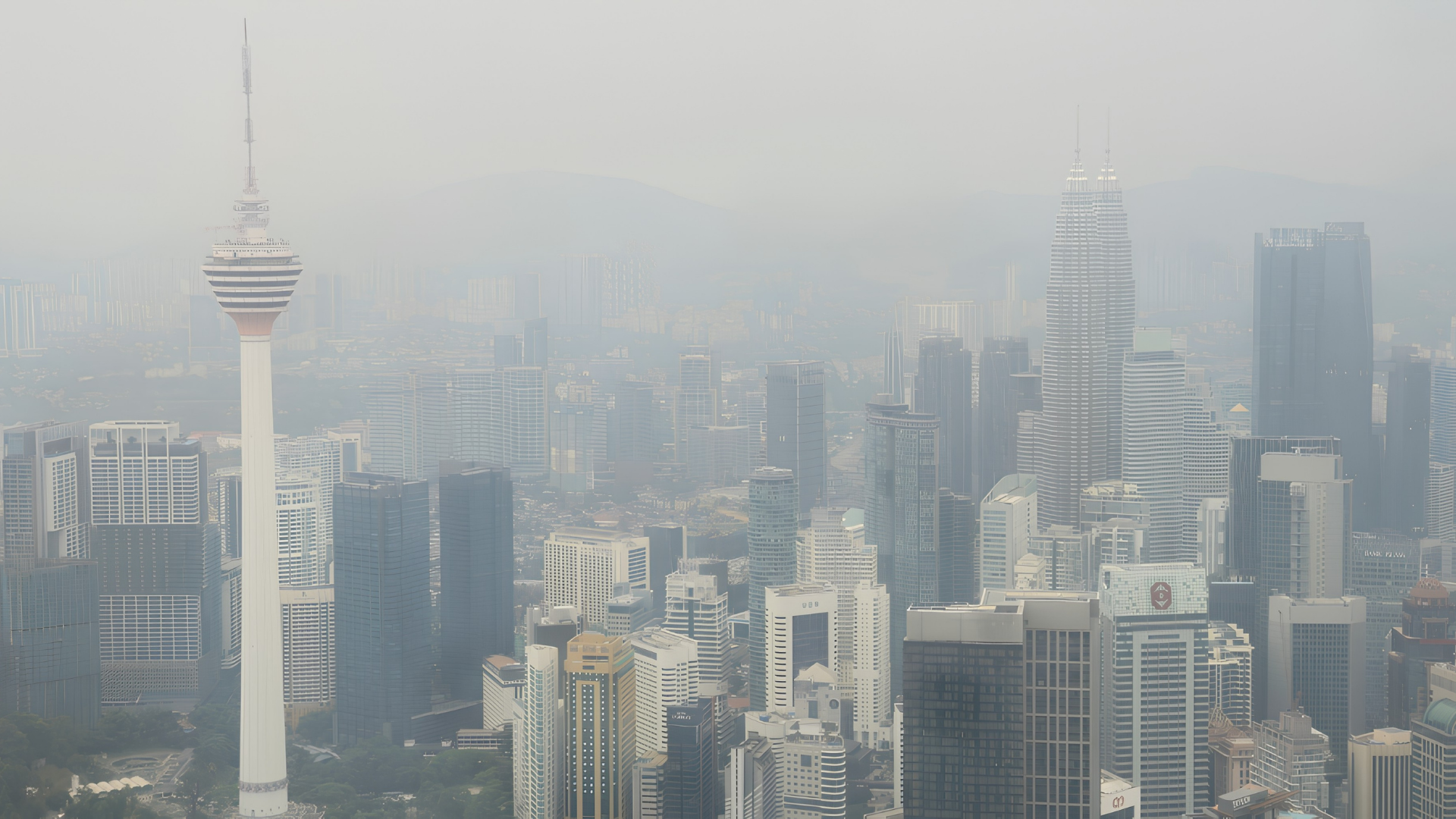
KUALA LUMPUR, AUGUST 2026 — Malaysia should move towards developing an early haze warning system as recurring episodes of air pollution continue to pose risks to public health, according to environmental and air-quality expert Assoc Prof Dr Azman Azid.
Azman, who is the Campus Director of Universiti Sultan Zainal Abidin’s Besut campus, said Malaysia should shift its approach from primarily managing haze after it develops to a more proactive model centred on forecasting, prevention, protection and early action.

One of the strongest arguments for a more proactive system is the impact of haze on respiratory health.
Azman cited Health Ministry monitoring showing that asthma cases increased by 259 per cent, from 61 cases during Epidemiological Week 32 to 219 cases in Week 33.
He said the figures indicate that worsening air quality can coincide with a substantial increase in respiratory illness, strengthening the case for earlier intervention rather than waiting for pollution readings to reach unhealthy levels.
According to Azman, much of the information needed to build such a forecasting system is already available in Malaysia.
He proposed integrating several types of environmental and health data, including hotspot locations, satellite imagery, meteorological information, atmospheric trajectory modelling, Air Pollutant Index readings, respiratory disease patterns and PM2.5 concentrations.
Each data source could serve a different purpose. Hotspot information could identify areas where fires are occurring, satellite imagery could trace smoke plumes, while meteorological data could determine wind direction and speed.
Atmospheric trajectory models could then estimate where polluted air masses are coming from and where they are likely to travel.
Azman said an integrated model could potentially indicate when PM2.5 levels are likely to increase within the next 48 to 72 hours in specific areas.
Such advance notice could allow hospitals and clinics to prepare for a potential rise in respiratory cases, while schools could reschedule or suspend outdoor activities before pollution reaches more dangerous levels.
The proposal would therefore treat haze warnings in a way similar to weather forecasting — giving the public easily understood information about what conditions could develop rather than only reporting conditions that already exist.
Azman stressed that an early warning mechanism should not replace Malaysia’s Air Pollutant Index (API).
The API remains important because it provides information on current air quality.
However, he argued that waiting until API readings increase before taking action means authorities and the public are responding only after pollutants have already entered the atmosphere.
An early warning system could instead complement existing API monitoring by estimating future pollution risks and allowing preventive measures to be activated sooner.
The proposal comes as authorities continue strengthening preparedness during periods of worsening haze.
In Penang, the state Education Department has instructed schools to stop outdoor activities when API readings exceed 100 and to close immediately if readings rise above 200. If the API exceeds 500, teachers and support personnel would also not be required to attend school, subject to existing rules.
An advance forecasting system could provide schools with additional time to modify schedules before those thresholds are reached.
Technology alone will not solve Malaysia’s haze problem, Azman said.
Authorities should also strengthen enforcement against open burning, land fires and fires involving peatland areas, which can generate persistent smoke and contribute to prolonged air-pollution episodes.
Peat fires are particularly challenging because they can burn underground for extended periods and produce large volumes of smoke.
Better monitoring of high-risk land areas would therefore need to form part of a broader haze-prevention strategy.
Azman also highlighted the regional dimension of haze, noting Malaysia’s participation in the ASEAN Agreement on Transboundary Haze Pollution (AATHP).
He said ASEAN countries should move beyond simply sharing information and develop deeper cooperation in areas such as fire-source mapping, smoke trajectory forecasting, technology sharing, firefighting assistance and coordinated response mechanisms.
Because smoke and air pollution can cross national borders, he argued that regional action must take place before individual fires expand into wider environmental crises.
Azman said haze management should ultimately combine several measures rather than depend on a single technological solution.
These include fire prevention, peatland management, atmospheric modelling, sustainable land use, tougher enforcement and stronger regional cooperation.
Even if Malaysia cannot completely prevent smoke from entering the country, better forecasting could still reduce public exposure by allowing authorities and communities to act earlier.
The proposed early warning system represents a broader shift in how Malaysia could manage recurring haze episodes.
Instead of waiting until unhealthy air has already reached communities, predictive modelling could provide hospitals, schools, government agencies and the public with additional time to prepare.
With respiratory illness rising sharply during deteriorating air conditions, Azman said protecting public health should become the central objective of Malaysia’s haze-management strategy.