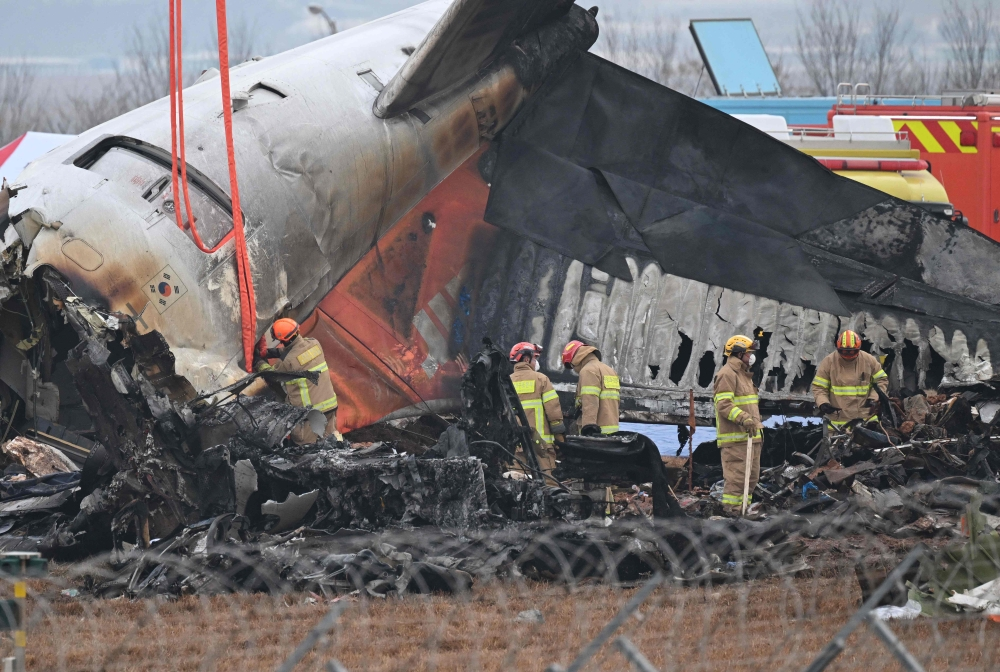
March 11 — A concrete barrier blamed for a deadly South Korean plane crash that killed 179 people was built as a cost-cutting measure, according to a report released by the Board of Audit and Inspection.
The report examined the circumstances surrounding the crash of Jeju Air Flight 2216, which occurred during an attempted landing at Muan International Airport

According to investigators, the aircraft had been approaching the runway after flying from Thailand when it struck a flock of birds shortly before landing, forcing the plane to perform a belly landing after its.
Concrete Structure Worsened the Impact
During the emergency landing attempt, the aircraft skidded along the runway before colliding with a concrete mound that supported a local, which helps guide aircraft during landing.
The audit report concluded that the structure had been constructed from reinforced concrete because authorities wanted to reduce construction costs instead of redesigning the terrain surrounding the runway.
Investigators said the terrain
When the aircraft struck the rigid structure, the collision caused catastrophic damage that led to the deaths of 179 of the 181 people on board, making it the deadliest aviation disaster in South Korea’s history.
Simulation Suggests Passengers
A government-commissioned simulation previously found that all passengers might have survived the crash if the concrete structure had not been present, or if it had been made from materials designed to break apart upon impact.
Aviation safety guidelines generally recommend that structures near runways be built using “frangible” materials, meaning they are designed to collapse or break easily if struck by an aircraft.
Experts say this design principle reduces the severity of accidents when planes overshoot runways or experience landing problems.
However, the rigid concrete structure at Muan airport failed to meet those safety expectations, significantly increasing the severity of the crash.
Longstanding Safety Oversight Issues
The audit also criticised South Korea’s transport authorities for approving airport infrastructure that prioritised cost savings over safety considerations.
Investigators found that similar cost-cutting practices and weak oversight in aviation infrastructure had occurred over many years, raising broader concerns about airport safety management in the country.
The findings have triggered renewed debate among aviation experts and policymakers about the importance of strict safety standards in airport design.
Calls for Improved Aviation Safety
Following the report, aviation analysts and safety advocates have urged authorities to review airport infrastructure across the country to ensure that runway areas comply with international safety guidelines.
Several experts have stressed that structures located near runways should be designed to minimise damage during accidents and prevent catastrophic outcomes.
South Korean authorities have since pledged to review aviation safety measures and implement improvements where necessary to prevent similar tragedies in the future.
The findings of the audit have also renewed calls from victims’ families for greater accountability and transparency regarding the decisions that contributed to the disaster.