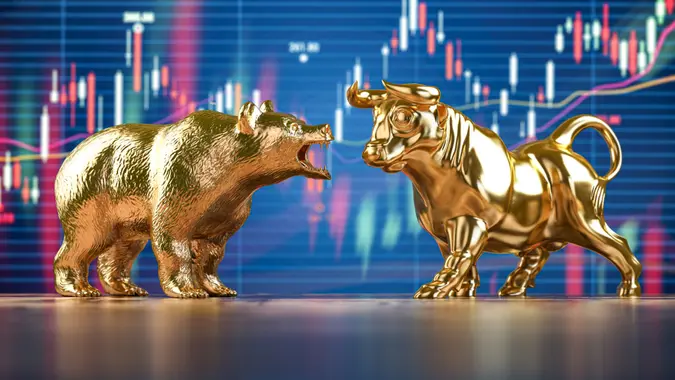
In recent months, global markets have shown signs of resilience. Stock indices are climbing, tech companies are posting strong earnings, and investor confidence appears to be returning. On the surface, it looks like the global economy is stabilising after a period of uncertainty.
But beneath this optimism lies a more complicated reality — one that raises an important question: Is the market truly strong, or is it being artificially supported?

A large part of the current market momentum is being driven by artificial intelligence (AI) and the surge in demand for technology infrastructure. Companies involved in semiconductors, cloud computing, and AI development have seen extraordinary growth, with valuations reaching levels that would have seemed unrealistic just a few years ago.
This has created what some analysts describe as a “narrow rally,” where a small group of dominant companies drives most of the market gains. While this may boost headline indices, it does not necessarily reflect broad-based economic strength. Many traditional sectors — including manufacturing, small businesses, and consumer markets — continue to face pressure from inflation, rising costs, and uncertain demand.
Another factor sustaining the market is liquidity. Central banks, despite tightening policies in recent years, still play a significant role in maintaining financial stability. Expectations of future rate cuts have also fueled investor optimism, even before such policies are fully implemented.
At the same time, geopolitical tensions and global supply chain disruptions remain unresolved risks. From energy market volatility to trade uncertainties, these factors have the potential to quickly reverse current gains.
There is also a psychological dimension at play. Markets today are heavily influenced by sentiment, narratives, and speculation — often amplified by digital platforms and rapid information flow. The fear of missing out (FOMO) can drive investors to pour money into trending sectors, further inflating valuations beyond fundamental levels.
This does not mean the current market growth is entirely unfounded. The rise of AI and digital transformation is real and is likely to shape the future of the global economy. However, the pace and scale of market reactions may be outstripping actual economic progress.
In the long run, sustainable growth requires more than just technological hype or investor optimism. It depends on real economic fundamentals — productivity, employment, consumer strength, and stable policy environments.
The current market may continue to rise in the short term, but investors and observers alike should remain cautious. Because history has shown that when growth is driven more by expectation than reality, corrections are not a matter of “if,” but “when.”