KUALA LUMPUR – In a move that has further strained an already volatile atmosphere, Israeli authorities have officially prohibited the performance of Eid al-Fitr prayers at the Al-Aqsa Mosque in occupied East Jerusalem. The decision, cited as a “stringent security measure” following recent Israeli military strikes on Iran, marks a significant escalation in restrictions at Islam’s third-holiest site.
The ban comes at the conclusion of a Ramadan period already defined by heavy surveillance and restricted access for Palestinian worshippers. According to reports from Anadolu Agency and WAFA, the directive effectively bars thousands of Muslims from congregating for the traditional dawn prayers that signal the end of the holy fasting month.

The impact of the mandate was immediately visible across the historic landscape of East Jerusalem. The Old City, which historically teems with life, vibrant markets, and colorful decorations during the “Malam Raya” (Eve of Eid), has been transformed into what locals describe as a “ghost town.”
While the area usually attracts tens of thousands of visitors from across the West Bank and Israel, the current blockade has left the stone-paved alleys eerily silent. Israeli security forces have established numerous checkpoints, limiting movement and enforcing a strict “no-gathering” policy.
The latest restrictions follow weeks of sporadic clashes. Reports indicate that Israeli police have previously utilized batons, flash grenades, and tear gas against Palestinians attempting to perform their daily prayers outside the Old City walls. These worshippers had gathered in protest after being denied entry to the mosque compound throughout the latter half of Ramadan.
The current atmosphere in East Jerusalem is described as “somber and heavy,” with the usual festive spirit of Eid al-Fitr replaced by a sense of mourning and economic despair.
Beyond the religious implications, the ban has dealt a devastating blow to the local Palestinian economy. Authorities have ordered the closure of nearly all commercial outlets in the Old City. Only essential services, such as pharmacies and basic grocery stores, are permitted to operate.
“We rely on the final week of Ramadan to sustain our families for months,” said one Palestinian merchant, who spoke on the condition of anonymity due to fears of retaliation. “By forcing us to close during Eid, they are not just stopping our prayers; they are taking away our livelihoods. The economic pressure is becoming unbearable.”
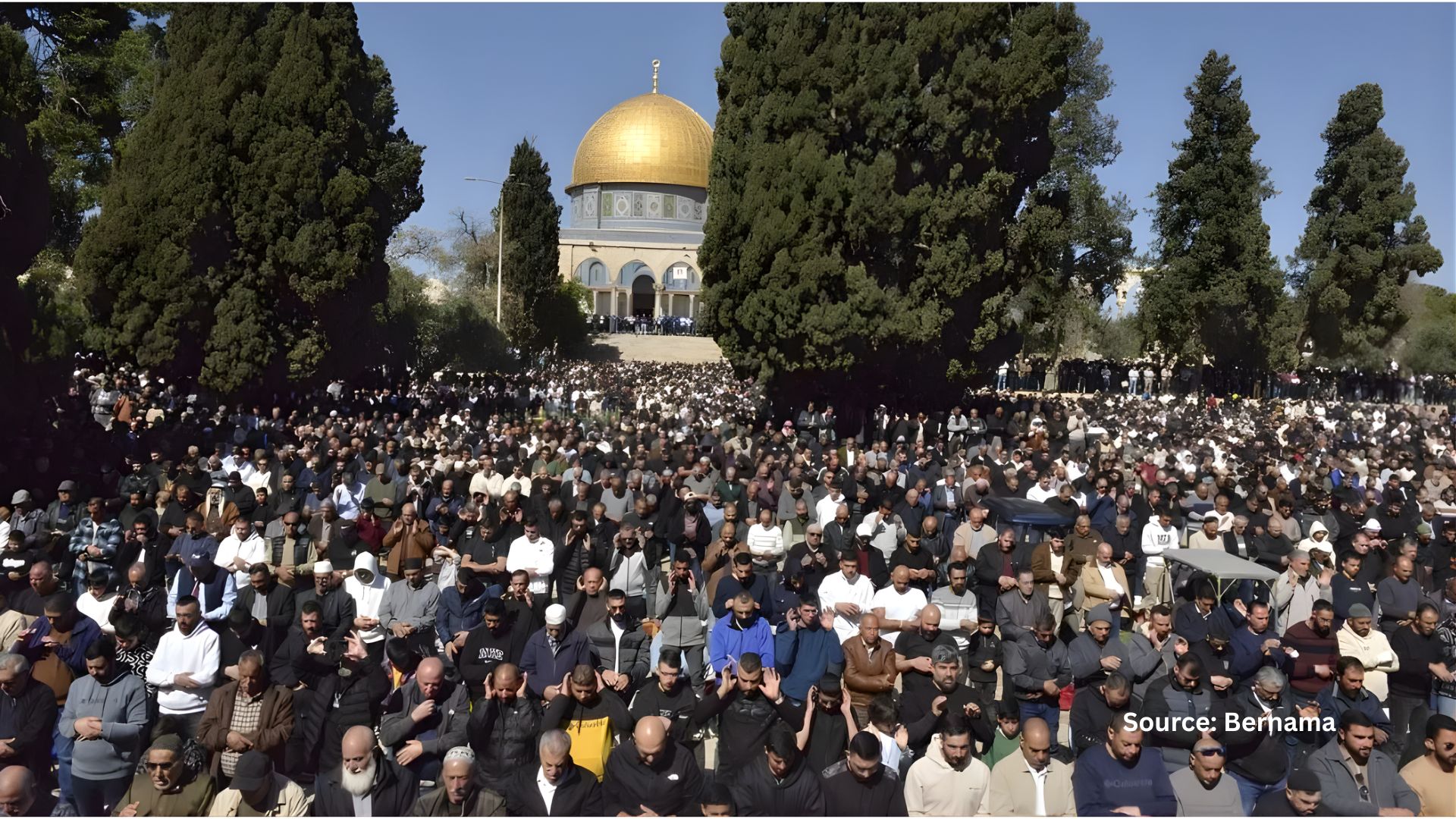
In defiance of the prayer ban, Palestinian community leaders and activists have issued a global call for resilience. They have urged Muslims to gather as close to the Old City gates as possible on the morning of Eid.
The movement encourages worshippers to perform the Salat al-Eid (Eid prayer) in the streets and open spaces surrounding the mosque’s perimeter, ensuring that the holiday is observed collectively despite the physical barriers.
As the Middle East grapples with broader geopolitical instability, the closure of Al-Aqsa during one of the most sacred days in the Islamic calendar remains a flashpoint for potential further unrest.