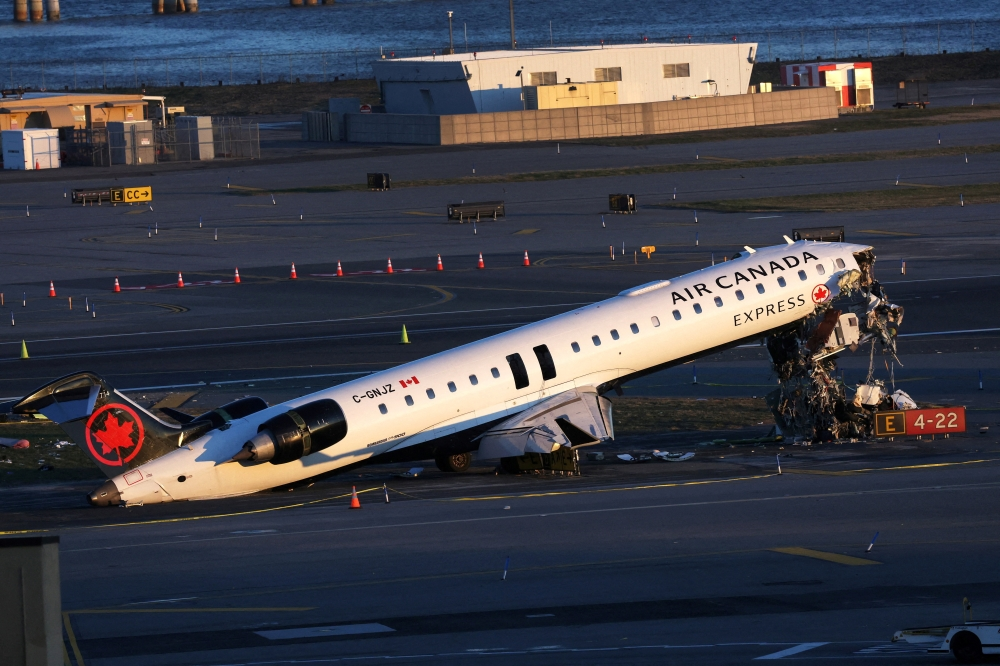
NEW YORK, March 25 — A critical safety system failed to prevent a tragic runway collision at LaGuardia Airport in New York City that killed both pilots aboard an Air Canada Express jet after it struck a fire truck while landing late Sunday, the U.S. National Transportation Safety Board (NTSB) said in an initial investigation update.
According to the NTSB, the airport’s ground surveillance and tracking technologies — designed to alert air traffic controllers of aircraft and vehicle proximity on runways — did not generate a warning before the collision occurred. The crash, which involved a regional jet and a Port Authority fire truck, marked one of the most severe runway collisions at the busy New York hub in decades.

NTSB Chair Jennifer Homendy said the runway safety system failed to detect the presence of the ground vehicle, in part because the fire truck did not have a transponder that could broadcast its position to the surveillance equipment. Without the transponder signal, the system was unable to create a reliable track of the vehicle’s movements relative to the jet.
Investigators also revealed that the runway collision unfolded only seconds after the fire truck had been cleared onto the active runway by air traffic controllers. Preliminary reports indicate the truck was authorised to cross the runway less than 20 seconds before the Air Canada Express jet — carrying dozens of passengers and crew — touched down.
Despite last‑minute communications from controllers attempting to stop the vehicle, the jet collided with the fire truck at runway speed, killing both the captain and first officer and injuring numerous passengers and crew members. Several passengers were taken to local hospitals for treatment of non‑life‑threatening injuries.
Investigators are also scrutinising procedural and staffing factors in the control tower at the time of the accident. Officials noted that only two air traffic controllers were on duty during the overnight shift, handling both aircraft movement and the emergency involving another inbound flight that prompted the fire truck’s runway crossing.
The NTSB’s preliminary findings have raised broader concerns about runway safety systems across major airports, particularly the adequacy of surveillance and collision avoidance technologies that rely on ground vehicle tracking. Aviation experts have highlighted that mandatory installation of transponders on all airport vehicles could improve the effectiveness of surface detection systems and prevent similar accidents in the future.
Industry analysts also note this incident highlights systemic challenges including aging infrastructure, technology gaps, and operational pressures on controllers during peak periods or concurrent emergencies. Some stakeholders are calling for enhanced safety protocols, mandatory technology upgrades, and additional staffing standards for overnight operations.
The NTSB’s final report is expected to take months as investigators continue reviewing flight data recorders, air traffic control communications, system telemetry, and procedural documentation. A comprehensive analysis will determine whether further recommendations are needed to prevent such tragedies in the future.
As airlines and regulators await the full investigation results, the LaGuardia runway collision has spotlighted persistent safety concerns at one of the United States’ busiest airports, prompting renewed discussions on improving runway incursion prevention measures and modernising airport ground tracking systems worldwide.