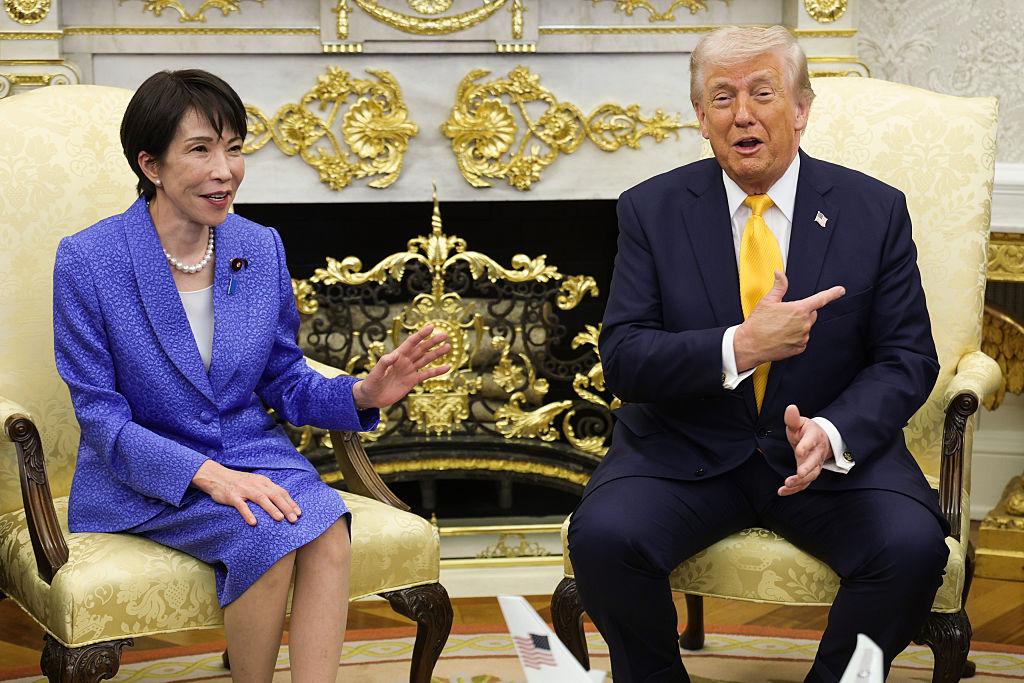
KUALA LUMPUR,MAY,2026 – US President Donald Trump and Japanese Prime Minister Sanae Takaichi have reaffirmed the strength of the US-Japan alliance following Trump’s two-day visit to China.
According to Reuters, Takaichi said she and Trump reaffirmed an “ironclad” bilateral alliance during a phone call held shortly after the US president concluded his visit to Beijing. Trump joined the call from aboard Air Force One, just hours after ending his China trip.

Speaking to reporters after the call, Takaichi said both leaders exchanged views on issues surrounding China, including economic and security matters. She also said Japan and the United States agreed to maintain close communication on Indo-Pacific issues.
The call came at a sensitive diplomatic moment for Tokyo. Trump’s visit to China had drawn close attention from Japan, especially as Tokyo continues to monitor Washington’s approach toward Beijing on regional security, economic competition and broader Indo-Pacific strategy.
Takaichi said Trump briefed her in detail about his China visit, but added that the contents of the briefing were shared on the condition that the conversation remain confidential. She did not clearly answer when asked wheth
The two leaders also discussed issues related to Iran. Takaichi said she shared Japan’s position with Trump, while a separate Jiji Press report carried by Nippon.com said both leaders exchanged views on the situation surrounding Iran and agreed to meet on the sidelines of next month’s G7 summit in France.
For Japan, the phone call was seen as an important reassurance after Trump’s direct engagement with Chinese President Xi Jinping. Japanese officials have remained cautious that stronger US-China communication could potentially affect issues important to Tokyo, including Taiwan, economic coercion and rare earth supply concerns.
The Star, citing The Yomiuri Shimbun, reported that Japan had urged Washington to press Beijing over tighter restrictions on rare earth exports to Japan. Japanese officials warned that such measures could also affect rare earth materials flowing from China to the United States through Japan.
Trump did not stop in Japan during his Asia trip, which reportedly prompted Tokyo to request a phone conversation after his China visit. Takaichi later highlighted that Trump called her from Air Force One, describing it as a sign of consideration toward Japan.
The reaffirmation of the US-Japan alliance is significant because Japan remains one of Washington’s closest security partners in Asia. The alliance plays a central role in regional security planning, particularly as tensions continue around China’s military activity, Taiwan, North Korea and maritime disputes in the Indo-Pacific.
At the same time, the call shows Japan’s effort to stay closely aligned with Washington while the United States manages its relationship with China. Tokyo wants to ensure that its security concerns remain part of US strategic calculations even as Washington and Beijing attempt to stabilise ties.
The timing also reflects growing concern among US allies over how major-power diplomacy could reshape regional influence. For Japan, the key issue is not only whether Washington maintains communication with Beijing, but whether the United States continues to defend alliance commitments in Asia.
Takaichi’s remarks suggest that Tokyo received reassurance from Trump that the US-Japan alliance remains firm. However, several details of Trump’s briefing on the China visit remain undisclosed, leaving room for further attention on how Washington balances ties with Beijing and Tokyo.
Overall, the phone call reinforced a clear message from both sides: despite Trump’s high-profile engagement with China, the United States and Japan intend to keep their alliance central to Indo-Pacific security and regional diplomacy.