KUALA LUMPUR, May 2026 — Transport Minister Anthony Loke has announced that an independent special task force will investigate the LRT derailment near Chan Sow Lin station, as authorities work to restore services on the affected Ampang-Sri Petaling Line by Wednesday, June 3.
Loke said the derailed train would be hoisted and removed today before repair work on the track begins. He made the announcement after visiting the derailment site with the special task force and the Land Public Transport Agency, or APAD, to inspect the condition of the affected track.

According to Loke, Prasarana informed him that the train involved in the incident would be removed first before track repair works could proceed. He said the repair process is expected to take between three and five days, with the affected section targeted to resume operations on June 3 after the long weekend holiday.
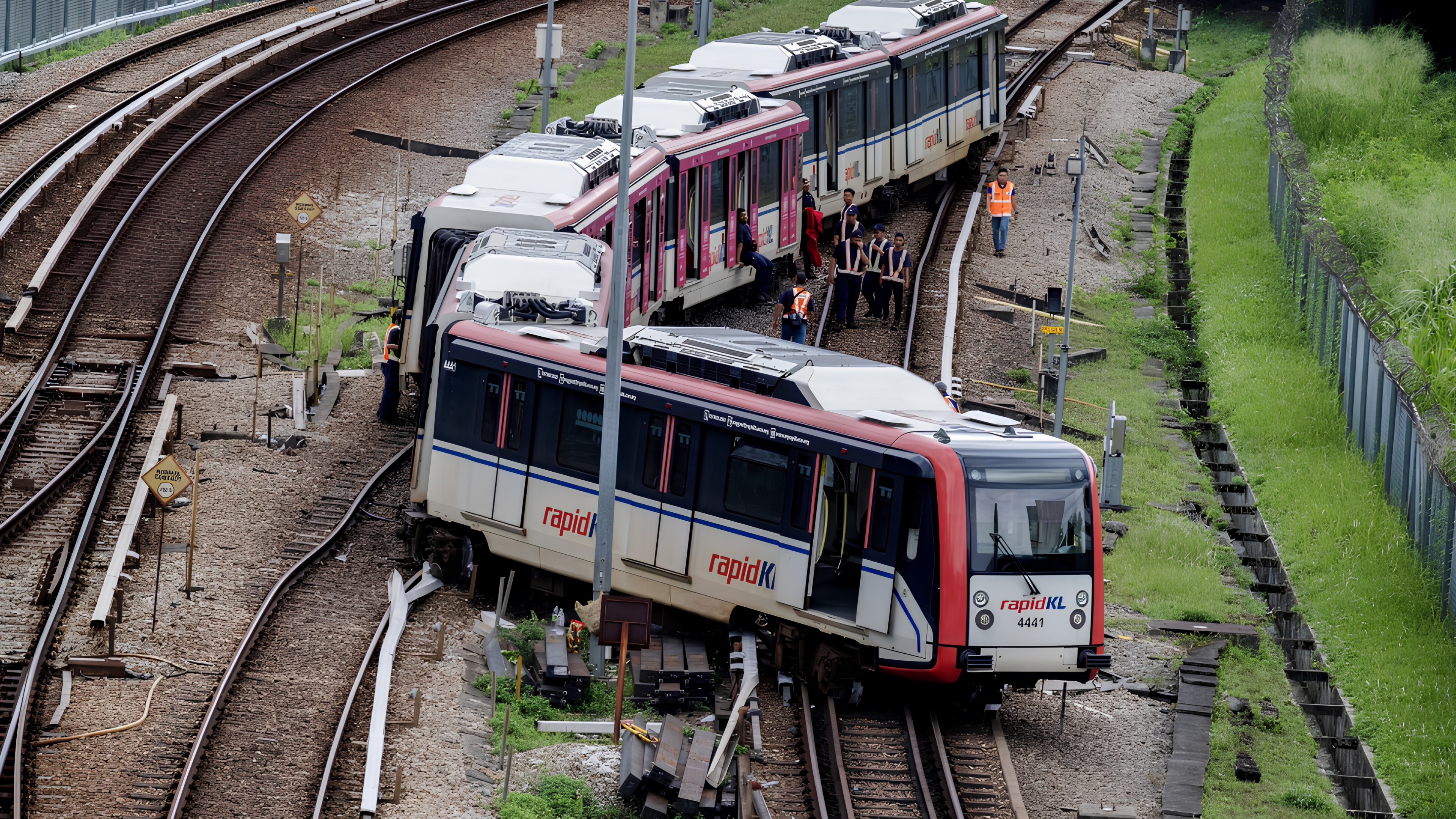
The derailment occurred on Thursday morning when a train on the Ampang-Sri Petaling Line was passing through a track switch area near Chan Sow Lin station. The incident disrupted service schedules along the affected route, but all 25 passengers on board were safely evacuated and no injuries were reported.
Loke said initial findings showed that the derailment was linked to the improper functioning of the station switch. He explained that the first carriage was on the correct track, but the following carriages were misdirected, causing force from the rear that eventually led the first carriage to come off the track completely.
The minister said a crane is required to haul the train back onto the track, as the train had fully come off the line during the incident. Once the train is removed, repair teams will begin immediate work to restore the affected section.
During the repair period, trains travelling from Ampang toward Kuala Lumpur will need to reverse back to the Ampang area to allow repair operations to continue safely. This temporary arrangement is expected to affect passenger movement until the track is fully restored.
Loke stressed that the investigation will be carried out independently. He said no Prasarana representatives will be included in the special task force, allowing the team to examine the cause of the derailment without internal influence.
The task force will study whether the incident was caused by human error, system failure or other technical factors. Loke said the team has been given a maximum of 30 days to complete its report, which will later be made public as part of the government’s transparency commitment.
The investigation is expected to focus on the condition of the track, the performance of the railway switch system, maintenance procedures and operational safety protocols. These areas are important because railway switch failures can pose serious safety risks if not detected and addressed properly.
The incident has placed renewed attention on Prasarana Malaysia Bhd, the state-owned public transport operator responsible for running the Klang Valley’s LRT, MRT and Monorail networks, as well as Rapid KL bus services.
A day earlier, Loke had described the derailment as a very serious incident and ordered APAD to take maximum punitive action against Prasarana. He said the derailment should not be treated as a normal service disruption because it involved safety risks to passengers and staff.
Loke also warned that Prasarana’s board and top management could not continue with a “business-as-usual” attitude. He said strong action, including dismissal, should be taken against any party found negligent in carrying out their responsibilities.
The derailment caused major inconvenience for commuters using the Ampang and Sri Petaling lines, two important rail routes serving Kuala Lumpur and surrounding areas. Chan Sow Lin is a key section within the network, making any disruption near the station likely to affect wider train movement.
Following the incident, Rapid KL activated alternative train services and shuttle bus arrangements to help passengers continue their journeys. Commuters were advised to follow instructions from station staff and refer to official Rapid KL updates for the latest service information.
The derailment also triggered public calls for stronger track maintenance and better inspection of older rail infrastructure. Some LRT users told Bernama that they hoped Rapid KL would improve maintenance work to prevent similar incidents in the future.
Public transport reliability remains a major concern in the Klang Valley, where thousands of commuters depend on rail services for daily travel. Any major disruption can affect workers, students and businesses, especially during peak hours.
The latest update from Loke provides a clearer timeline for recovery, with services on the affected section expected to resume on June 3 if repair works are completed as planned. However, the full cause of the derailment will only be known after the independent task force completes its report.
For now, commuters using the Ampang-Sri Petaling Line are advised to plan their journeys carefully, allow extra travel time and check Rapid KL’s official channels before travelling.
The incident is expected to remain under close public scrutiny, especially as the Transport Ministry has promised that the investigation findings will be made public. The outcome of the probe may determine whether further action will be taken against Prasarana or any party found responsible.
the Chan Sow Lin derailment has become more than a transport disruption. It is now a major public safety and accountability issue involving Rapid KL operations, Prasarana management, APAD oversight and the government’s commitment to restoring confidence in Malaysia’s urban rail system.