KUALA LUMPUR, June, 2026 – Malaysia has rejected claims that its manufacturers are producing beyond market demand to flood the United States market, with Investment, Trade and Industry Minister Datuk Seri Johari Abdul Ghani saying the issue may instead be linked to imports from third-party countries.
Johari said the US Trade Representative’s claim of excess capacity against Malaysia may have arisen because some products imported into Malaysia could have originated from other countries that are facing overproduction issues.

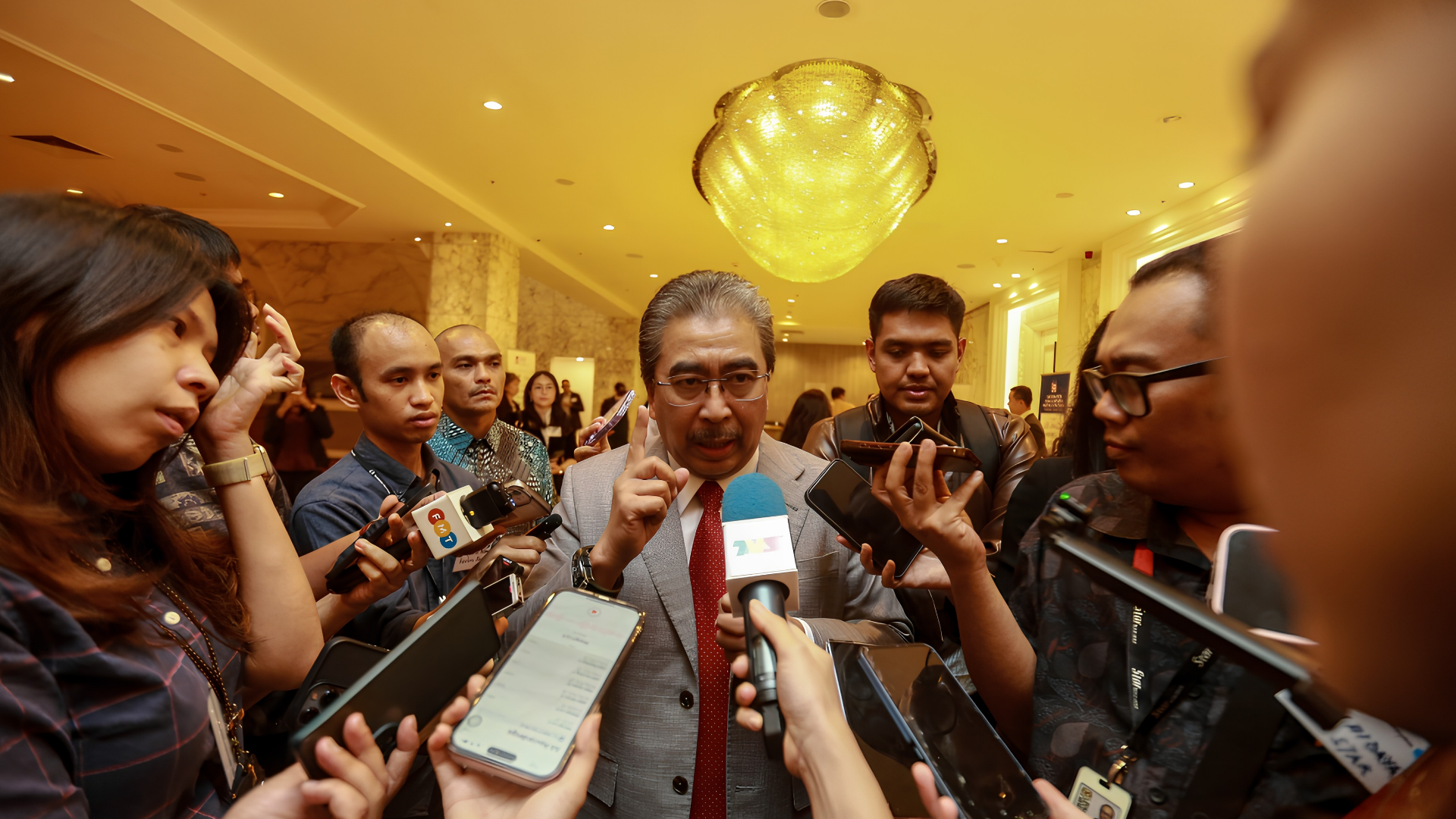
Speaking to reporters after addressing executives from US companies at the American-Malaysian Chamber of Commerce annual general assembly luncheon in Kuala Lumpur, Johari firmly denied that Malaysia has an excess capacity problem.
“We don’t have excess capacity,” Johari said, adding that the concern may have been caused by products imported from third parties with excess capacity.
His remarks came after the USTR reportedly cited suspected forced-labour concerns and alleged excess capacity among Malaysian manufacturers as reasons for a proposed 10 per cent tariff on certain Malaysian exports.
The proposed tariff is expected to take effect after the current 10 per cent tariff imposed under Section 122 of the US Trade Act 1974 expires on July 24, 2026. However, the Ministry of Investment, Trade and Industry, or Miti, has said discussions are still ongoing and no final decision has been made.
The issue is significant because tariffs can directly affect Malaysian exporters, especially manufacturers that rely on access to the US market. If additional tariffs are imposed, affected companies could face higher costs, reduced price competitiveness and greater uncertainty in export planning.
Johari’s explanation suggests that Malaysia is trying to separate its own manufacturing sector from wider concerns about global overcapacity. In international trade, excess capacity usually refers to a situation where businesses produce more goods than the market can absorb, often allowing exporters to sell at artificially low prices and gain an unfair competitive advantage.
Malaysia’s position is that its manufacturers are not overproducing to undercut competitors in the US market. Instead, Johari indicated that the concern may involve goods from other countries entering Malaysia before reaching export channels.
This distinction matters because trade authorities often examine whether a country is genuinely producing goods domestically or whether it is being used as a transit point for products from other countries. If the issue involves third-party imports, Malaysia may need to strengthen verification, documentation and supply-chain monitoring to reassure US authorities.
The matter also comes at a sensitive time for global trade. The United States has become more aggressive in reviewing imports linked to alleged forced labour, transshipment, excess capacity and unfair trade practices. Countries with strong manufacturing and export sectors, including Malaysia, may face closer scrutiny as Washington tightens trade enforcement.
For Malaysia, maintaining strong trade ties with the US is important. The US remains one of Malaysia’s key export markets, particularly for sectors such as electrical and electronics, machinery, rubber products, medical devices and other manufactured goods.
Any tariff action could therefore have wider implications for manufacturers, investors and supply chains. Even a 10 per cent tariff can affect margins, pricing strategies and long-term contracts, especially for companies operating in highly competitive export markets.
Johari’s comments also show that Putrajaya is seeking to defend the credibility of Malaysian manufacturers while continuing engagement with US authorities. By stating that no final decision has been made, Miti appears to be leaving room for negotiation and clarification before any new tariff measure takes effect.
The forced-labour concern is another sensitive issue for Malaysia’s export industries. In recent years, several Malaysian companies have faced scrutiny from US authorities over labour practices. Because of this, the government and industry players have been under pressure to improve compliance, worker welfare and supply-chain transparency.
However, the excess capacity claim introduces a different trade challenge. Unlike labour compliance, which focuses on employment practices, excess capacity relates to production levels, pricing and market behaviour. Malaysia’s response will likely need to address both issues separately.
If the USTR concern is connected to third-party imports, Malaysia may need to show that local manufacturers are not acting as channels for products from countries accused of overcapacity. This could involve stronger origin checks, customs controls and cooperation with US trade officials.
The situation also highlights how global trade enforcement is becoming more complex. Countries are no longer judged only by their own production practices, but also by the integrity of their supply chains and the origin of goods moving through their markets.
For investors, Johari’s statement may be seen as an attempt to provide reassurance that Malaysia’s manufacturing sector remains legitimate and demand-driven. It also signals that the government is aware of the issue and is engaging with the matter before the proposed tariff becomes final.
The meeting with US company executives through the American-Malaysian Chamber of Commerce was also important. It gave Johari a platform to address trade concerns directly with the business community and explain Malaysia’s position to American stakeholders operating in the country.
Businesses will now be watching closely for the outcome of discussions between Miti and US authorities. If Malaysia can clarify the source of the USTR’s concern and provide enough assurance, there may be room to reduce or avoid further tariff pressure.
At the same time, Malaysian exporters may need to prepare for possible changes in compliance requirements. Companies involved in US-bound exports may have to strengthen traceability, documentation and audit readiness to avoid being affected by trade restrictions.
Overall, Johari’s statement reflects Malaysia’s effort to defend its manufacturing sector against allegations of overcapacity while acknowledging that third-party imports could be part of the issue. With the proposed tariff deadline approaching after July 24, the next phase of discussions between Malaysia and the US will be crucial for exporters and trade policy watchers.