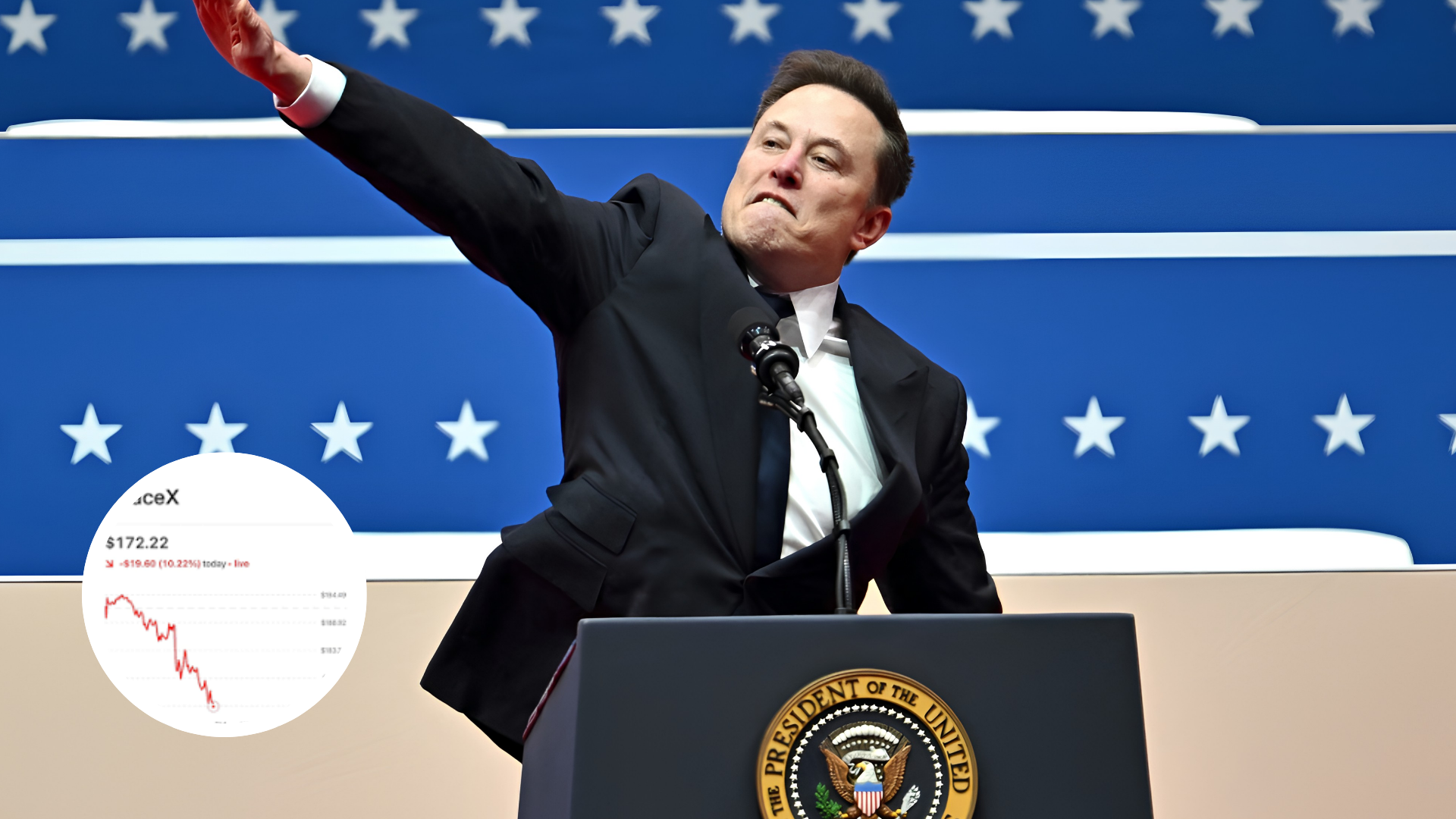
KUALA LUMPUR, June, 2026 — SpaceX shares suffered a sharp market reversal, plunging more than 16% as Wall Street’s enthusiasm for artificial intelligence-linked growth came under pressure from rising investor scepticism. The fall wiped hundreds of billions from the company’s market value after a record IPO and several strong opening trading sessions.
According to Malay Mail, SpaceX became the main victim of the latest market downturn, with its shares falling more than 16% after the company had previously enjoyed a record market debut and three positive opening trading sessions.

The sell-off came as the Nasdaq dropped more than 1%, with several major technology companies also trading lower. Malay Mail reported that Amazon, Nvidia and Microsoft were sharply down as investors reassessed the strength of the AI-driven rally on Wall Street.
Reuters reported that US technology megacaps declined as SpaceX extended its slump and investors became increasingly concerned about the huge capital expenditure required to build artificial intelligence infrastructure.
The latest decline marks a major shift in sentiment after investors had previously treated SpaceX’s IPO as a symbol of confidence in the future of AI, space technology and Elon Musk-linked growth companies.
MarketWatch reported that SpaceX shed about US$400.8 billion in market value, with its stock falling to US$154.60, below its IPO-day closing price of US$160.95. The report said the decline pushed SpaceX’s market capitalisation to about US$2.04 trillion.
Despite the sharp fall, SpaceX shares remained above the reported IPO price of US$135, showing that the company was still trading above its initial offer level even after the heavy market correction.
The decline also came as investors questioned whether AI-related revenue expectations had moved too far ahead of realistic business performance. SpaceX had been linked to aggressive forecasts for future AI-related revenue growth, adding to debate over whether parts of the AI trade had become overvalued.
The broader market weakness was not limited to SpaceX. Reuters reported that Alphabet fell about 6%, its worst one-day performance since May 2025, while Amazon, Meta and Microsoft were also under pressure, with the trio expected to lose more than US$248 billion in combined market value.
Alphabet’s decline was linked partly to concerns over its AI talent pipeline and the departure of a leading Google DeepMind scientist to Anthropic. The Times reported that Alphabet suffered a major market value loss after two leading AI researchers defected, adding to pressure on Big Tech valuations.
The latest sell-off shows that Wall Street investors are becoming more selective in the AI trade. Companies spending heavily on AI infrastructure are facing questions over cost, return on investment and valuation, while some hardware suppliers linked to AI infrastructure demand have continued to perform better.
Reuters reported that memory and storage-related stocks such as Micron Technology, SanDisk and Western Digital rose as investors continued to favour suppliers that directly benefit from AI data-centre demand.
This created a split market environment. On one side, companies with huge AI spending needs faced selling pressure. On the other side, companies supplying essential AI hardware and memory infrastructure continued to attract investor interest.
The SpaceX decline is especially significant because the company had been one of the most closely watched technology listings of 2026. Its IPO was treated as a major test of investor confidence in high-growth technology companies, especially those tied to AI, satellite infrastructure and next-generation computing.
The sharp reversal suggests that investors are now more concerned about whether market valuations have moved too quickly. When a company rises sharply after listing, even small doubts about growth expectations can lead to heavy profit-taking.
Another concern involves financing. MarketWatch reported that SpaceX planned to issue senior unsecured notes to raise funds connected to repayment of a bridge loan used by Elon Musk’s xAI. This added another layer of attention to the company’s balance sheet and capital strategy.
For Wall Street, the sell-off may signal that the AI rally is entering a more cautious phase. Investors are no longer simply buying every company connected to artificial intelligence. Instead, they are comparing revenue visibility, infrastructure costs, cash flow and real returns from AI investment.
The pressure also affected global markets. The Financial Times reported that global stocks were hit by a broader technology sell-off, with weakness spreading beyond the United States into European and Asian markets.
Malay Mail also reported mixed Asian market performance following Wall Street’s decline, with Taipei and Shanghai down, Hong Kong and Sydney flat, while Singapore, Wellington and Manila edged higher.
The sell-off highlights how heavily global markets have become tied to the AI investment theme. When optimism is strong, AI-linked companies can lead rallies. But when investors question valuations, the same stocks can become the centre of sharp corrections.
For SpaceX, the key question is whether the company can reassure investors that its long-term growth story remains intact. The market will likely watch its AI-linked revenue projections, Starlink growth, launch business, capital spending and debt plans closely.
For broader tech stocks, investors will continue monitoring whether AI spending can translate into meaningful earnings growth. If companies cannot show clear returns, market pressure may continue.
At the same time, the correction does not necessarily mean the AI trend is over. It may instead show that investors are separating companies with strong near-term AI revenue from companies whose valuations depend heavily on future expectations.
SpaceX’s market decline is therefore more than a single-company story. It reflects a wider debate over whether Wall Street’s AI boom has become too expensive and whether investors are ready to keep paying premium valuations for long-term growth narratives.
the plunge in SpaceX shares marks one of the biggest market developments in the latest technology sell-off. It shows that even the most high-profile AI-linked and innovation-driven companies are not immune to investor caution when valuation concerns rise.
The development is suitable for Update News because it involves a current Wall Street sell-off, a major decline in SpaceX’s market value, renewed AI scepticism and wider pressure on global technology stocks