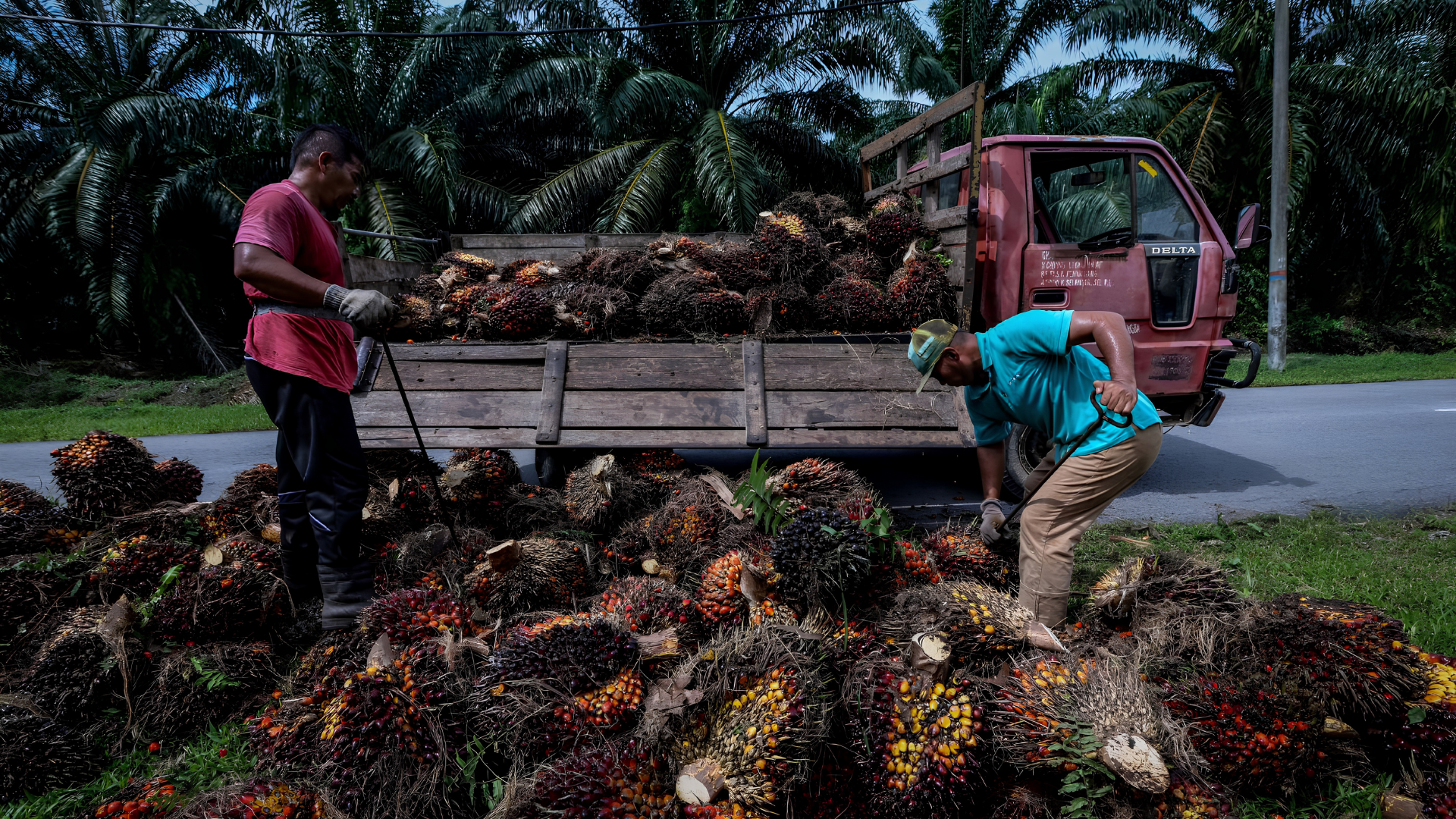
KUALA LUMPUR, AUGUST 2026 — Malaysian palm oil futures recovered on Tuesday after falling for two straight trading sessions, supported by stronger crude oil prices and gains in rival edible oil markets.
The benchmark October palm oil contract on the Bursa Malaysia Derivatives Exchange rose RM31, or 0.67%, to RM4,660 per metric tonne during early trading, reversing recent losses as market sentiment improved.

Market analysts said the recovery was largely driven by higher prices for soybean oil and palm oil on China’s Dalian Commodity Exchange, as well as firmer soybean oil futures on the Chicago Board of Trade.
Palm oil prices typically move in line with other vegetable oils because they compete in the global edible oils market.
Crude oil also provided additional support after rebounding from recent declines. Continued uncertainty over the conflict involving the United States and Iran has kept concerns over Middle East energy supplies alive, encouraging buying interest across commodity markets.
Higher crude oil prices generally improve the attractiveness of palm oil as a biodiesel feedstock, providing additional support for demand.
The Malaysian ringgit weakened slightly against the US dollar during the trading session, making locally produced palm oil more competitive and affordable for overseas buyers using foreign currencies.
Currency movements remain an important factor influencing export competitiveness and international demand for Malaysian palm oil.
Despite the rebound, traders remain cautious over expectations that Malaysia’s palm oil inventories increased to a five-month high in July.
A Reuters survey indicated that stronger production growth outpaced healthy export demand, leading to expectations of larger stockpiles that could limit further price gains in the near term.
Meanwhile, Indonesia, the world’s largest palm oil producer, exported 11.28 million metric tonnes of crude and refined palm oil during the first half of 2026, representing a 2.5% increase compared with the same period last year.
The higher export volume reflects continued global demand despite ongoing uncertainty surrounding commodity markets and geopolitical tensions.
Analysts noted that while stronger energy prices have improved short-term market sentiment, concerns over rising inventories and softer demand from several key importing countries may continue to cap further price appreciation.
Market participants are also closely monitoring upcoming Malaysian Palm Oil Board (MPOB) data for clearer indications of production, exports and inventory levels, which are expected to influence price direction over the coming weeks.
The latest rebound highlights the close relationship between energy markets and agricultural commodities, with developments in crude oil, currency movements and global edible oil prices continuing to shape investor sentiment.
As geopolitical uncertainty persists and supply-demand fundamentals evolve, palm oil is expected to remain one of the most closely watched commodities in Southeast Asia’s agricultural sector.