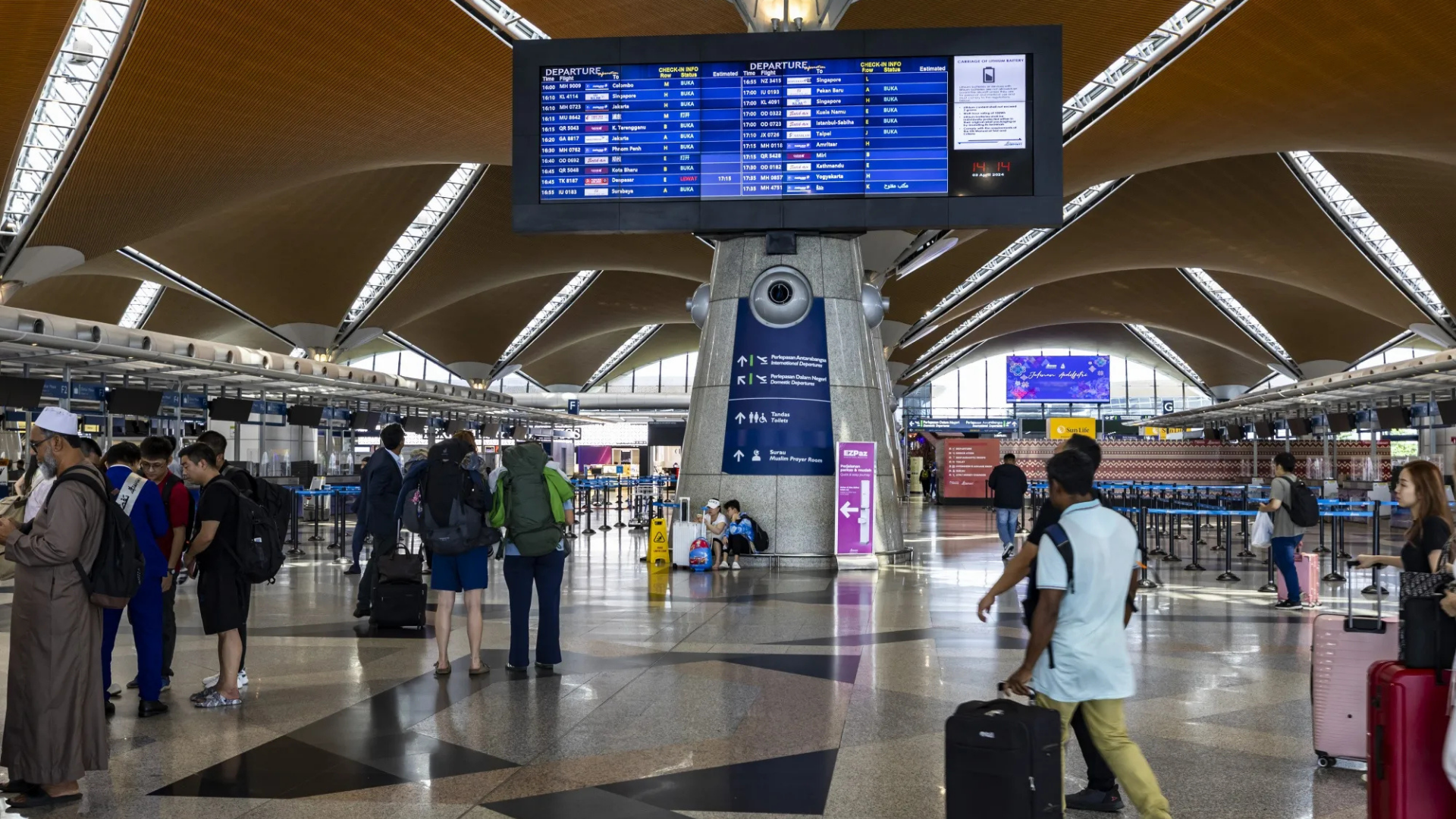
KUALA LUMPUR, AUGUST 2026 — Malaysia Airports Holdings Bhd (MAHB) has welcomed the government’s move to strengthen airport security, including the possible reintroduction of targeted physical screening when required based on security risk assessments.
The airport operator said targeted checks could provide an additional layer of prevention alongside existing aviation-security procedures and technology.

The proposal forms part of a wider government effort to improve controls at Malaysia’s international entry points and close potential security gaps through stronger cooperation between airport operators, police, customs, immigration and other agencies.
MAHB said physical screening would not necessarily be applied universally. Instead, it could be conducted on a targeted, risk-based basis where security assessments indicate that additional checks are necessary.
The measure would complement tools already available at airports, including handheld metal detectors.
Deployment of K9 detection units by the Royal Malaysia Police (PDRM) and Royal Malaysian Customs Department (JKDM) could also strengthen the existing Aviation Security, or AVSEC, framework.
MAHB said it is also reinforcing its current security arrangements through upgraded screening equipment at Kuala Lumpur International Airport (KLIA) and other airports under its operations.
MAHB managing director Datuk Mohd Izani Ghani said the integrated approach would help address longstanding challenges in airport-security management, particularly when incidents involve responsibilities shared by several agencies.
Airport operators have traditionally focused on aviation safety and the secure operation of airport infrastructure, while criminal investigations, border enforcement and prohibited substances can fall under the jurisdiction of separate enforcement agencies.
According to MAHB, a clearer division of responsibilities would allow each organisation to apply its own legal authority and expertise more effectively.
The company said it remains committed to working with the government and enforcement agencies to protect Malaysia’s international gateways.
The new security approach also involves stronger coordination through the National Immigration Command Centre (NICC) and the joint technical committee between the Ministry of Home Affairs (KDN) and Ministry of Transport (MOT).
MAHB said the structure should create clearer accountability and make multi-agency implementation more coordinated.
Liaison officers will be drawn from agencies including the Malaysian Border Control and Protection Agency (AKPS), Civil Aviation Authority of Malaysia (CAAM), PDRM, JKDM and Immigration Department of Malaysia, alongside MAHB through its airport operations and AVSEC functions.
The approach is intended to reduce overlap while ensuring that security concerns can be referred quickly to the agency with the appropriate enforcement authority.
MAHB stressed that AVSEC will continue focusing on protecting civil aviation against unlawful interference and threats that could compromise aviation and air-transport safety.
Those responsibilities include preventing security threats involving passengers, aircraft and restricted airport areas, including attempts to bring firearms or other dangerous items onto aircraft.
Existing airport conditions also require passengers and hand luggage to undergo appropriate security screening before entering sterile areas, while checked baggage is subject to mandatory screening. Additional random manual searches can also be required as an added security measure.
MAHB said the broader multi-agency arrangement would allow the airport operator to remain focused on its core responsibility of maintaining safe, secure and efficient airport operations, while specialised enforcement agencies handle matters falling under their respective jurisdictions.
The development follows the Cabinet’s approval of a comprehensive plan to strengthen controls at Malaysia’s entry points, with immediate measures already beginning to be implemented.
Earlier this month, the government also announced plans to involve PDRM officers more directly in the AVSEC ecosystem. Authorities said greater police involvement could strengthen intelligence-sharing, early detection, enforcement coordination and responses to criminal threats attempting to exploit aviation facilities.
The government has also been reviewing airport scanning technology and considering improvements to screening equipment at entry points nationwide.
Airport-security procedures have come under increased scrutiny following the arrest of a Malaysian pilot in Indonesia who was suspected of attempting to smuggle about 25 kilograms of MDMA through Soekarno-Hatta International Airport.
The incident prompted Malaysian authorities to review possible weaknesses involving airport personnel, crew screening, border enforcement and coordination between agencies.
MAHB previously said it would cooperate fully with enforcement agencies investigating the case while continuing to strengthen security and enforcement measures at KLIA.
Malaysia Aviation Group has separately introduced mandatory drug screening for its active Malaysia Airlines pilots as part of wider efforts to reinforce aviation safety.
Rather than relying on a single security method, Malaysia’s developing airport-security model is increasingly based on multiple layers of prevention.
Targeted physical screening, K9 units, improved scanners, intelligence sharing and clearer agency responsibilities are intended to work together to detect threats earlier and close potential loopholes.
MAHB said it would continue engaging the authorities to ensure the enhanced measures can be implemented effectively.
The broader goal is not only to safeguard passengers and aviation operations but also to strengthen confidence that Malaysia’s airports and international entry points cannot easily be exploited for criminal activities.