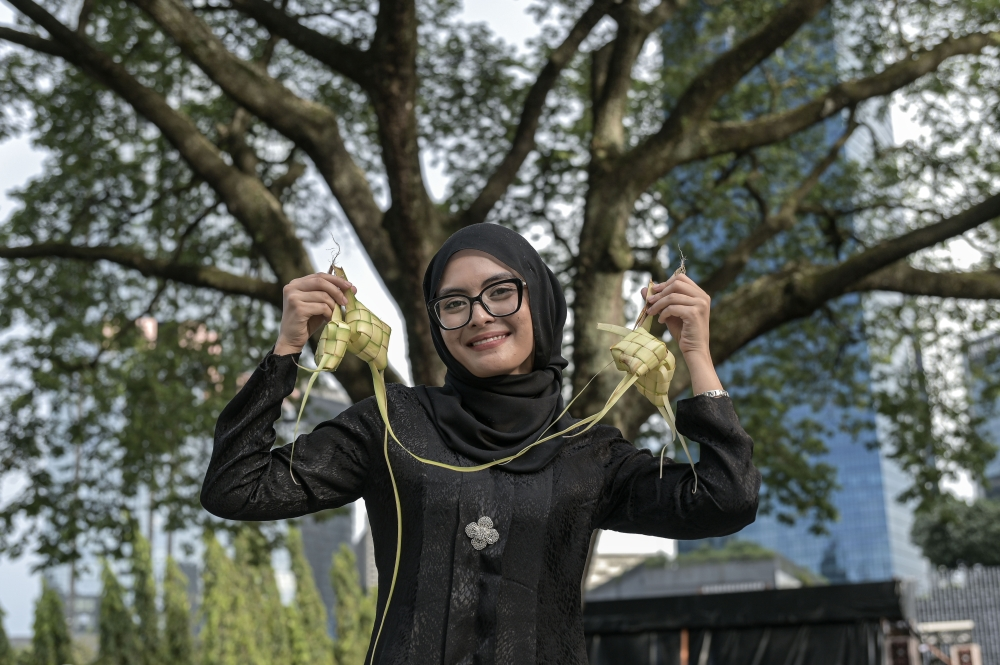
KUALA LUMPUR, March 17, 2026 — As preparations for Hari Raya Aidilfitri intensify across Malaysia, a growing number of people are turning to ready-made ketupat casings for convenience, sparking concerns over the gradual decline of traditional weaving skills.
Ketupat, a staple dish during the festive season, is traditionally made by filling rice into pouches woven from young coconut leaves before being boiled to form a compact rice cake. It is widely enjoyed alongside dishes such as rendang, peanut sauce, and sayur lodeh, making it an essential part of Raya celebrations.

However, the process of weaving ketupat casings — once a common household activity — is now becoming less practiced, particularly among younger generations. Many Malaysians prefer to purchase pre-woven casings, citing time constraints and convenience as key reasons for the shift.
Tradition at Risk
According to entrepreneur Nur Fatin Yasmin Firdaus, the increasing reliance on ready-made options could lead to the eventual disappearance of this traditional skill if efforts are not made to preserve it.
“If no one continues learning the craft, it may eventually fade away. Ketupat weaving is part of our heritage passed down through generations,” she said during a ketupat weaving workshop held in conjunction with a Raya community programme in Kuala Lumpur.
Ketupat weaving is considered a cultural art form that requires patience, precision, and practice. Even a small mistake can cause the weave to unravel, making it a skill that demands both technique and persistence.
Reviving Cultural Heritage
In response to these concerns, initiatives such as ketupat weaving workshops have been introduced to encourage more Malaysians — especially the younger generation — to learn and appreciate the craft.
Nur Fatin, who developed an interest in weaving at a young age, now actively shares her knowledge with the public through hands-on sessions. She aims to show that the skill is not as difficult as many believe and hopes to inspire more people to keep the tradition alive.
Participants in these workshops are given the opportunity to learn various weaving styles, including traditional forms such as ketupat bawang, ketupat sate, and ketupat jantung. Mastering these techniques can take time, but they remain an important part of Malaysia’s cultural identity.
Balancing Convenience and Tradition
While ready-made ketupat casings offer a practical solution for busy households, cultural advocates stress the importance of maintaining a balance between modern convenience and preserving heritage.
Ketupat itself is more than just a festive food — it symbolises unity, tradition, and celebration across Southeast Asia, particularly during Hari Raya.
Experts note that the survival of traditional crafts like ketupat weaving depends on continued interest, education, and community involvement. By combining modern accessibility with cultural awareness, Malaysians can ensure that this cherished tradition continues to thrive.