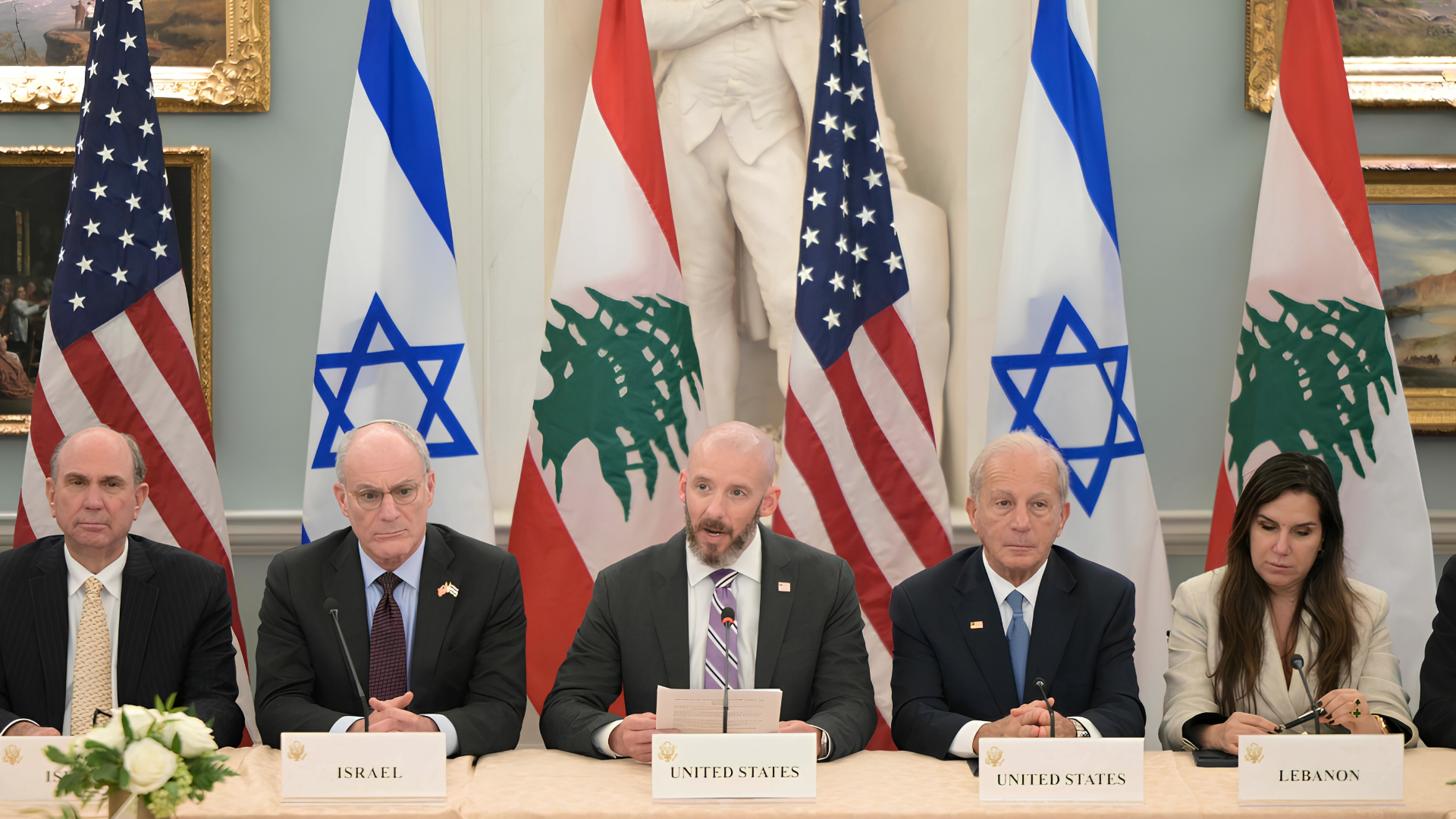
KUALA LUMPUR,June, 2026 – Israel and Lebanon have agreed to implement a conditional ceasefire aimed at ending the latest escalation linked to the conflict involving Hezbollah, according to a joint statement released with the United States.
The agreement was reached after negotiations in Washington and is seen as a major diplomatic step to reduce violence along the Israel-Lebanon front. However, the ceasefire is not unconditional. It depends on a complete halt of fire by Hezbollah and the withdrawal of all Hezbollah operatives from the South Litani Sector in southern Lebanon.

Under the agreement, Israel and Lebanon will move quickly towards creating “pilot zones” where the Lebanese Armed Forces will take exclusive control of the territory. These zones are expected to exclude all non-state armed groups, including Hezbollah.
The deal is significant because previous ceasefire arrangements in April and May failed to fully stop the violence. Although both sides had agreed to earlier pauses in hostilities, attacks continued across southern Lebanon and northern Israel.
According to Reuters, Israeli drone strikes still killed at least six people in southern Lebanon on Wednesday, while Israel said it had intercepted a hostile aircraft likely fired by Hezbollah. This shows that the situation remains fragile despite the latest diplomatic breakthrough.
The new ceasefire framework follows a US-mediated arrangement announced earlier this week, when Israel stepped back from planned attacks on Hezbollah-controlled southern suburbs of Beirut in exchange for Hezbollah halting cross-border strikes.
Axios reported that the latest full ceasefire agreement is conditioned on Hezbollah halting attacks and withdrawing its operatives from areas south of the Litani River. However, it remains unclear whether Hezbollah will fully accept all terms agreed by the Israeli and Lebanese governments.
The role of Hezbollah is central to the success of the deal. While Lebanon and Israel are the formal parties in the negotiations, Hezbollah remains the main armed group involved in the fighting with Israel from Lebanese territory.
The agreement also carries broader regional importance because Iran has linked any wider settlement involving the United States and Israel to a ceasefire covering Lebanon. Tehran has said it will not agree to a broader deal unless the Lebanon front is also addressed.
The conflict between Israel and Hezbollah intensified after Israel entered Lebanon in March in pursuit of Hezbollah, which had fired across the border in support of Tehran. Since then, southern Lebanon has become a major flashpoint in the wider regional crisis.
The latest agreement may therefore help reduce immediate military pressure and support wider diplomatic efforts involving the United States, Israel, Lebanon and Iran. Washington has played a central role in pushing both Israel and Lebanon towards a more structured ceasefire process.
Both Israel and Lebanon have also agreed to continue direct negotiations to build confidence and resolve outstanding issues. The next round of political and security-related talks is expected to take place during the week of June 22, with the aim of moving towards a more comprehensive agreement.
Axios reported that the two sides reaffirmed they have no hostile intent towards one another and committed to further direct negotiations. The joint statement also said the future of Israel-Lebanon relations must be decided by their sovereign governments.
The creation of pilot zones in southern Lebanon could become one of the most important parts of the ceasefire arrangement. If implemented, these zones would allow the Lebanese Armed Forces to take control while Israeli forces withdraw from specific areas.
However, implementation will likely be difficult. Hezbollah has long maintained a strong presence in southern Lebanon, and any attempt to remove its operatives from areas south of the Litani River could face political, military and logistical challenges.
For Lebanon, the agreement may offer a chance to restore state authority in parts of the south and reduce the risk of further Israeli strikes. For Israel, the condition requiring Hezbollah to halt fire and withdraw from sensitive areas is central to its security demands.
The ceasefire also comes after intense pressure on civilians in Lebanon. Continued airstrikes, drone attacks and cross-border fire have caused fear, displacement and damage in communities near the conflict zone.
For residents in northern Israel, the agreement may also bring hope of reduced attacks from across the border. Israeli communities near Lebanon have faced repeated security alerts, drone threats and rocket fire since the escalation began.
Still, the ceasefire remains highly uncertain. Its success will depend on whether Hezbollah stops attacks, whether Israel refrains from further military operations, and whether the Lebanese Armed Forces can take meaningful control in the agreed zones.
The agreement could also become a test of US influence in the region. If Washington can help enforce the ceasefire and push both sides towards talks, it may create space for a wider political settlement. If the deal collapses, the region could return quickly to renewed violence.
The coming days will be crucial. Any violation by Hezbollah or renewed Israeli strike could damage confidence before the next round of talks begins later this month.
Overall, the Israel-Lebanon conditional ceasefire marks a significant diplomatic development, but it remains far from a guaranteed end to the conflict. The agreement offers a possible path towards de-escalation, but its future depends heavily on Hezbollah’s response, Israeli restraint and the Lebanese state’s ability to assert control in southern Lebanon.