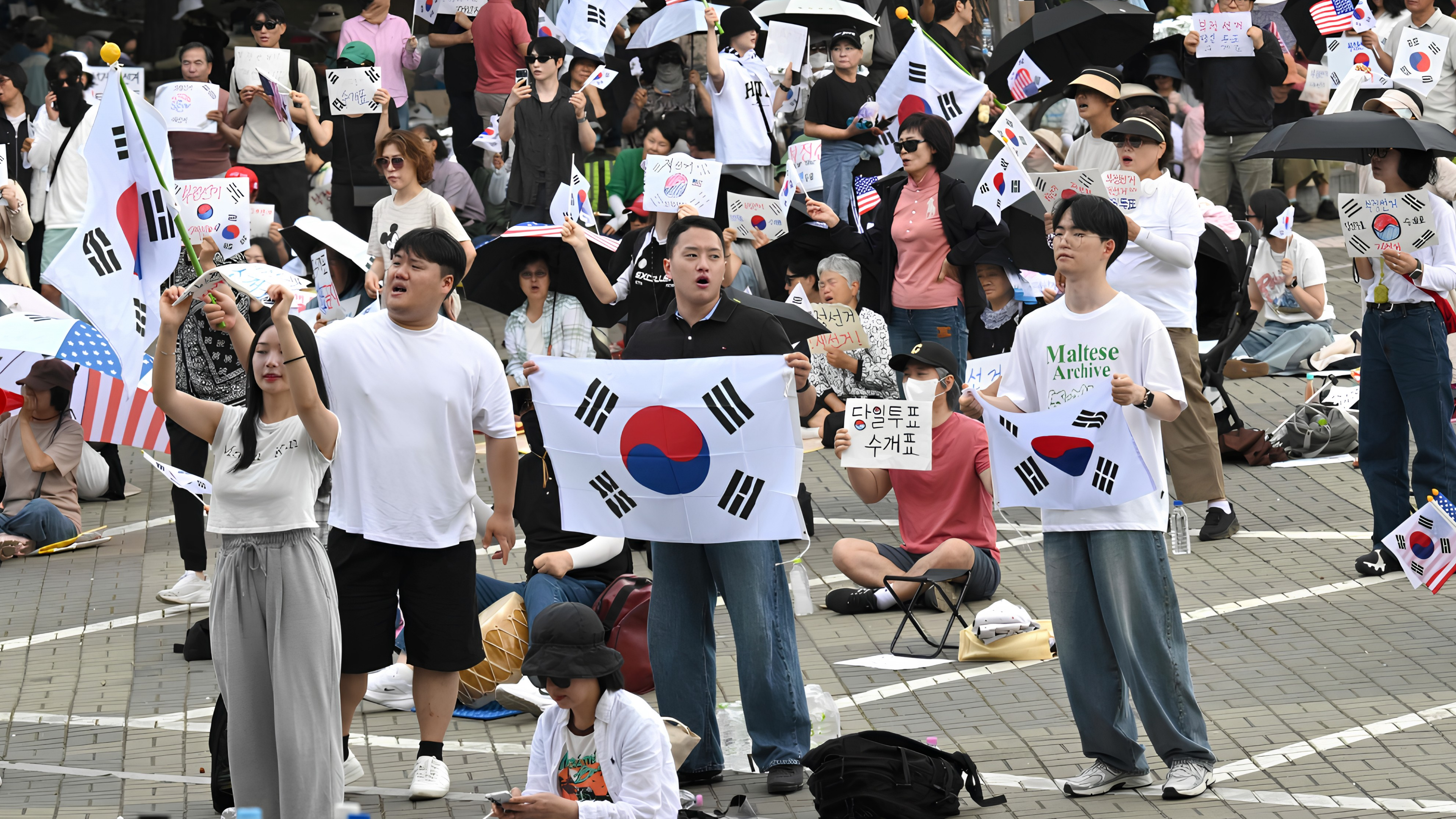
KUALA LUMPUR,June,2026 – Anger is growing in South Korea after ballot paper shortages were reported during the country’s recent local elections, prompting university students across the nation to plan fresh protests.
According to official data cited by Malay Mail and AFP, dozens of polling stations across South Korea were short of around 7,000 ballot papers during election day on June 3. Although the supplies were eventually replenished on the same day, the incident triggered public anger and raised fresh concerns over election management.

The controversy comes at a sensitive political moment for South Korea. The local election was the first nationwide vote since President Lee Jae Myung took office following the ouster of conservative former president Yoon Suk Yeol, who was removed after his brief martial law declaration in late 2024.
Lee’s ruling liberal Democratic Party won most races in the local election, including contests for mayors, local government officials and assembly members. However, the party failed to capture the important Seoul mayoral seat, making the vote politically significant for both the ruling bloc and opposition forces.
The ballot paper shortage has since fuelled frustration among voters, especially in a country where election-related claims and suspicion over voting integrity have increasingly gained attention. The mishap also added pressure on South Korea’s election authorities, with the head of the election watchdog resigning over the issue.
Despite the resignation, authorities have not offered to hold a new vote. That decision has further angered critics and helped trigger large public protests over the weekend, as demonstrators called for accountability and greater transparency in the handling of the election.
Student unions from 18 universities said they would hold new demonstrations from 6pm on Wednesday. The planned nationwide protests reflect growing dissatisfaction among young people, many of whom believe the ballot shortage issue should not be treated as a minor administrative mistake.
Hwang In-seo of Yonsei University’s student council told AFP that students were determined to protest because public anger had spread beyond party lines. The statement suggests that the issue is not being viewed solely as a partisan dispute, but as a broader concern over the credibility of the electoral process.
The controversy has also placed the National Election Commission under renewed scrutiny. Analysts cited in the report said the commission, which is a constitutional body with limited external oversight, has long faced weaknesses in internal discipline and review mechanisms.
In a further development, a Seoul court ordered evidence from one affected polling station in the capital to be preserved for investigation. A representative of the Seoul Eastern District Court said the evidence includes ballot boxes and CCTV footage.
Local media also reported that prosecutors and police had agreed to establish a joint investigation team, indicating that the authorities are now moving to examine the incident more closely.
The case has become a major test for South Korea’s democratic institutions. While the shortage was reportedly resolved on election day, the incident has raised questions about election preparedness, administrative oversight and public confidence in the voting process.
For students and protesters, the issue goes beyond the number of missing ballot papers. It touches on the principle that elections must be conducted smoothly, transparently and without room for doubt. Any disruption, especially in a highly polarised political environment, can quickly become a national controversy.
The protests are expected to increase pressure on election officials and the government to provide clearer explanations about how the shortages happened, whether voters were affected, and what measures will be taken to prevent similar problems in future elections.
As South Korea continues to deal with the political fallout, the ballot paper shortage controversy is likely to remain a major issue in public debate, particularly among young voters, civil society groups and opposition voices demanding stronger accountability.