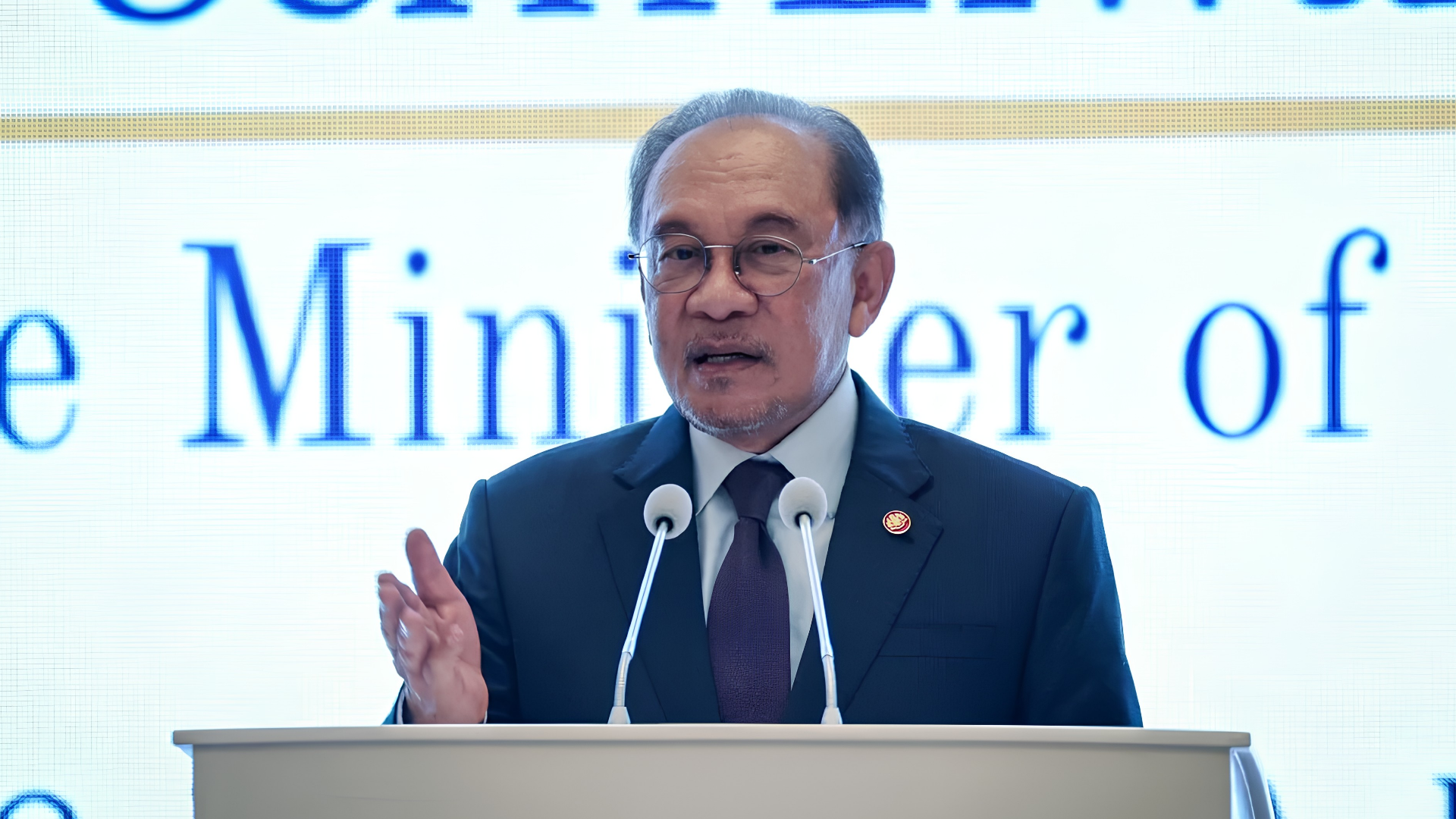
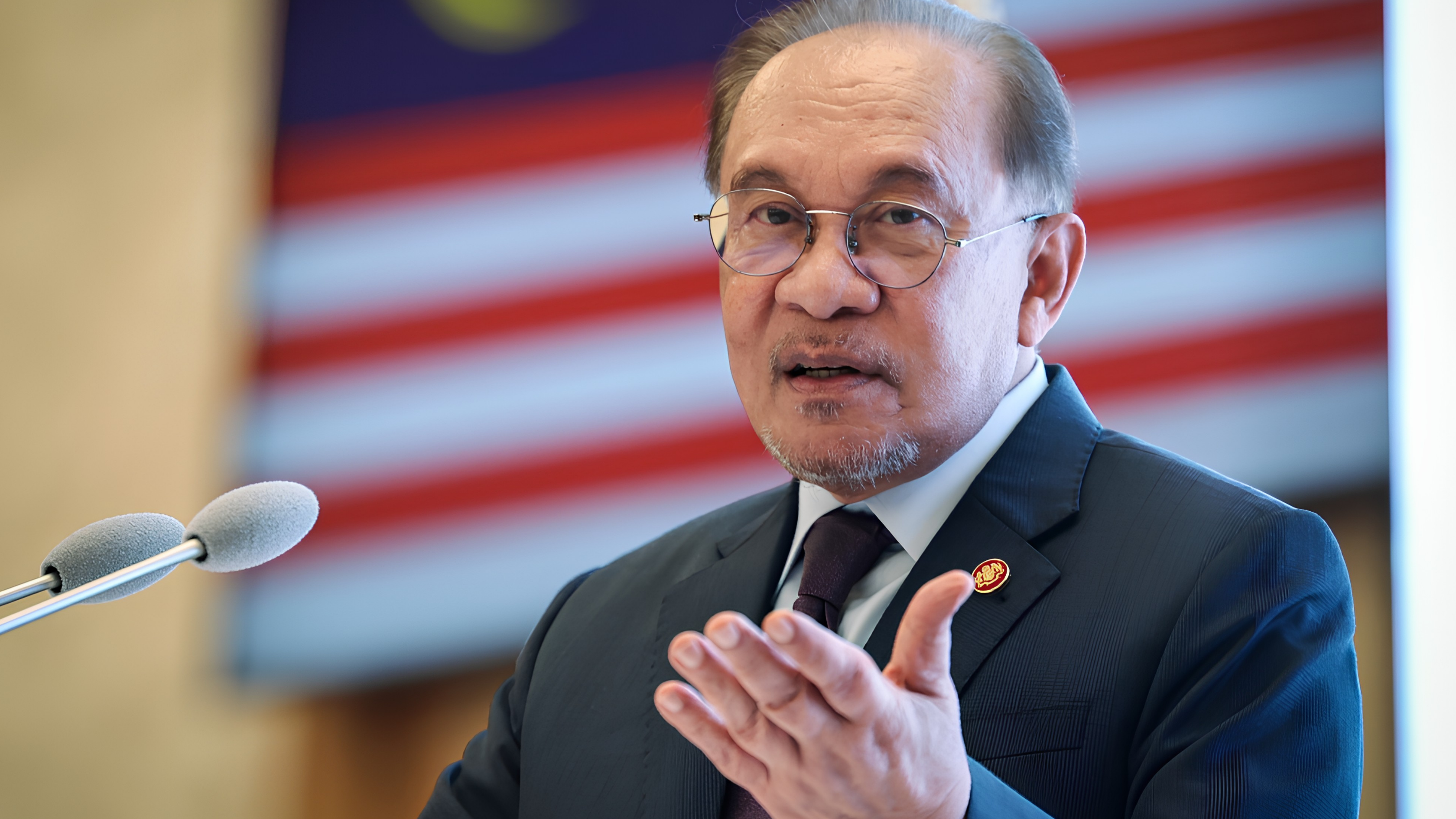
KUALA LUMPUR,June,2026 – DAP secretary-general Anthony Loke has responded to Johor caretaker Menteri Besar Datuk Onn Hafiz Ghazi’s “no seat at the table” remark with a pointed but light-hearted invitation to ride the KTM Komuter Selatan together.
Loke, who is also the Transport Minister, said he would be in Johor Bahru next Tuesday for the launch of the KTM Komuter Selatan service and invited Onn Hafiz to sit beside him on the train from Kulai to Johor Bahru. His remarks were made in response to Onn Hafiz’s earlier statement that he would rather not sit at the same table with DAP if Barisan Nasional forms the Johor state government again.

Loke said that if some leaders do not want to sit with DAP, that is their choice, and DAP would not force anyone. However, he reminded them that DAP remains part of the federal government and that he continues to serve as Malaysia’s Transport Minister.
In a sarcastic yet conciliatory tone, Loke said that although Onn Hafiz had said he did not want to sit with DAP, he was still extending an invitation for the Johor BN leader to sit beside him on the KTM Komuter ride.
The exchange comes amid rising political tension ahead of the Johor state election, where Barisan Nasional is seeking to defend its position while maintaining a firm stance against cooperation with DAP at the state level.
The controversy began when Onn Hafiz declared during the launch of Johor BN’s election machinery that he would rather give up the Menteri Besar post than form a state government with DAP. He said BN would not form a Johor government with DAP if it receives a fresh mandate from voters.
Onn Hafiz reportedly framed the position as part of the Bangsa Johor spirit and rejected claims that voting for BN would mean support for DAP. His remarks quickly became one of the most discussed political statements in the run-up to the state polls.
Loke’s response turns the phrase “sit at the same table” into a political metaphor about cooperation, public service and federal-state relations. By inviting Onn Hafiz to sit beside him on a commuter train, Loke appeared to suggest that political differences should not prevent leaders from working together on infrastructure and public transport projects that benefit ordinary Malaysians.
The invitation also carries symbolic weight because it involves the KTM Komuter Selatan, a transport service connected to Johor commuters and cross-district mobility. Public transport is a practical issue for residents, and Loke’s remark positions the train ride as a reminder that governance requires cooperation beyond party rivalry.
Loke also said DAP has experience working with various political parties, including PAS, for the benefit of the people and the country. This was likely intended to show that DAP is willing to cooperate across political lines when public interest is involved.
The political context is complicated because BN and DAP are partners at the federal level under Prime Minister Datuk Seri Anwar Ibrahim’s unity government. However, Johor BN has taken a different position at the state level by insisting that it will not work with DAP if it wins the election.
This creates a clear contrast between federal cooperation and state-level competition. At the federal level, BN and DAP sit in the same government bloc, but in Johor, BN is campaigning with a more independent and anti-DAP message.
The issue is especially sensitive because Johor is a key political battleground. BN has traditionally seen Johor as one of its strongest states, while DAP and Pakatan Harapan have support in several urban and mixed constituencies.
Onn Hafiz’s no-DAP stance may appeal to traditional BN supporters who want the coalition to preserve its own political identity. However, it could also raise questions among voters who support the federal unity government and expect cooperation between parties that already work together in Putrajaya.
Loke’s response appears designed to challenge that inconsistency. By reminding Onn Hafiz that DAP remains part of the federal government, he is pointing out that political realities at the national level are different from Johor BN’s campaign rhetoric.
The exchange also highlights the strategic importance of public messaging ahead of the Johor polls. Political leaders are not only debating policy, but also using symbolic gestures, humour and public statements to shape voter perception.
For DAP, Loke’s KTM Komuter invitation allows the party to respond without appearing overly confrontational. Instead of attacking Onn Hafiz directly, Loke used the upcoming train launch to frame the issue around public service and cooperation.
For BN, Onn Hafiz’s position may be intended to reassure voters who remain uncomfortable with DAP. The statement could strengthen BN’s appeal among its core base, especially in constituencies where anti-DAP sentiment remains politically useful.
However, the strategy also carries risk. If the message is perceived as divisive or inconsistent with federal-level cooperation, it could alienate moderate voters or non-Malay communities who prefer political stability and inclusive governance.
The debate comes as the Election Commission has confirmed that Johor will go to the polls on July 11, with nomination day set for June 27 and early voting scheduled for July 7. EC chairman Datuk Seri Ramlan Harun also said Johor has 2,727,926 voters based on the updated electoral roll as of May 31, 2026.
These dates mean political campaigning is entering a more intense phase. Candidate selection, coalition messaging, local manifestos and campaign strategies will become more important in the coming days.
The Johor election is expected to test BN’s ability to retain voter confidence and measure the strength of Pakatan Harapan and other political blocs in the state. It will also show whether Johor voters prioritise local leadership, coalition identity, federal alignment or issue-based governance.
In this context, Loke’s invitation to Onn Hafiz is more than a casual political joke. It reflects a broader argument about whether political parties should remain divided by campaign rhetoric or cooperate when public infrastructure and people’s welfare are involved.
The issue also raises a larger question about Malaysia’s unity government era. Since parties that were once rivals now work together at the federal level, voters may expect a more pragmatic political culture. However, state elections often bring back older rivalries and sharper party identities.
Johor BN’s refusal to work with DAP may therefore become one of the central narratives of the election campaign. DAP and Pakatan Harapan are likely to use the issue to argue that BN is being inconsistent, while BN may frame its stance as a matter of state-level principle and voter mandate.
For ordinary voters, the practical question is whether political rivalry will affect development, public transport, state-federal cooperation and service delivery. Loke’s KTM Komuter invitation touches directly on that point by linking the political debate to a transport project in Johor.
If Onn Hafiz accepts the invitation, it could create a symbolic moment of cooperation despite political disagreement. If he declines, DAP may use it as further proof that Johor BN is unwilling to engage even on public-interest matters.
Either way, the exchange has already added another layer to the Johor election campaign. It combines humour, symbolism and political messaging at a time when voters are closely watching how parties position themselves before polling day.
Anthony Loke’s invitation to Onn Hafiz to ride the KTM Komuter Selatan together is a sharp political response to Johor BN’s no-DAP stance. While the remark was delivered with humour, it reflects a serious debate over coalition politics, public service and whether leaders from rival parties can still work together for the benefit of the people.