KUALA LUMPUR, June 2026 — Prime Minister Datuk Seri Anwar Ibrahim has warned that Malaysia and other developing countries may seek alternative partners if European nations continue to treat them unfairly, following a defence-related dispute involving Norway.
Anwar made the remarks in an exclusive interview with Russian television network RT, where he criticised Norway’s decision to revoke the export licence for the Naval Strike Missiles system despite Malaysia having already paid most of the contract value.

According to the report, Malaysia had paid 95% of the contract value for the defence-related procurement but did not receive a satisfactory explanation for Norway’s decision, even after repeated attempts to seek clarification.
Anwar said the episode would influence Malaysia’s future decisions when choosing international defence partners. He warned that if European countries continued to treat developing nations unfairly, Malaysia would have to consider dealing elsewhere.
The Norwegian government reportedly revoked the export licence for the Naval Strike Missiles, or NSM, system in March, just days before the scheduled delivery. The decision was said to follow tighter export controls on sensitive military technologies.
The issue has become a major concern for Malaysia because the procurement was already close to completion. Defence Minister Datuk Seri Mohamed Khaled Nordin said on June 2 that Norway’s unilateral decision had caused direct losses exceeding RM600 million, while indirect costs could surpass RM1 billion.
Anwar said Malaysia initially suspected the issue could have been linked to Nato and possible influence from the United States. However, he said other Nato countries, including Germany, France and Italy, had indicated they still maintained relations with Malaysia.
The Prime Minister also said Malaysia had sent representation to the United States to clarify Washington’s position and was informed that the US was not involved in the matter.
Anwar described Norway’s decision as unacceptable because Malaysia had already honoured its contractual obligations. He said the agreement had been signed and 95% of the payment had been made, yet Malaysia was left without a clear explanation.
He also said he had spoken to the Norwegian Prime Minister, who was apologetic but cited security concerns as the reason behind the decision. However, Anwar indicated that Malaysia was not satisfied with the explanation.
The dispute has raised broader questions about how developing countries are treated in defence and trade arrangements with advanced economies. For Malaysia, the issue is not only about one missile procurement contract, but also about trust, reliability and fairness in international partnerships.
Anwar said Malaysia had strongly protested the decision and stressed that the matter would not simply end without further action. His remarks suggest that Malaysia may reassess future defence procurement relationships if similar treatment continues.
The Prime Minister contrasted the episode with Malaysia’s dealings with Russia, saying Moscow had honoured its commitments despite challenges caused by sanctions, payment restrictions and difficult procedures.
Anwar said Malaysia had not found any case of Russia breaching its commitments, even during difficult periods involving payment systems and restrictions. He also said this differed from what he described as negative Western narratives against Russia.
His comments come at a time when Malaysia is seeking to strengthen diplomatic and economic ties with multiple global partners. While Malaysia continues to maintain strong links with the West, Anwar’s remarks show that Kuala Lumpur is also prepared to deepen cooperation with countries outside the traditional Western bloc.
Anwar said the United States remains Malaysia’s top trading and investment partner, while trade and investment with China have also shown strong growth. At the same time, he said Malaysia sees significant untapped potential in cooperation with Russia.
The Prime Minister highlighted several areas where Malaysia and Russia could expand cooperation, including digital technology, artificial intelligence, cybersecurity and modern agriculture.
These sectors are important for Malaysia’s long-term economic transformation because they involve future industries, innovation and food security. By naming these fields, Anwar indicated that Malaysia-Russia cooperation may move beyond traditional trade and energy links.
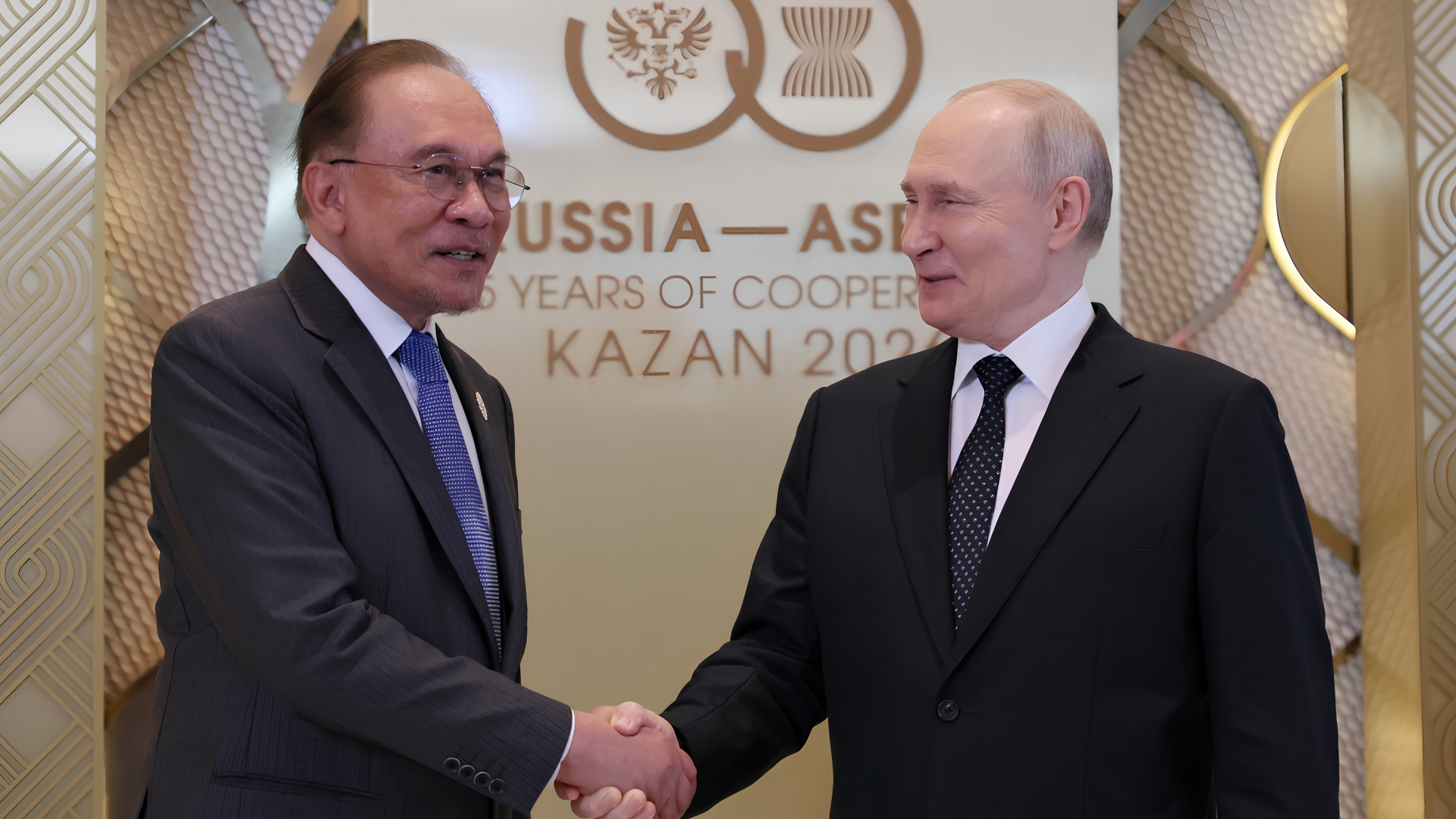
Anwar also said he was thankful to Russian President Vladimir Putin, who had given a supportive view on efforts to strengthen cooperation. He added that teams are now working not only to facilitate, but also to accelerate the process.
The remarks reflect Malaysia’s broader diplomatic strategy under Anwar’s leadership: maintaining relations with major powers while preserving national independence in decision-making. Malaysia has repeatedly positioned itself as a country that wants constructive relations with all sides without being forced into a single geopolitical camp.
The Norway missile issue could therefore become a turning point in how Malaysia evaluates future defence procurement. For any country, defence contracts require long-term confidence because they involve national security, military readiness and public funds.
When a major defence system is delayed, cancelled or blocked after payment has already been made, the impact can go beyond financial losses. It may affect military planning, procurement timelines and trust in the supplier country.
For developing nations, Anwar’s warning also carries a wider message. Countries in Asia, Africa and the Global South are increasingly demanding fairer treatment in trade, technology, finance and defence arrangements. If they feel sidelined or treated unequally, they may choose to diversify their partnerships.
This is why the Prime Minister’s comments are significant. He was not only criticising Norway’s decision, but also warning Europe that developing nations have other choices in a changing global order.
The issue also comes amid growing geopolitical competition, where countries such as Russia, China, India and several Middle Eastern powers are expanding their engagement with developing economies. For Malaysia, this creates more options in areas such as defence, energy, digitalisation, agriculture and infrastructure.
At the same time, Malaysia is unlikely to completely abandon ties with Europe. The European Union and individual European countries remain important economic and diplomatic partners. However, Anwar’s statement suggests that Malaysia expects mutual respect and reliability from its partners.
The Prime Minister’s remarks may also send a message to other European governments that unilateral decisions in sensitive contracts can affect long-term trust. In defence procurement, credibility is often as important as technology.
For now, the dispute with Norway remains unresolved, but Malaysia has made clear that it views the matter seriously. The government is expected to continue seeking clarification and possible remedies over the losses linked to the revoked licence.
The issue also places pressure on Norway to explain its decision more clearly, especially because Malaysia had already paid almost the full amount. Without a satisfactory resolution, the case may continue to affect future defence and diplomatic discussions between the two countries.
Anwar’s warning marks an important diplomatic update in Malaysia-Europe relations. It highlights Malaysia’s frustration over the Norway missile deal, its willingness to explore alternative partners and its wider message that developing countries should not be treated as secondary players in global affairs.
The latest development is suitable for Update News because it involves a current statement by the Prime Minister, an ongoing defence procurement dispute, Malaysia’s foreign policy direction and potential changes in future international partnerships.