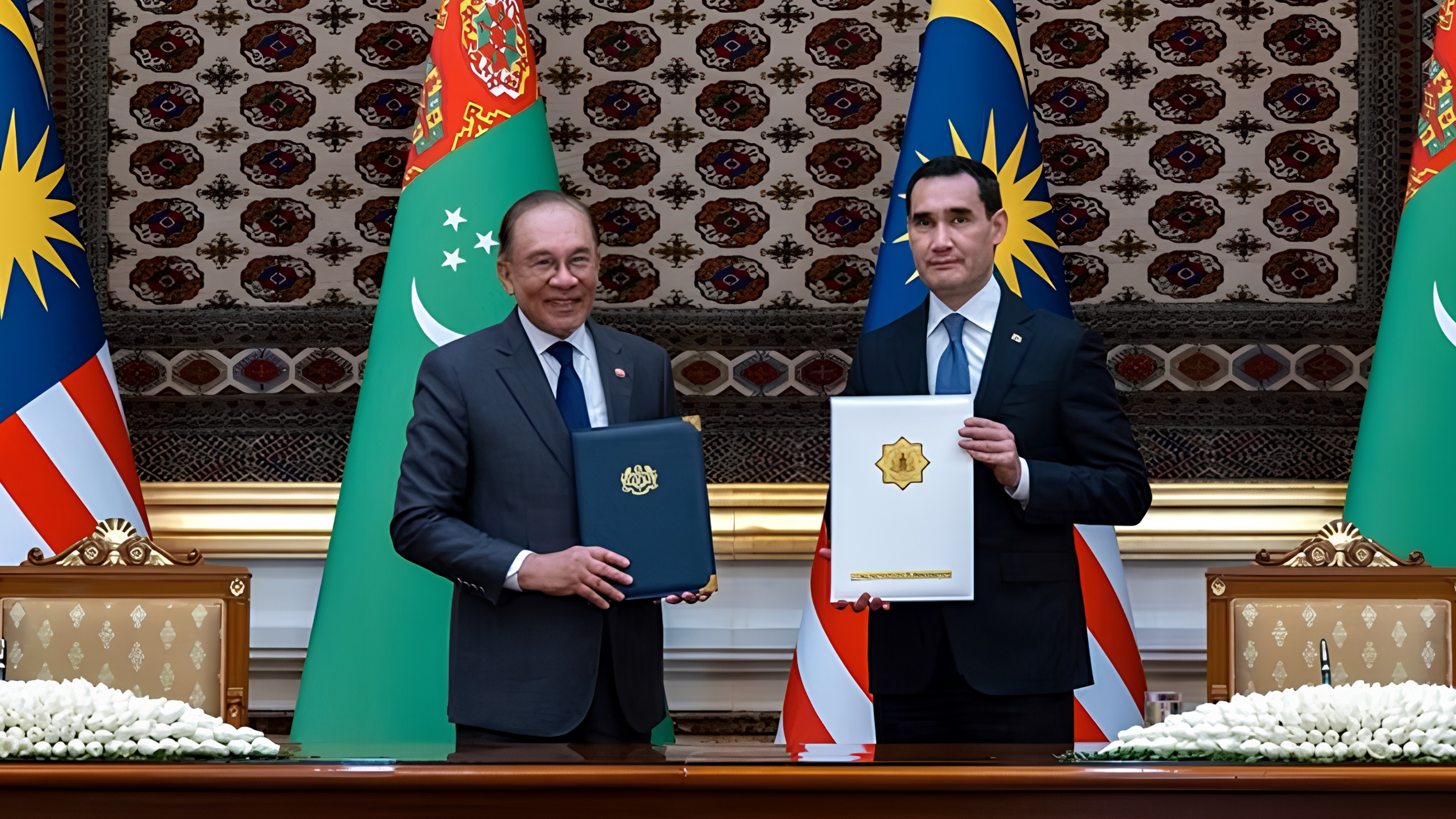
KUALA LUMPUR,June,2026 — Malaysia’s strong diplomatic relationship with Turkmenistan has opened the way for Petroliam Nasional Bhd, or Petronas, to secure new strategic energy agreements in the Central Asian country, strengthening Malaysia’s position in the global oil and gas landscape.
Geostrategist Dr Azmi Hassan said the latest energy agreements involving Petronas in Turkmenistan and Russia reflect the strength of Malaysia’s diplomatic ties with both countries. He said such cooperation does not happen overnight, but is built through years of diplomatic engagement, commercial trust and mutual confidence.

According to Dr Azmi, the agreements also show that Petronas’ reputation as a long-standing global energy player continues to be recognised internationally. He said gaining access to upstream opportunities in another country is not easy, especially in a strategic and competitive sector such as oil and gas.
The latest development came as Petronas, through its wholly owned subsidiary Petronas Carigali (Turkmenistan) Sdn Bhd, marked 30 years of operations in Turkmenistan by signing several new agreements to advance long-term strategic growth.
Petronas said the milestone coincided with Prime Minister Datuk Seri Anwar Ibrahim’s official visit to Turkmenistan, reflecting three decades of Malaysia-Turkmenistan energy cooperation built on mutual trust, shared aspirations and sustained value creation.
The agreements involve cooperation with State Concern Turkmennebit and State Enterprise Hazarnebit, deepening Petronas’ presence in the Caspian Sea and expanding its upstream portfolio in Turkmenistan.
Among the key agreements is a Production Sharing Agreement covering Offshore Block-19 and Block-20, as well as a Cooperation Agreement on 2D seismic studies for the Northern Offshore Blocks. These agreements are aimed at unlocking future opportunities and strengthening technical understanding of Turkmenistan’s offshore resources.
Under the newly signed Production Sharing Agreement, Petronas Carigali Turkmenistan will acquire a 100% participating interest in Block-19 and Block-20, marking Petronas’ entry into new exploration acreage in the country.
Petronas also said the seismic study cooperation will allow new data acquisition to address existing data gaps and support a more comprehensive evaluation of the Northern Offshore Blocks. This is important because seismic data plays a major role in identifying potential resources and reducing exploration risk before larger development decisions are made.
In parallel, Malaysia and Turkmenistan formalised a Framework Agreement on Long-Term Cooperation for the Development of Hydrocarbon Resources of Turkmenistan. Malaysia was represented by Economy Minister Akmal Nasrullah Mohd Nasir, while Turkmenistan was represented by Guvanch Agajanov, Deputy Chairman of the Cabinet of Ministers of Turkmenistan.
The framework agreement provides a platform for broader cooperation, including the potential development of the Galkynysh field, as well as downstream and adjacent sectors such as oil refining, gas processing and gas chemicals.
The signing ceremony was witnessed by Prime Minister Anwar Ibrahim and Turkmenistan President Serdar Berdimuhamedov, highlighting the high-level political support behind the energy partnership.
Anwar later described Petronas’ success in securing access to one of the world’s largest gas fields as an extraordinary achievement. He said the development places Petronas among major players in the global gas sector and helps address concerns over Malaysia’s long-term gas supply.
The Prime Minister also said the success would strengthen Petronas’ ability to continue exporting gas to key markets such as Japan, South Korea, China and other countries.
Anwar said the outcome was partly the result of a series of negotiations following earlier discussions with President Berdimuhamedov in 2024. He said Petronas’ track record, operational performance, technology transfer proposals and training initiatives helped convince Turkmenistan to expand the company’s role.
This is significant because Turkmenistan is one of the world’s major gas-rich countries. For Malaysia, deeper Petronas participation in Turkmenistan’s energy sector could strengthen long-term supply security while expanding the national oil company’s global upstream footprint.
The agreements also show how government-to-government relations can support major commercial outcomes. In strategic sectors such as oil and gas, diplomacy often plays a crucial role because host countries need confidence not only in a company’s technical ability, but also in the reliability of its home country.
Dr Azmi said government relations were important in facilitating the agreement, while Petronas’ credibility and track record were also key factors in securing opportunities in the global oil and gas industry.
The latest agreements also reinforce Petronas’ long history in Turkmenistan. Petronas began operating in the country in 1996, creating a foundation for long-term cooperation between Malaysia and Turkmenistan.
At the Turkmenistan-Malaysia: 30 Years of Mutually Beneficial Cooperation in the Oil and Gas Sector Forum and Exhibition, Anwar said Petronas is not merely present in Turkmenistan as an investor, but as a reliable partner committed to technology transfer, shared expertise and long-term cooperation.
The forum gathered more than 500 participants, including government agencies, local industry players, Malaysian companies operating in Turkmenistan and members of the wider energy community.
Petronas said it has also contributed to local capability development in Turkmenistan over the past three decades. The company has trained 235 local technicians and provided scholarships to 188 Turkmen students to pursue studies at Universiti Teknologi PETRONAS and Petronas technical training facilities in Malaysia.
Petronas has also employed more than 1,000 Turkmen nationals, who make up close to 90% of Petronas Carigali Turkmenistan’s workforce in the country.
These long-term investments show that the partnership is not only about resource extraction. It also includes skills development, education, knowledge transfer and workforce localisation, which help build deeper trust between Malaysia and Turkmenistan.
Anwar said Malaysia-Turkmenistan cooperation goes beyond normal commercial interests and should become an example of meaningful collaboration for the Global South. He said both countries can work together in areas beyond oil and gas, including research, artificial intelligence, semiconductor education and emerging technologies.
Astro Awani reported that Anwar’s two-day official visit from June 18 to 19 also saw several cooperation documents signed in areas such as education, diplomatic training, aviation, science and human capital development.
This broader cooperation matters because Malaysia is seeking to diversify its international partnerships while strengthening strategic sectors such as energy, technology, education and industrial development.
From an economic perspective, the Petronas agreements could provide long-term benefits for Malaysia. Stronger involvement in Turkmenistan’s upstream sector may create new revenue opportunities, expand Petronas’ international portfolio and support Malaysia’s energy resilience.
From a diplomatic perspective, the agreements strengthen Malaysia’s position as a country capable of building trust with major energy-producing nations. This is especially important at a time when global energy markets remain affected by geopolitical tensions, supply uncertainty and rising competition for strategic resources.
The deal also highlights the importance of Petronas as a national strategic asset. Its international credibility allows Malaysia to participate in major energy developments abroad, while its technical reputation helps open doors that may not be available to ordinary commercial players.
For Turkmenistan, the partnership offers access to Petronas’ experience in offshore exploration, production management, training and technology transfer. For Malaysia, it offers access to one of the world’s most important gas-producing regions and strengthens the country’s role in global energy supply chains.
the Petronas-Turkmenistan agreements mark a major step in Malaysia’s energy diplomacy. They show how long-term diplomatic relationships, commercial trust and Petronas’ global reputation can combine to create strategic opportunities for the country.
The development is suitable for Update News because it involves new Petronas agreements, Malaysia-Turkmenistan diplomatic relations, long-term energy security and major developments in the global oil and gas sector.