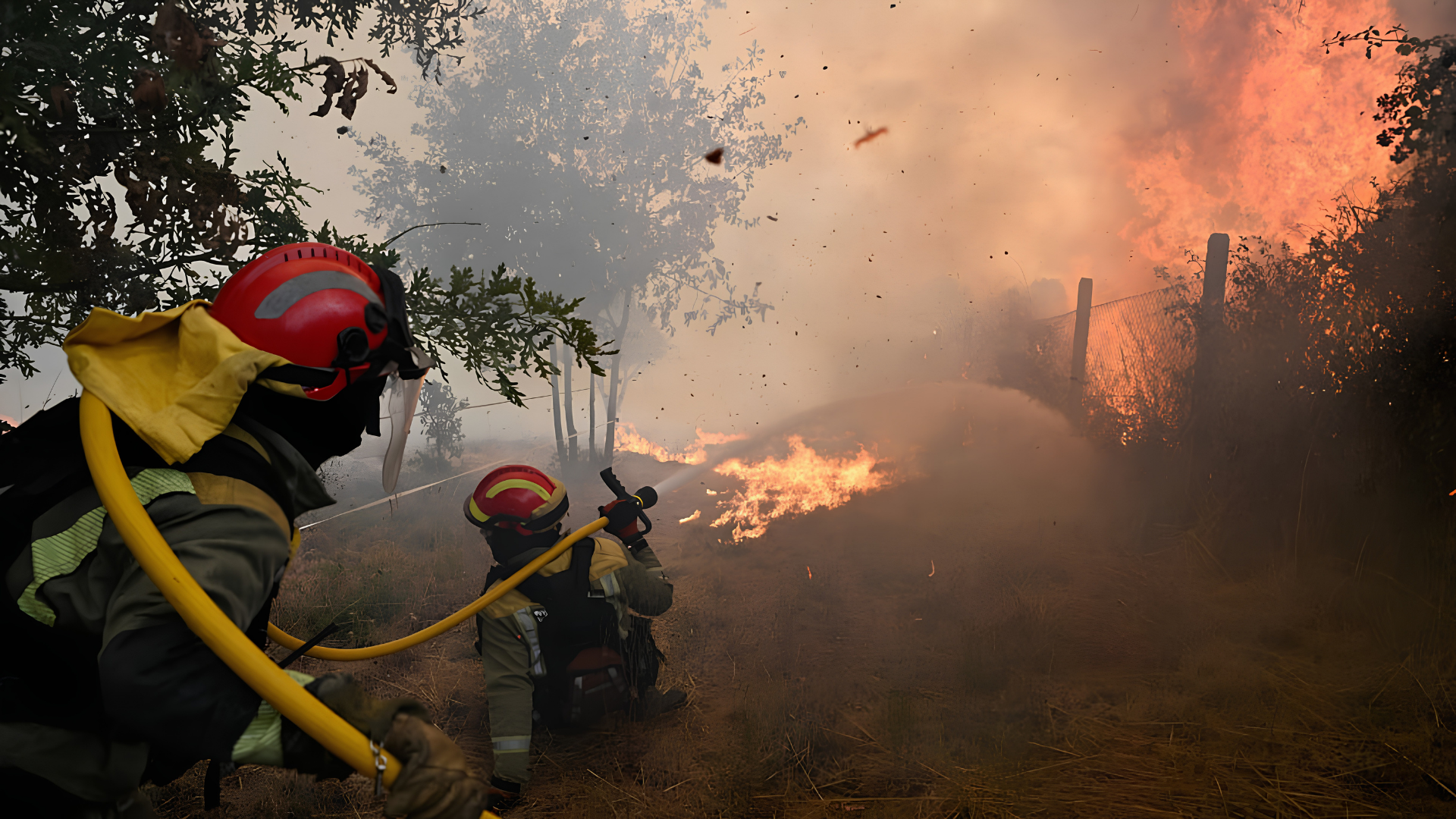
KUALA LUUMPUR, JULY 2026 — Firefighters in Spain and France continued efforts to contain major wildfires as extreme temperatures, drought conditions and strong winds created a high risk of further outbreaks across Southern Europe.
Spain’s largest wildfire of the year has burned an estimated 32,000 hectares in the central province of Guadalajara. The blaze began to stabilise on Tuesday after forcing evacuations across 34 municipalities and confinement orders in another 14 areas.

Authorities later allowed residents from five villages to return home, although several safety restrictions remained in place. Spanish Prime Minister Pedro Sánchez said the country had already recorded 22 major wildfires in 2026.
Sánchez said more than 100,000 hectares had burned before Spain reached the most critical period of its wildfire season. The total burned before Spain reached the most critical period was already comparable to the country’s aved during the previous decade. citeturn762787view0
Spain’s weather agency, AEMET, warned that the wildfire risk remained very high or extreme across most of mainland Spain and the Balearic Islands. The combination of an ongoing heatwave, dry thunderstorms and Saharan dust was expected to further increase the danger.
Temperatures in parts of Spain’s Mediterranean regions could reach between 42 and 44 degrees Celsius as dry westerly winds push another surge of heat towards the area. A temporary reduction in temperatures was expected from Friday, butturn early the following week.
In France, two firefighters died after their vehicle was engulfed by flames while they were responding to a wildfire in the southwestern Gironde region. Authorities urged residents to avoid barbecues and other activities that could ignite fires, noting that most wildfires are linked to human activity.
A separate blaze in Gironde burned about 100 hectares between Bordeaux and Cap Ferret, forcing around 600 people to evacuate near the village of Saumos. Road traffic was also redirected aes close to the affected area.
Authorities prepared to restrict forestry operations and other work involving internal-combustion engines because of the extremely dry conditions. The risk of additional fires was expected to remain very high across western and southwestern France for the rest of the week.
In southeastern France, cooler temperatures and lighter winds helped firefighters confront a wildfire that had burned approximately 2,500 hectares in the Var region. The blaze damaged dozens of homes and fnts to leave their properties.
French Interior Minister Laurent Nuñez said around 44,000 hectares had burned in France since the beginning of the year, significantly exceeding the normal average. Another wildfire was also reported in the southeastern Hautes-Alpes region.
The heatwave affected other parts of Europe, including Greece and Cyprus, where authorities temporarily prohibited outdoor work during the hottest hours of the day. Temperatures i to exceed 41 degrees Celsius.
Meanwhile, severe storms replaced extreme heat as the main threat in parts of the Western Balkans. Eleven people were admitted to hospital in North Macedonia after strong winds brought down trees, damaged roofs and disrupted electricity supplies.
Scientists have repeatedly warned that human-driven climate change is increasing the intensity and frequency of heatwaves, droughts, wildfires and destructive storms. Western Europe’s average high temperature on July 22 was forecast at 26.6 degrees Celsius, around threstorical normal for that date.