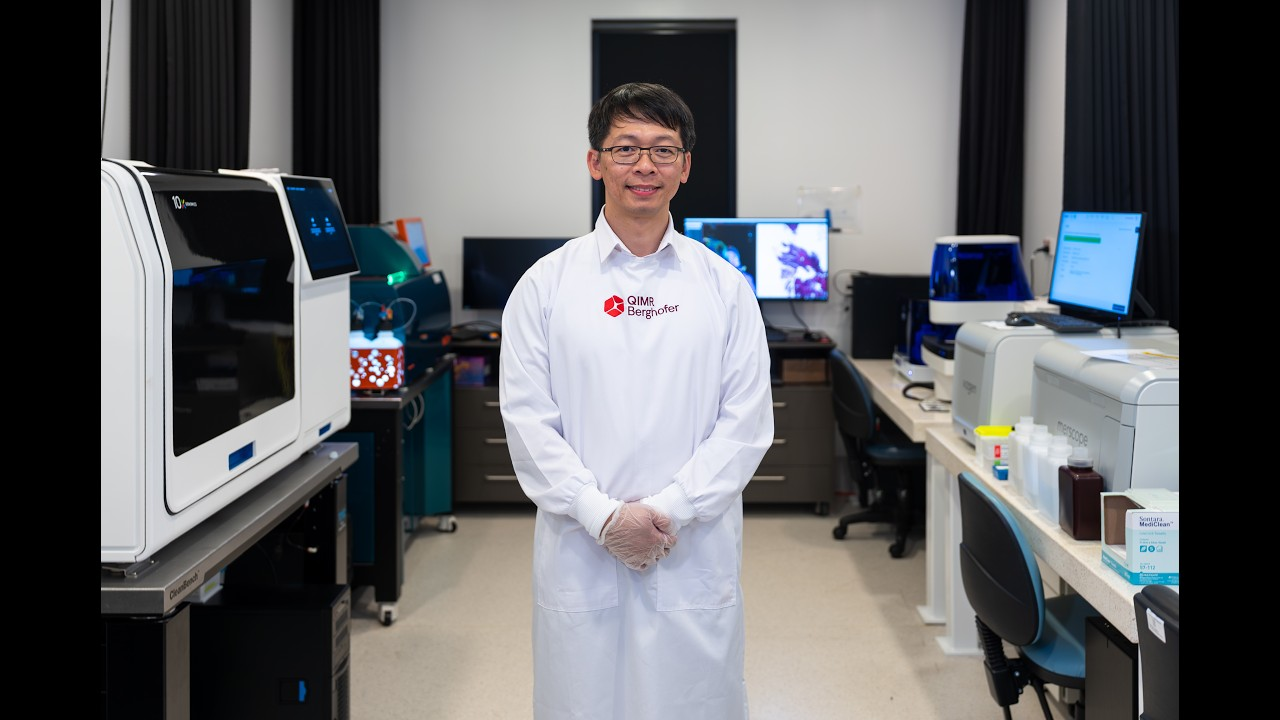
KUALA LUMPUR,May 2026 — Scientists have developed a new artificial intelligence (AI) screening tool that can significantly improve the way pathologists detect cancer, offering what researchers describe as “spatial super vision” to identify hidden disease markers in standard tissue samples.
The system, designed to work with conventional pathology slides, allows doctors to detect subtle genetic and molecular patterns that are normally invisible under traditional microscopes. Researchers say this advancement could lead to earlier diagnosis and more precise cancer treatment decisions.

AI System Improves Detection of Multiple Cancer Types
The AI tool has been shown to accurately predict and identify several types of cancer, including:
- Breast cancer
- Skin cancer
- Kidney cancer
- Certain liver immune-related diseases
By analyzing standard stained tissue slides, the system can scan millions of microscopic data points to highlight abnormal biological signals linked to disease development.
Researchers describe the technology as a major leap forward in digital pathology, combining artificial intelligence with spatial biology to improve diagnostic accuracy and speed.
How the “Super Vision” AI Works
Traditionally, pathologists rely on Hematoxylin and Eosin (H&E) staining, a century-old method used to observe tissue structure under a microscope. While effective for identifying visible abnormalities, this method does not reveal deeper molecular activity inside cells.
The new AI system bridges this gap by applying advanced spatial analysis to standard slides, allowing it to detect:
- Hidden genetic markers
- Cellular-level abnormalities
- Molecular activity patterns linked to cancer
This gives pathologists a more detailed “layer” of diagnostic information that enhances decision-making.
Faster, Cheaper and More Accurate Diagnosis
Researchers say the AI tool is designed to be:
- Low-cost compared to advanced lab testing
- Fast, producing rapid diagnostic results
- Interpretable, allowing doctors to understand AI findings easily
The system does not replace pathologists but supports them by acting as an advanced diagnostic assistant, improving efficiency in hospitals facing high patient workloads.
Experts believe this could be especially useful in rural and remote healthcare settings, where access to specialist pathology services is limited.
Part of the Future of Precision Medicine
The breakthrough is seen as part of a broader shift toward precision medicine, where treatments are tailored based on a patient’s unique biological data.
Researchers say the AI model not only helps detect cancer earlier but can also:
- Estimate disease progression risk
- Predict treatment response
- Support personalised treatment planning
This could lead to improved survival rates by identifying aggressive cancers earlier and more accurately.
Global Impact on Healthcare Systems
Medical experts believe the technology could reduce pressure on healthcare systems by:
- Speeding up diagnostic workflows
- Reducing human error in slide analysis
- Supporting overworked pathology departments
- Expanding access to specialist-level diagnostics globally
A researcher involved in the development described the system as giving doctors “super-resolution vision” to detect rare cancer signals hidden in large volumes of tissue data.
Clinical Trials and Adoption
The next stage of development involves testing the AI tool in real hospital environments. Researchers hope it could become part of routine clinical practice within the next few years if trials are successful.
If widely adopted, the technology could mark a major transformation in how cancer is diagnosed worldwide, moving pathology into a new era powered by artificial intelligence