KUALA LUMPUR,June,2026 – Johor caretaker Menteri Besar Datuk Onn Hafiz Ghazi has defended Johor Barisan Nasional’s position that it will not cooperate with DAP if BN is returned to power in the upcoming Johor state election.
Onn Hafiz said political disagreement with DAP should not be confused with race, stressing that DAP is a political party and not a racial group. His remarks came after criticism that Johor BN’s anti-DAP stance could alienate the Chinese community ahead of the state polls.

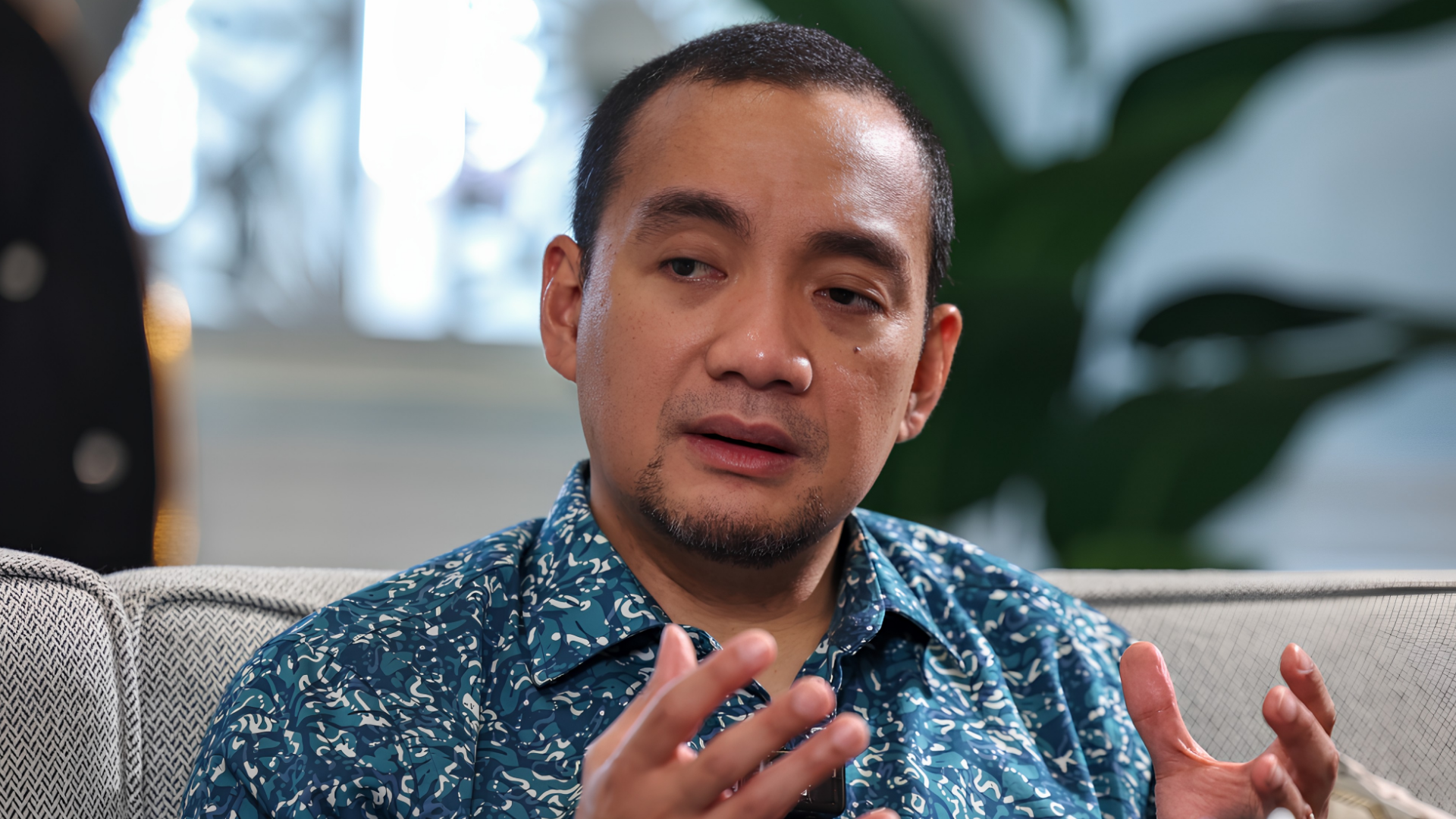
Speaking in an exclusive interview with the New Straits Times, Onn Hafiz rejected claims that his position was racially motivated. He said DAP may be seen as a party that champions issues related to the Chinese community, but that does not mean DAP represents the entire community.
He also pointed to MCA, a component party of Barisan Nasional, as another party that represents and looks after the interests of the Chinese community. This was part of his argument that rejecting cooperation with DAP should be viewed as a political decision rather than hostility towards Chinese voters.
The controversy began after Onn Hafiz declared during the launch of Johor BN’s election machinery that he would rather not hold political office than form a state government with DAP. He also said Johor BN would not work with the party if BN receives a fresh mandate in the state election.
His remarks attracted attention because BN and DAP are currently part of the federal unity government led by Prime Minister Datuk Seri Anwar Ibrahim. At the federal level, BN works alongside Pakatan Harapan, which includes DAP, but Johor BN has maintained that its state-level political direction is decided independently.
DAP secretary-general Anthony Loke responded to the controversy through a social media post showing himself seated next to Deputy Prime Minister and BN chairman Datuk Seri Ahmad Zahid Hamidi during a Cabinet meeting. The post was seen as a pointed reminder that BN and DAP cooperate at the federal level.
Onn Hafiz later clarified that his earlier phrase about not sitting at the same table with DAP was figurative and referred to forming a state government, not literally sharing a table. He said that if Johor BN wins the mandate, the state government would continue as a fully Barisan Nasional-led administration.
The Johor BN chairman also defended his administration’s record, saying the state government had served all communities under the Bangsa Johor concept. He said the Johor government had assisted Malays, Chinese, Indians and other communities, regardless of race or political background.
According to Onn Hafiz, the state government has spent around RM50 million on initiatives for the Chinese community and RM40 million for the Indian community. He said his administration would continue protecting the welfare and interests of all four million people in Johor.
He also urged Johor’s Chinese voters to judge him based on his administration’s track record rather than political claims made by opponents. Onn Hafiz said opposition parties were trying to frame his political stance as racism, while he insisted that the issue was about political alignment and principles.
The debate comes at a sensitive time as Johor prepares for a closely watched state election. The Election Commission has confirmed that polling day for Johor will be held on July 11, with nomination day fixed for June 27 and early voting set for July 7.
Johor BN has already indicated that it intends to contest all 56 state seats, signalling a solo approach in the election. The decision means BN is positioning itself as an independent state-level force despite being part of the federal unity government arrangement.
This strategy could appeal to traditional BN supporters who want the coalition to preserve its own identity in Johor. However, it also creates political tension because BN still cooperates with PH and DAP at the federal level.
The issue is especially important because Johor has long been considered a key BN stronghold. A strong performance in Johor could help BN present itself as a coalition capable of making a broader political comeback, while a weaker result could raise questions about its future direction. CNA reported that BN leaders view the Johor snap polls as a potential platform for a wider “blue wave” comeback.
For Pakatan Harapan and DAP, Onn Hafiz’s statement may become a campaign issue. PH may argue that voters should support a more inclusive political model, while BN is likely to frame its campaign around state stability, continuity and Johor identity.
The controversy also highlights the complicated nature of Malaysia’s unity government politics. At the national level, parties with different histories and voter bases are working together for federal stability. At the state level, however, local political calculations may differ.
Johor BN’s stance shows that state elections can operate under different political dynamics from the federal government. Even when parties cooperate in Putrajaya, they may still compete or reject cooperation in certain states depending on local sentiment, leadership strategy and voter expectations.
Onn Hafiz’s explanation that “DAP is not a race” is aimed at separating political disagreement from ethnic identity. This distinction is important in Malaysia’s multiracial political environment, where party positions can easily be interpreted through racial or community-based lenses.
The statement may also be intended to reassure non-Malay voters that Johor BN’s refusal to work with DAP does not mean the coalition intends to neglect Chinese or Indian communities. By highlighting state spending for different communities, Onn Hafiz is trying to present his administration as inclusive despite its firm political stance.
However, the response from DAP and other critics shows that the issue is unlikely to disappear quickly. As the campaign period approaches, BN’s no-DAP position may become one of the main political narratives in Johor.
For voters, the key question will be whether they see Johor BN’s position as a matter of political principle, coalition identity or unnecessary division. The answer may differ across constituencies, especially between urban, semi-urban and rural areas.
Urban seats with stronger DAP influence may respond differently from traditional BN areas. This could make the issue particularly important in mixed constituencies where Chinese and Indian voters play a significant role.
At the same time, Onn Hafiz’s personal image and state government record may influence voter response. Several reports have noted that he is seen by some political observers as having a strong administrative profile, which could help BN defend its position in the campaign.
The coming Johor polls will therefore test not only BN’s electoral machinery, but also its ability to balance political independence with the realities of federal coalition cooperation.
Onn Hafiz’s defence of Johor BN’s no-DAP stance marks a major political moment ahead of the state election. His message is clear: Johor BN sees its position as a political decision, not a racial one. Whether voters accept that explanation will become one of the key questions in the run-up to polling day.