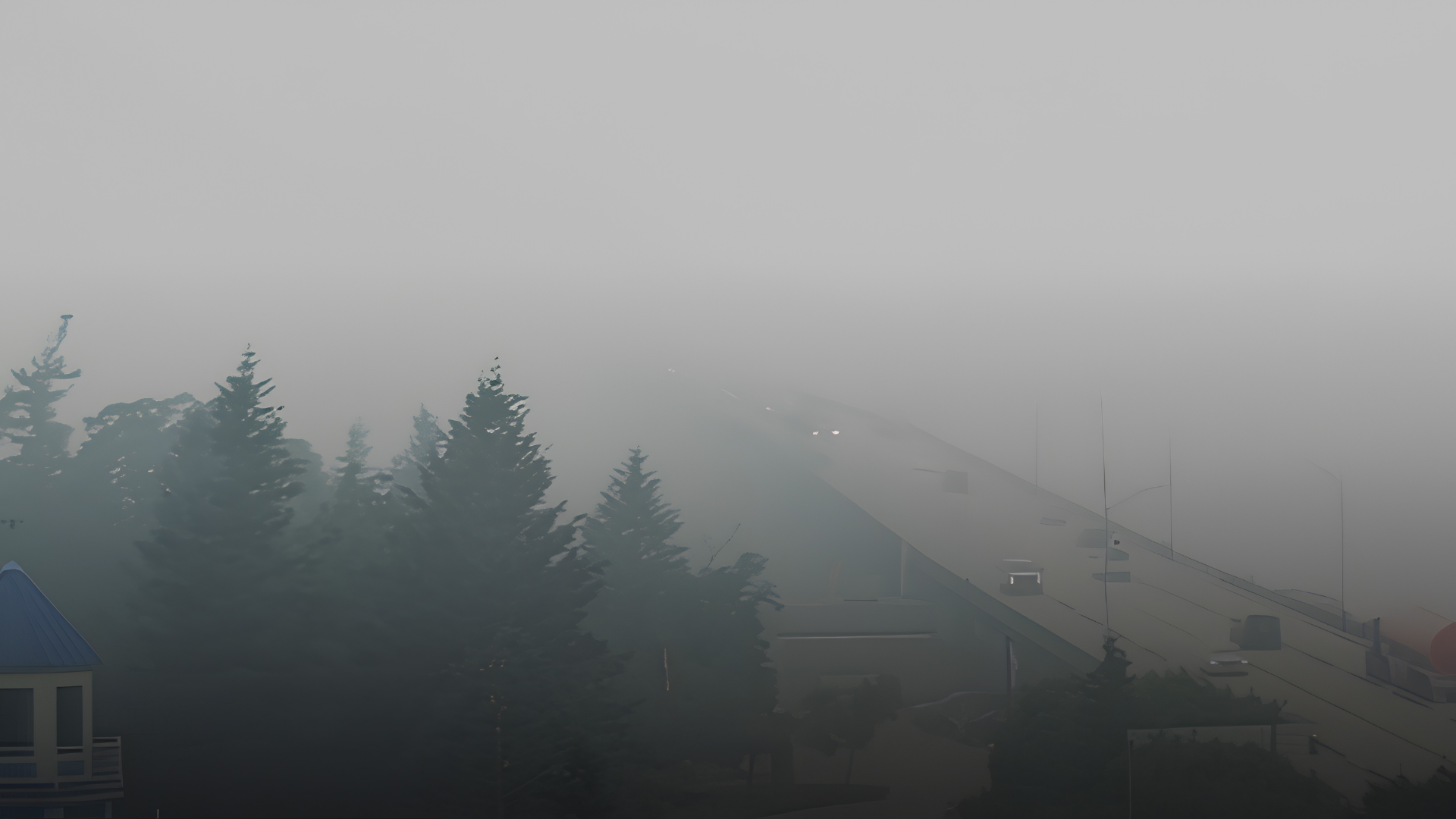
KUALA LUMPUR, JULY 2026 – Thick smoke from hundreds of wildfires burning across Canada descended on large parts of the United States on Wednesday, reducing visibility and pushing air quality to unhealthy levels from the Great Lakes region to New York City.
More than 830 active wildfires were reported across Canada, while over a dozen additional fires were burning in northern Minnesota. Some of the largest fires were concentrated in west-central Ontario, where burning forests released heavy smoke that was carried south by prevailing winds.

A hazy orange cloud covered the New York City skyline as smoke reached the metropolitan area. Air quality initially entered unhealthy levels in the city, Eastern Lake Ontario, Central New York and parts of Western New York, according to air-quality monitoring data. New York officials subsequently issued a statewide Air Quality Health Advisory for Thursday.
New York City Mayor Zohran Mamdani urged residents to avoid unnecessary outdoor activities and remain indoors where possible. The city also offered free masks, with officials warning that people with heart or lung conditions, older adults, pregnant residents, infants and children faced greater health risks from the smoke.
Air-quality alerts extended from Minnesota to New York City and included the entire states of Wisconsin and Michigan. Particularly heavy smoke was recorded around Duluth in Minnesota, Marquette in Michigan and northern Wisconsin, while additional smoke moved through Green Bay, Milwaukee, Grand Rapids, Detroit and Toronto.
Smoke also spread across New York state and New England before reaching New York City and Boston. Cleveland, Columbus, Baltimore and Washington, D.C., were expected to experience heavier smoke as the plume continued moving east and south.
The AirNow Air Quality Index classifies readings between 101 and 150 as unhealthy for sensitive groups, while levels from 151 to 200 are considered unhealthy for the wider population. Residents in affected areas were advised to monitor local readings and reduce exposure when pollution levels increased.
The smoke arrived during an extreme heat spell affecting much of the United States. Temperatures across the Northeast were expected to approach 100 degrees Fahrenheit, while humidity could make conditions feel even hotter in New York City, Washington and Philadelphia. Minneapolis also remained under an extreme heat warning.
The combination of heat and wildfire smoke increased concerns for residents with respiratory or cardiovascular conditions. Authorities advised people to limit prolonged outdoor exercise, keep windows closed and use filtered or air-conditioned indoor spaces when available.
Forecasters said rain moving into the Upper Midwest on Friday and the Northeast on Saturday could help disperse part of the smoke. However, conditions may continue to change depending on wildfire activity and wind direction.
Canada had approximately 835 active fires, including more than 100 classified as out of control. The fires had burned around 1.9 million hectares, with Manitoba, Saskatchewan and Ontario among the provinces experiencing significant activity.
Although New York City’s conditions were not expected to become as severe as the June 2023 wildfire-smoke crisis, officials warned that pollution could still reach dangerous levels and affect millions of people beyond those traditionally considered medically vulnerable.